Thinking Process
PHASE 1: VISUAL DECONSTRUCTION
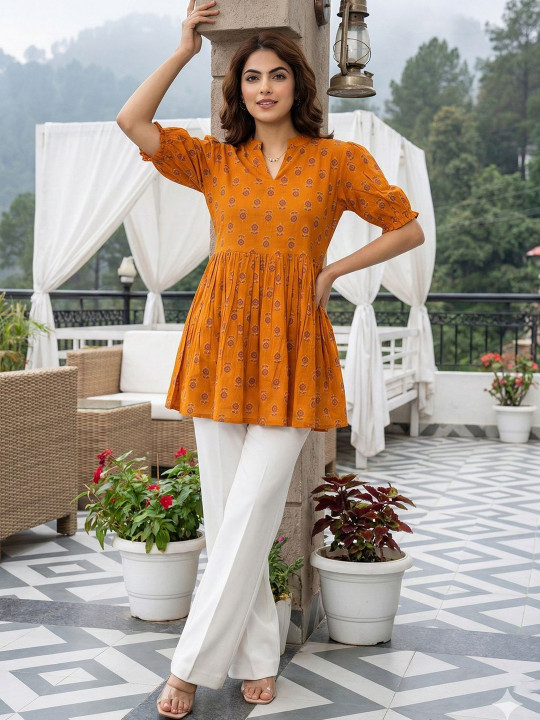
- **Fabric Physics:** The source garment appears to be a medium-weight cotton or cotton-linen blend. It possesses a matte finish with zero specular highlights (no shine). The physics simulation must account for a "structured drape"—meaning the fabric holds the shape of the gathers at the waist and the puff at the sleeves without clinging to the skin like spandex or flowing continuously like silk.
- **Key Features:** The intricate block-print floral pattern must remain undistorted. The gathered "empire waist" seam (separating the bodice from the flared lower section) is a critical structural element. The V-neckline with the button placket and the elbow-length sleeves with elasticized/gathered cuffs must be preserved. The flared "peplum" style bottom hem must be maintained.
PHASE 2: FIT & DRAPE SIMULATION
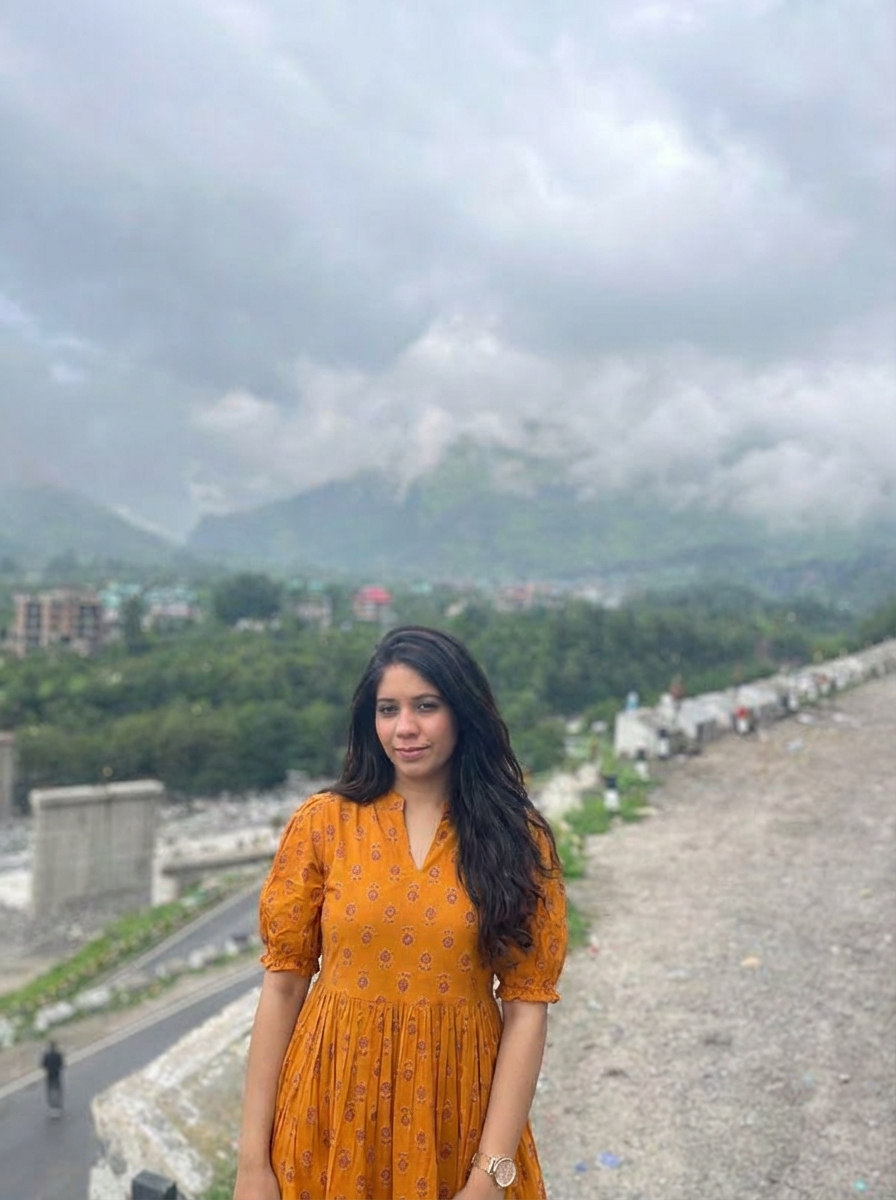
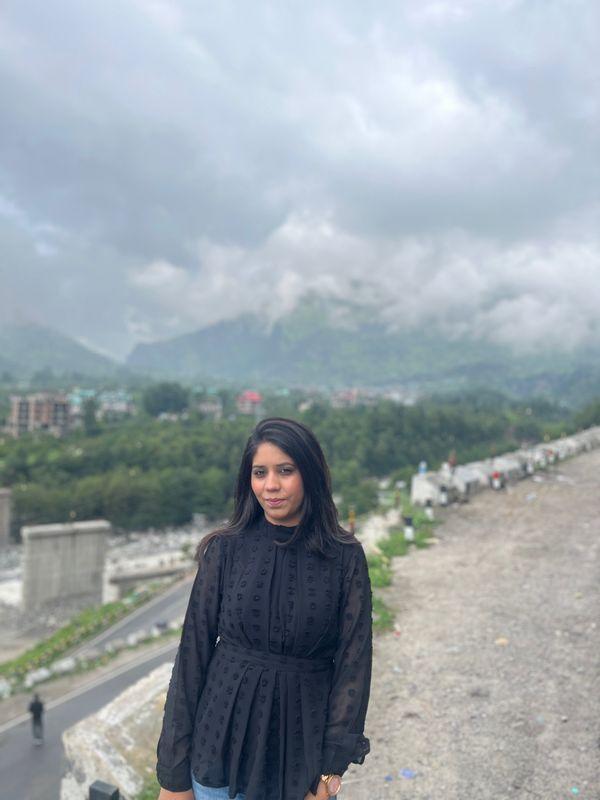
- **Body Mapping:** The user is in a relaxed standing pose. The garment's shoulder seam must align with the user's natural shoulder line. The bodice should fit closer to the chest and then release into the gathered flare immediately below the bust/waist area, utilizing gravity to hang vertically rather than contouring to the hips. *Crucial:* The source sleeves are elbow-length, while the user is currently wearing long sleeves. The simulation must infer skin texture for the user's forearms or maintain the user's arm volume while generating skin tone where the new sleeve ends.
- **Occlusion Handling:** The user has long, dark hair cascading over both shoulders and resting on the upper chest. A high-precision segmentation mask is required to separate the hair strands. The hair must be composited as the top layer, occluding the orange fabric. The watch on the user's left wrist must remain visible and untouched.
PHASE 3: ENVIRONMENT & LIGHTING
- **Light Match:** The user is in an outdoor environment with overcast, diffuse lighting (soft, cool, top-down ambient light). The source garment currently has warmer, studio-style lighting. The render engine must neutralize the warm cast of the orange fabric and apply a cool, bluish-grey tint to match the mountain atmosphere. Shadows should be soft and widespread (ambient occlusion) rather than hard or directional.
- **Color Calibration:** The saturation of the mustard/orange fabric needs to be slightly reduced to blend naturally with the muted, desaturated tones of the background landscape. Contrast on the garment should be lowered to match the flat lighting of the overcast day.
PHASE 4: IDENTITY PROTECTION
- **Facial Lock:** Absolute pixel preservation required for the user's face (eyes, nose, mouth, jawline) and the specific volume and texture of her hair.
- **Body Integrity:** The user's shoulder width and bust proportions must dictate the size of the virtual garment. Strictly forbid warping the user's underlying skeletal structure or slimming the torso to match the model in the source image. The user's skin tone on the neck and (newly exposed) forearms must match her face perfectly.