Thinking Process
PHASE 1: VISUAL DECONSTRUCTION
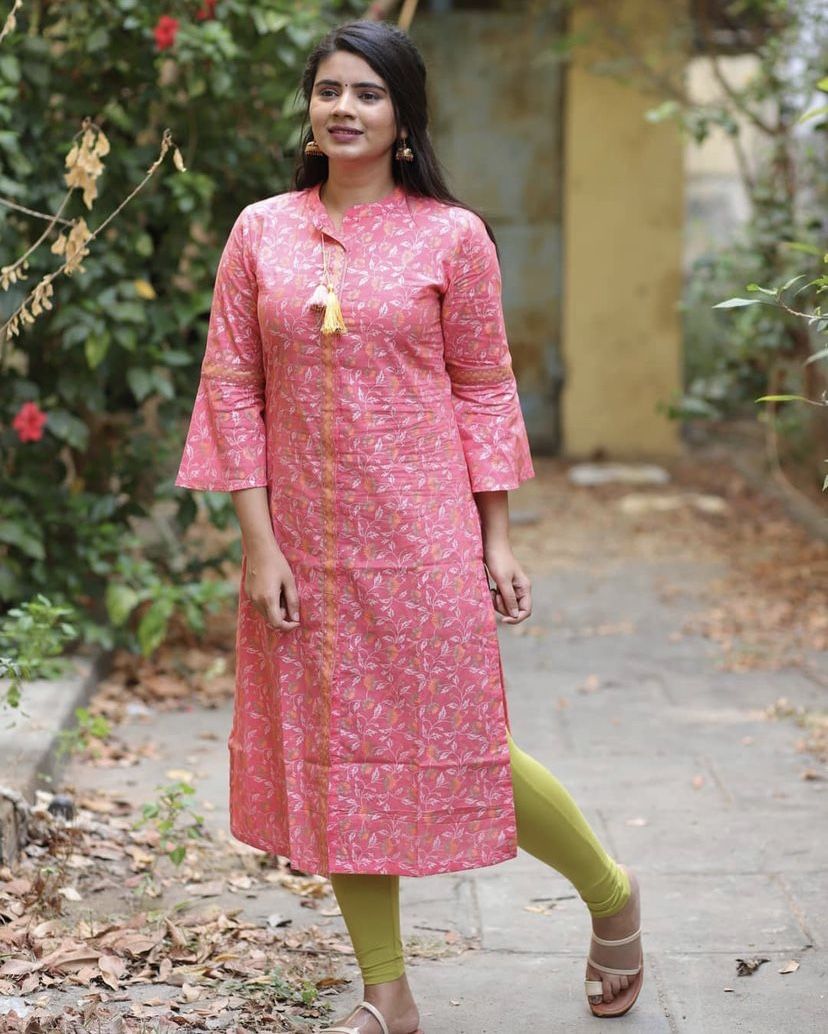
- **Fabric Physics:** The source garment appears to be a printed cotton or cotton-blend Kurta. It possesses a matte finish with medium weight—structure enough to hold the shape of the bell sleeves and center placket, but soft enough to wrinkle naturally at movement points. It should not reflect light specularly (like satin) but rather diffuse light evenly.
- **Key Features:** The central vertical gold/bronze trim and the hanging tassel tie at the neckline are critical anchor points. The floral/leaf print density must remain consistent. The 3/4 length sleeves feature a distinct "bell" flare with a specific gold border trim that must be preserved. The side slits (chaks) typical of this garment style must be implied if the generation extends below the hip.
PHASE 2: FIT & DRAPE SIMULATION
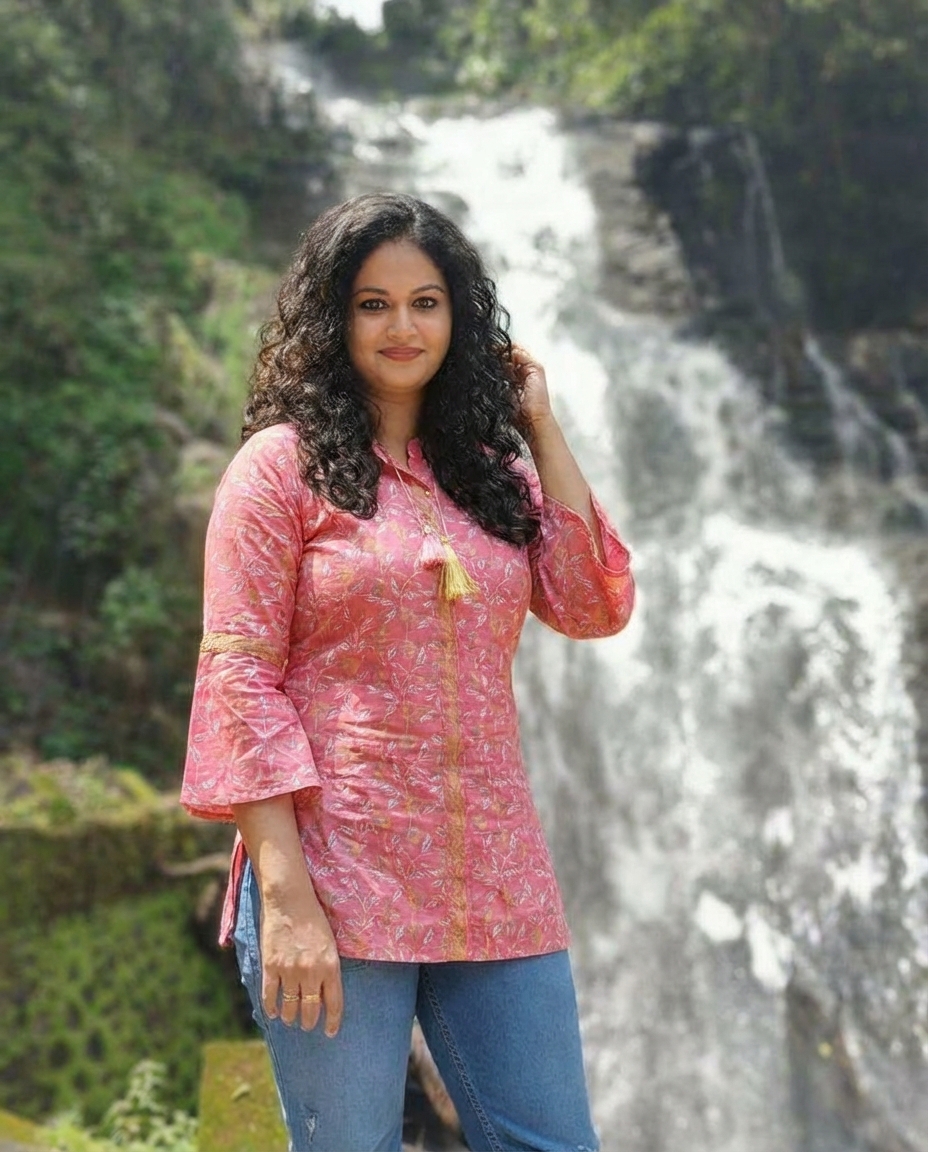
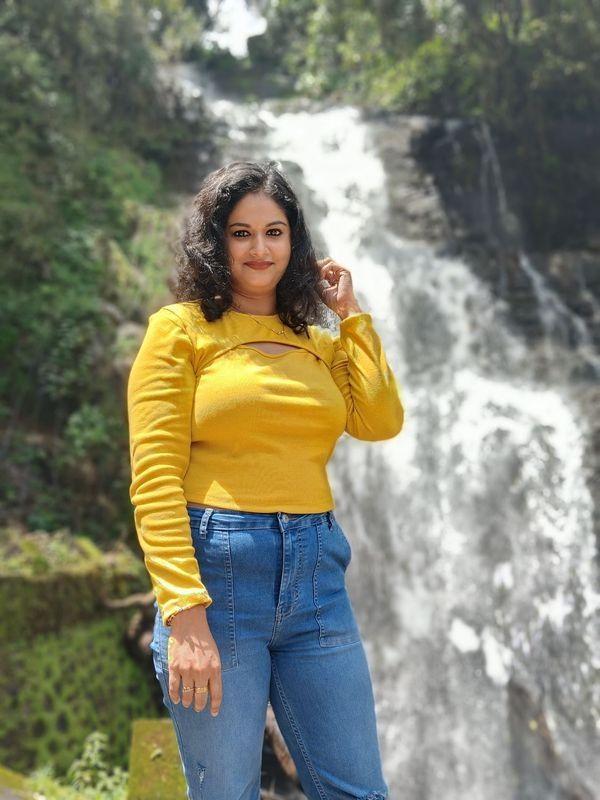
- **Body Mapping:** The target user is currently wearing a tight crop top; the new Kurta must replace this with a "relaxed fit" silhouette that skims over the torso rather than hugging it. Crucially, the Kurta is long; it must drape *over* the waistband of the user's jeans, obscuring the current midriff exposure. On the user's raised left arm, the fabric must bunch at the shoulder and the bell sleeve should slide down slightly toward the elbow due to gravity, exposing the forearm. On the right arm (hanging down), the sleeve should hang open in its natural bell shape.
- **Occlusion Handling:** The user has voluminous, curly dark hair cascading over both shoulders. The generated Kurta must be rendered purely as a background layer relative to the hair mask; not a single strand of hair should be covered by the pink fabric. The user's left hand is near the head, away from the torso, so hand occlusion is minimal, but the sleeve cuff must respect the wrist position.
PHASE 3: ENVIRONMENT & LIGHTING
- **Light Match:** The User Image features soft, diffused natural daylight (likely overcast or shaded by foliage) with a cool color temperature due to the waterfall and greenery. The light source is omnidirectional but slightly stronger from the top-front. The garment's shading must be soft (ambient occlusion) rather than hard-edged.
- **Color Calibration:** The source cloth image has warmer, potentially golden-hour lighting. The pink tone of the Kurta must be color-graded to a slightly cooler temperature to match the outdoor waterfall environment. The gold trim should not gleam excessively but appear metallic-matte to match the soft outdoor lighting conditions.
PHASE 4: IDENTITY PROTECTION
- **Facial Lock:** Absolute freeze on the user's facial structure (eyes, nose, mouth), skin tone, and the complex texture of her curly hair.
- **Body Integrity:** The simulation is strictly forbidden from slimming the user's bust or waist to match the source mannequin's frame. The Kurta must expand to accommodate the user's natural curvature while maintaining its own loose-fitting design logic. The user's visible lower body (jeans legs) must remain unchanged, only interacting with the hem of the new top where they overlap.