Thinking Process
PHASE 1: VISUAL DECONSTRUCTION
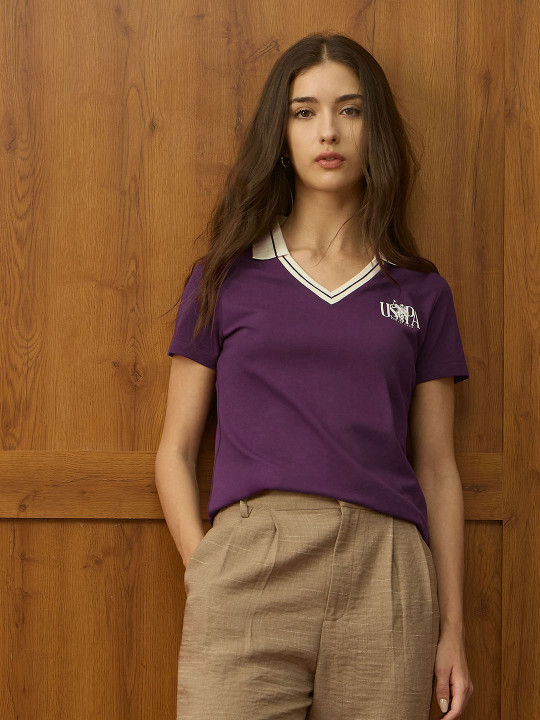
- **Fabric Physics:** The source garment is a cotton or cotton-blend pique polo shirt. It features a matte finish with a micro-textured surface that absorbs light rather than reflecting it. The simulation must avoid high-gloss specular highlights (like silk) and rigid creasing (like starched linen), opting instead for soft, medium-weight folds that follow gravity.
- **Key Features:** The structural integrity of the white V-neck collar with its specific stripe detailing must be preserved exactly. The "USPA" logo on the left chest is a critical anchor point and must deform naturally with the chest curvature without becoming illegible. The short sleeves and their hem stitching must be generated where the user's shoulders are currently bare.
PHASE 2: FIT & DRAPE SIMULATION
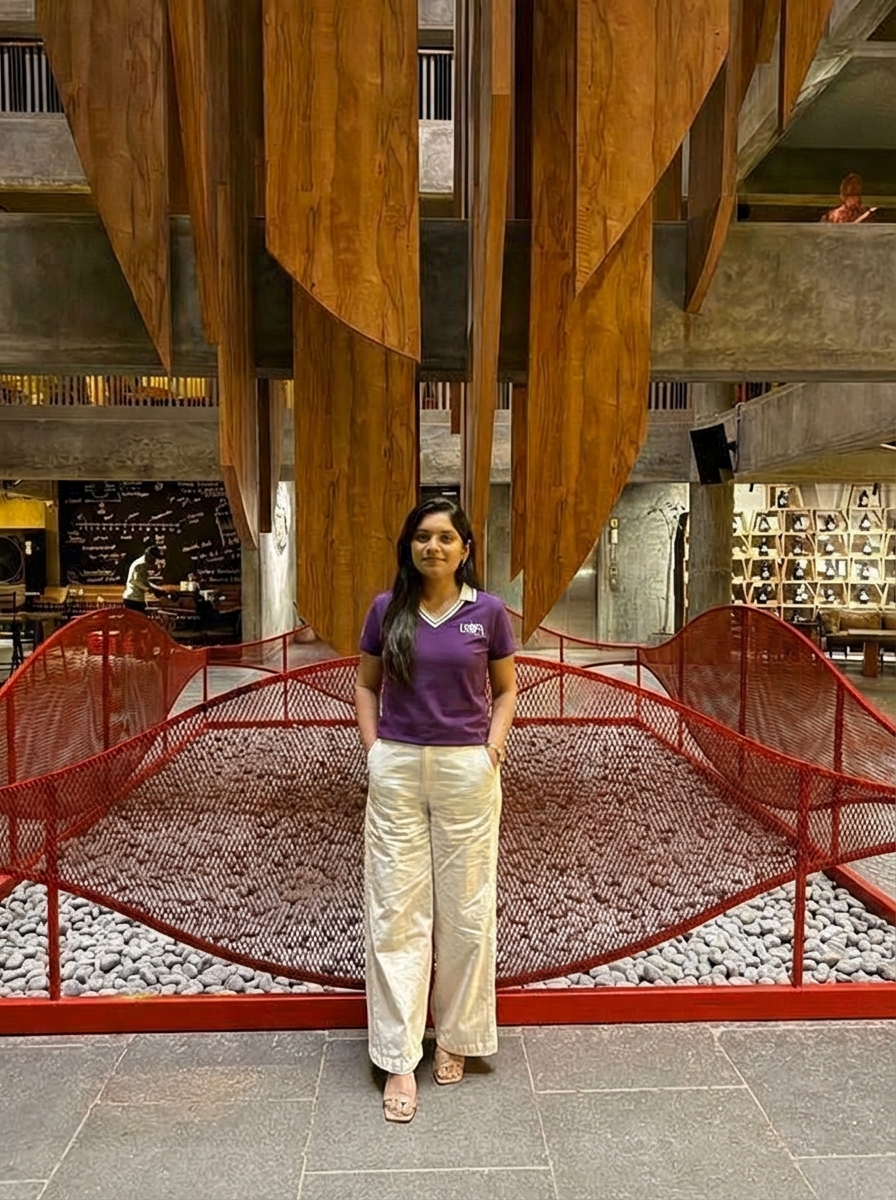
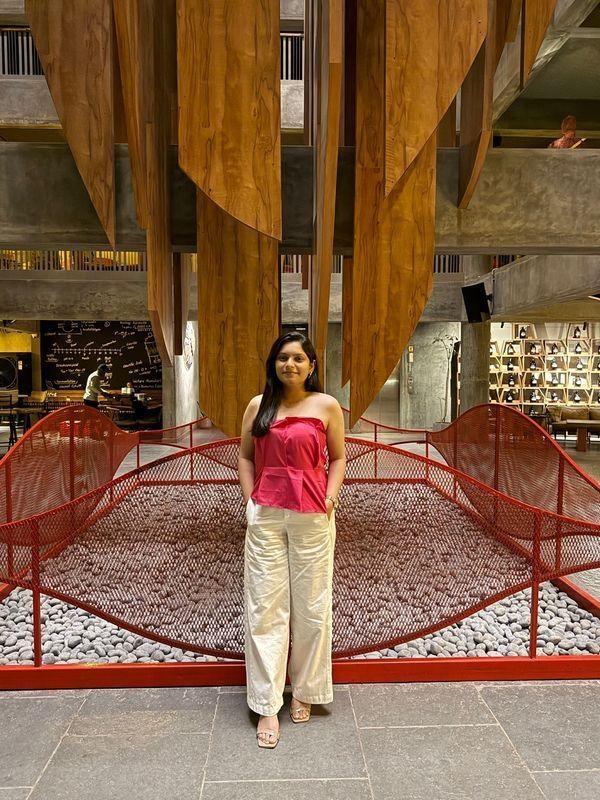
- **Body Mapping:** The user is currently wearing a strapless top; the simulation must generate realistic fabric coverage over the currently bare shoulders and upper chest (decolletage). The polo should settle naturally on the clavicle, with the collar standing slightly raised against the neck. The bodice should drape comfortably over the torso, following the slight curve of the waist, and terminate at the waistband of the user’s white trousers (simulating a gentle tuck or a hem resting just above the hips).
- **Occlusion Handling:** **CRITICAL:** The user has long dark hair draped over her right shoulder (viewer's left) and down the front of her torso. This hair mass must be segmented and layered *over* the new purple polo shirt. The fabric must appear to go *underneath* the hair, not replace it. The user's arms are relaxed; the sleeve openings must align with the upper arm circumference.
PHASE 3: ENVIRONMENT & LIGHTING
- **Light Match:** The target environment features diffuse, overhead ambient lighting with warm undertones (likely indoor artificial light mixed with daylight). The crisp studio lighting on the source garment must be softened. Shadows on the new shirt should cast downwards (under the bust and folds) to match the soft shadows seen on the wooden structures in the background.
- **Color Calibration:** The source purple is vibrant and high-contrast. It must be slightly desaturated and color-graded to match the slightly warmer, grainier aesthetic of the target photo. A slight noise layer should be applied to the garment texture to match the ISO/grain of the user's mobile photography.
PHASE 4: IDENTITY PROTECTION
- **Facial Lock:** The user’s face (eyes, nose, mouth), jawline, and skin tone on the face must remain frozen and untouched. The transition from the new collar to the neck skin must be seamless.
- **Body Integrity:** The user's natural shoulder width and torso volume must be maintained. Do not apply slimming filters or alter the silhouette of the white trousers. The skin tone on the visible forearms must remain consistent with the face.