Thinking Process
PHASE 1: VISUAL DECONSTRUCTION
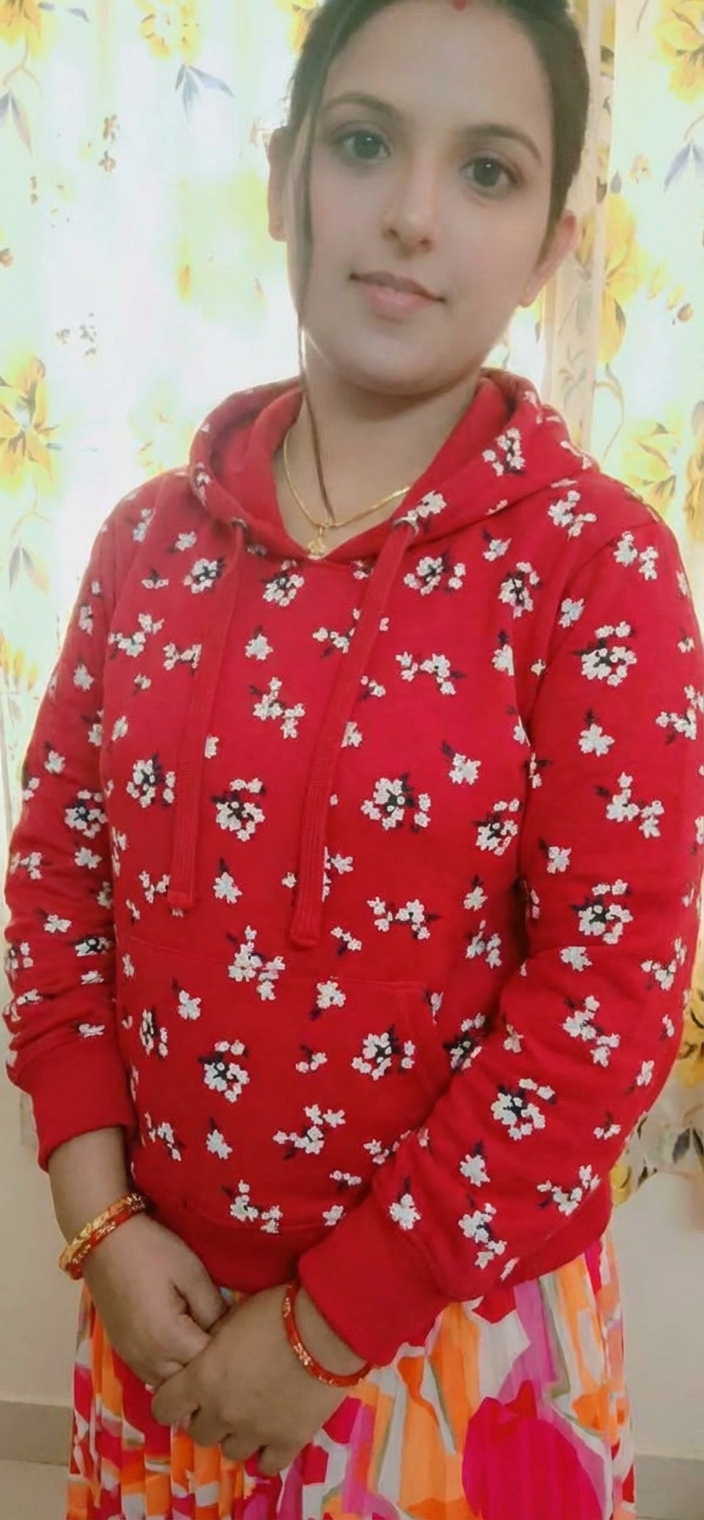
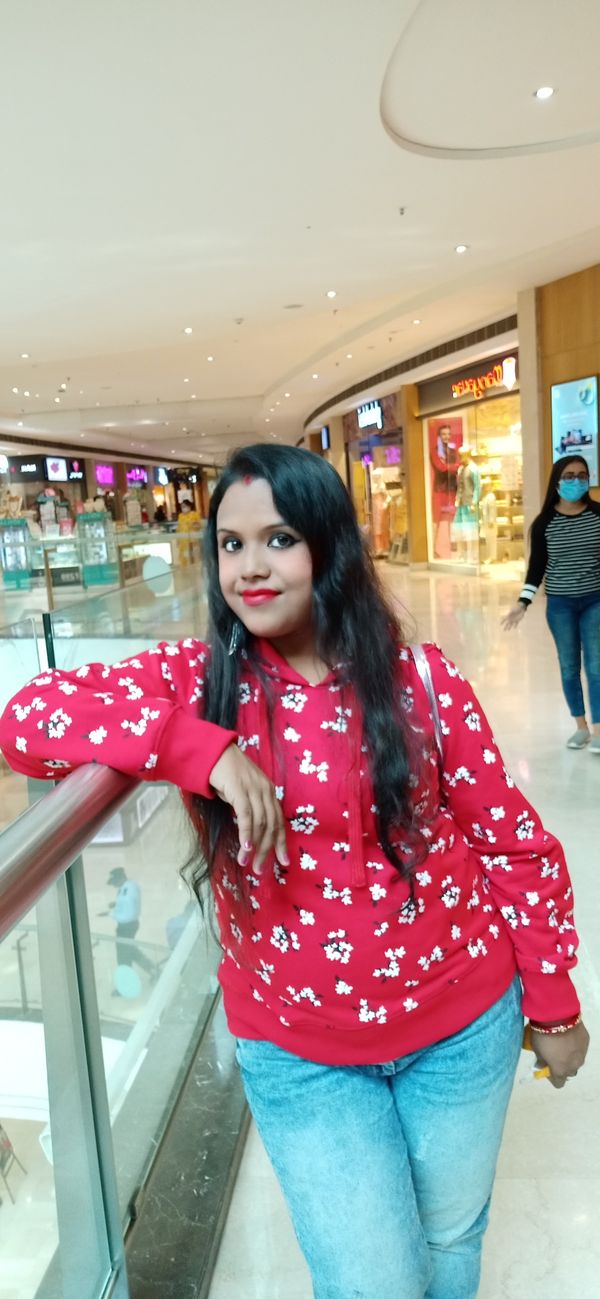
- **Fabric Physics:** The source garment is a cotton-blend fleece or jersey hoodie. It features a matte finish with low specular reflection. The physical simulation must account for medium-weight fabric stiffness—it should hold its volume away from the body rather than clinging like the user's current ribbed top. It requires "puff" simulation at the seams and cuffs.
- **Key Features:**
- **Hood Structure:** The volume of the hood bunched around the neck/trapezius area must be transferred, replacing the current open neckline.
- **Patterning:** The white floral scatter print on the red background must maintain its scale and not stretch unnaturally across the chest.
- **Trims:** The ribbed elastic cuffs (wrists) and ribbed hem (waist) must be preserved. The white flat drawstrings at the neck are a critical detail.
PHASE 2: FIT & DRAPE SIMULATION
- **Body Mapping:**
- **Torso:** The hoodie is a relaxed fit. It should sit wider than the user's current silhouette, creating negative space between the fabric and the user's waist. It should not look "bodycon."
- **Sleeves:** The user's arms are slightly bent. The fabric needs to generate tension folds at the inner elbow (antecubital fossa) and slight bunching above the wrist cuffs due to gravity and fabric excess.
- **Hemline:** The bottom ribbed hem should sit at the high-hip level, naturally overlapping the top of the user's colorful skirt.
- **Occlusion Handling:**
- **Hair:** The loose strands of hair framing the user's face and jawline must be segmented and layered *over* the new hoodie collar/shoulder area.
- **Necklace:** The user's gold chain is short; given the higher neckline of the hoodie, it will likely be occluded. If the hoodie neckline settles lower, the chain must be rendered *on top* of the fabric.
- **Wrists/Hands:** The cuffs must terminate before the hands, ensuring the user's bangles/bracelets are either properly covered or visible depending on sleeve length calibration (likely covering the wrist bracelets).
PHASE 3: ENVIRONMENT & LIGHTING
- **Light Match:** The user's environment features soft, diffused lighting coming primarily from the left (viewer's perspective), likely a window, creating soft shadows on the right side of the face and body. The source garment's harsh overhead mall lighting (top-down highlights) must be neutralized. New shadows must be cast on the right side of the torso and under the bust/hood area to match the target scene.
- **Color Calibration:** The source red is highly saturated and cool-toned. It must be slightly warmed and desaturated to match the softer, slightly yellowish indoor ambient light of the user's photo. The white flower print needs to reflect the ambient room tone, not pure white.
PHASE 4: IDENTITY PROTECTION
- **Facial Lock:** Absolute freeze on the facial region from the chin up, including the jawline contour, ears, and the specific hairline shape.
- **Body Integrity:** Do not slim or alter the user's underlying skeletal frame. The hoodie adds bulk; this volumetric increase is acceptable and desired. Do not warp the user's hips to match the width of the source image mannequin; fit the garment to the user's existing proportions.