Thinking Process
PHASE 1: VISUAL DECONSTRUCTION
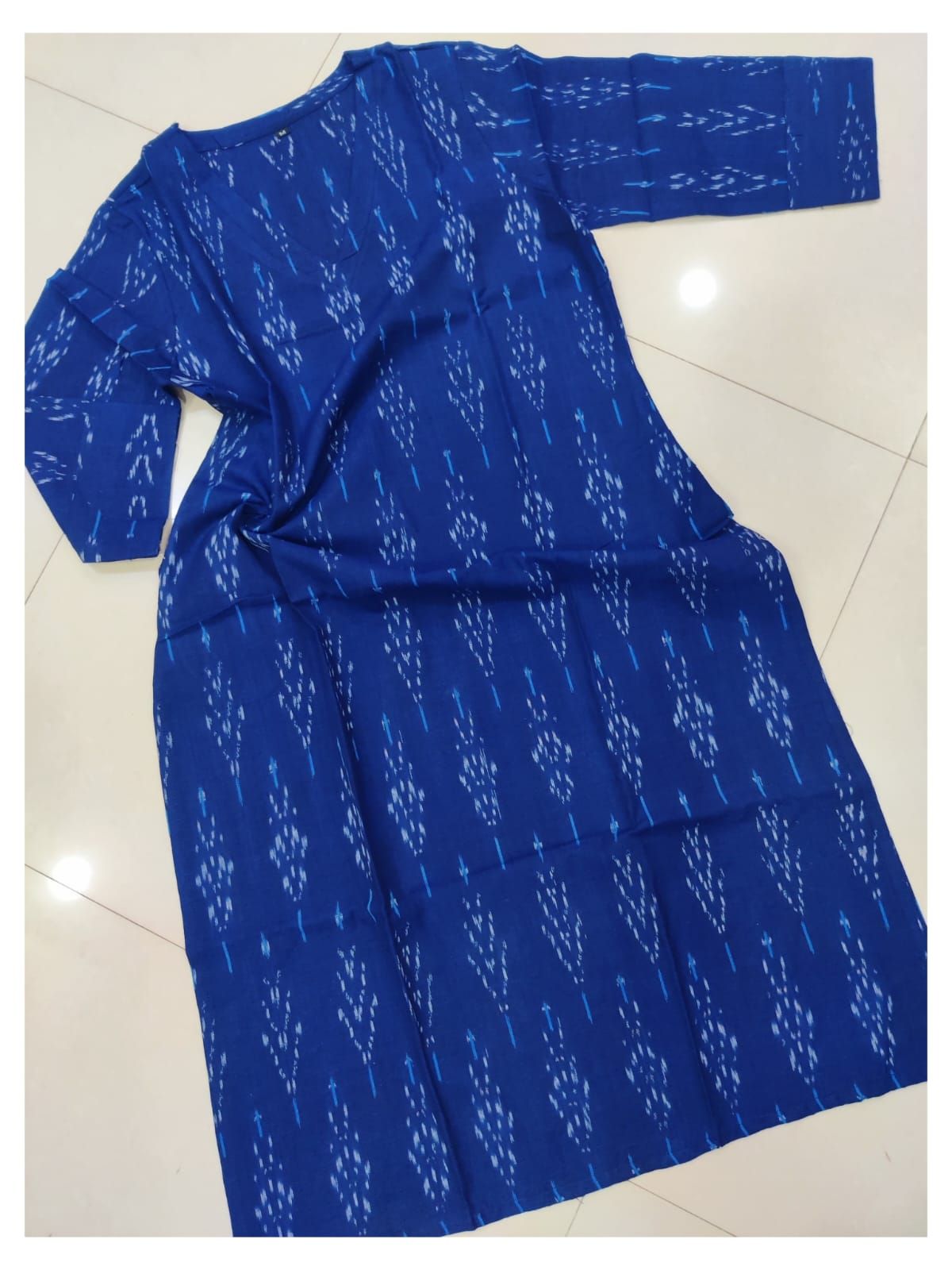
- **Fabric Physics:** The source garment appears to be a woven cotton or cotton-blend Kurta with an Ikat-style print. The material has a matte finish with zero specularity (no shine). It is medium-weight, meaning it will hold structured folds rather than draping like liquid silk, but it is soft enough to crease at stress points. It should not reflect light sharply; highlights should be diffused.
- **Key Features:** The distinctive white/light blue vertical Ikat arrow patterns must remain aligned vertically relative to gravity. The V-neck collar structure needs to be preserved. The long sleeves (currently folded in the flat lay) must be virtually unfolded to cover the user's arms. The deep indigo blue hue is the primary color identifier.
PHASE 2: FIT & DRAPE SIMULATION
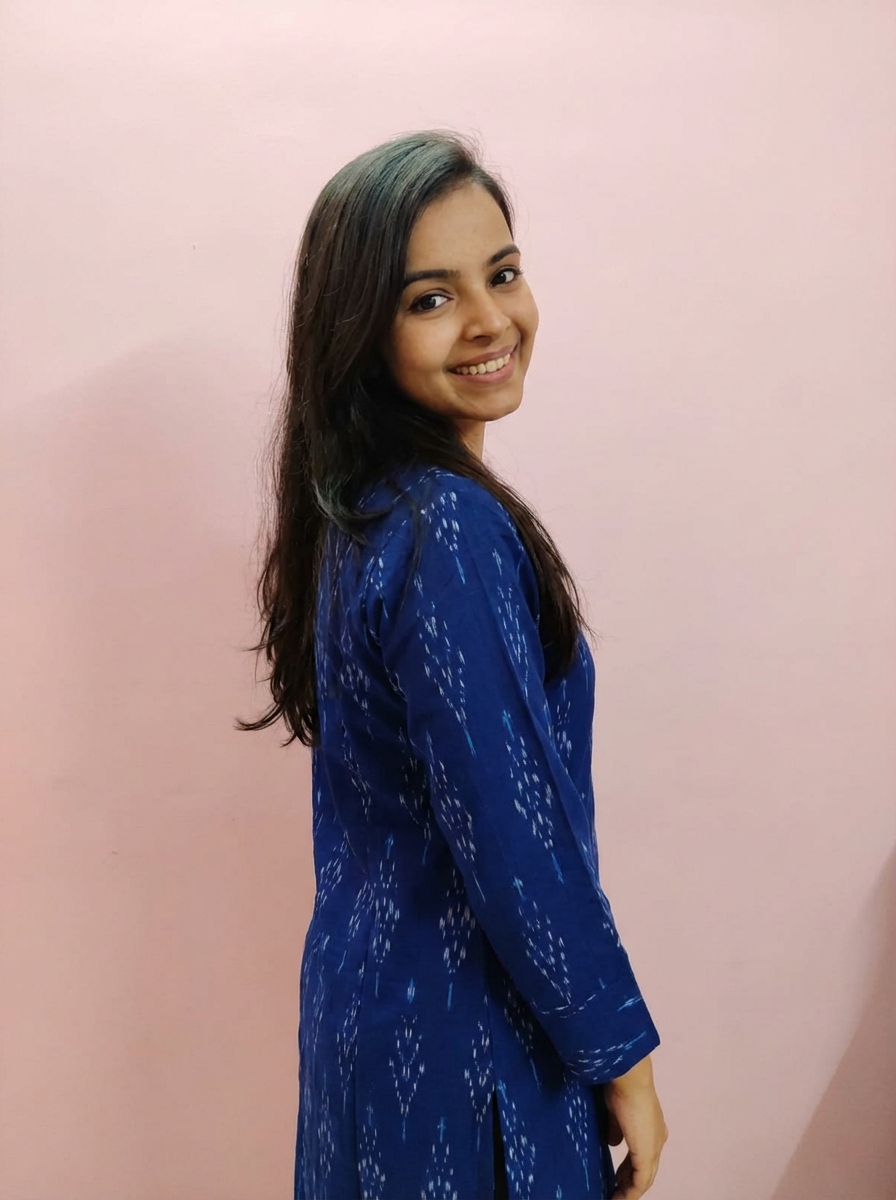
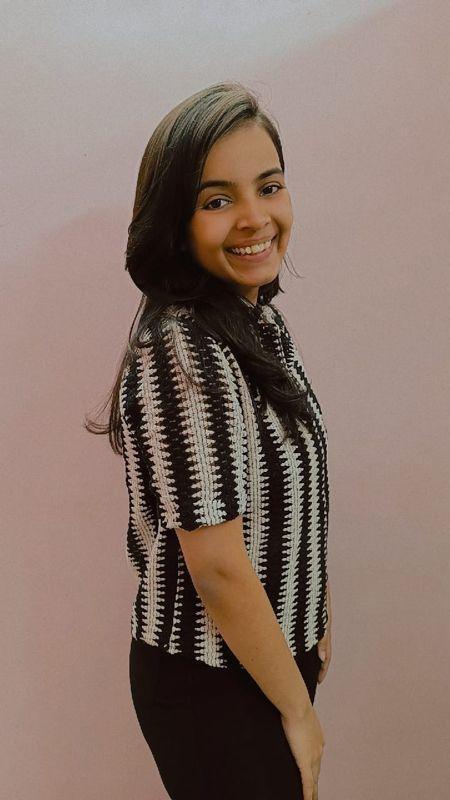
- **Body Mapping:** The user is in a side-profile/three-quarter back pose. The flat-lay Kurta must be virtually 3D-wrapped to account for this rotation. The garment must flow loosely over the torso, extending past the waistline of the current crop top (as Kurtas are long tunics). The fabric needs to show diagonal tension wrinkles across the back due to the user's spinal twist. The long sleeve must bunch slightly at the inner elbow where the user's arm is bent.
- **Occlusion Handling:** The user's long hair acts as a critical foreground layer. It drapes over the left shoulder and down the back; the new blue fabric must be generated *underneath* this hair layer. The user's left arm is pressed against the torso; ambient occlusion shadows must be generated where the sleeve touches the side of the body to create depth.
PHASE 3: ENVIRONMENT & LIGHTING
- **Light Match:** The user image features soft, warm, diffused indoor lighting (likely from a ceiling fixture in front of her), creating a pinkish/warm cast. The source cloth was photographed under cool, harsh, overhead fluorescent light on a reflective tile floor. The blue Kurta must be color-graded to remove the cool tint and adopt the warm ambient occlusion of the user's room. Shadows should be soft and fall to the right/back of the user.
- **Color Calibration:** The stark white patterns on the Kurta must be slightly warmed (shifted towards cream) to match the white balance of the target environment. The deep blue must be desaturated slightly to match the noise/grain level of the user's photo to avoid looking "pasted on."
PHASE 4: IDENTITY PROTECTION
- **Facial Lock:** The user's facial structure, smile, teeth, and jawline must be strictly frozen using a hard mask. The hairline and ear visibility must remain unchanged.
- **Body Integrity:** The simulation is strictly forbidden from warping the user's underlying anatomy. The arm thickness and shoulder width must remain constant. The Kurta is a loose garment; it should add volume to the silhouette, not slimming or contouring the user's body artificially.