Thinking Process
PHASE 1: VISUAL DECONSTRUCTION
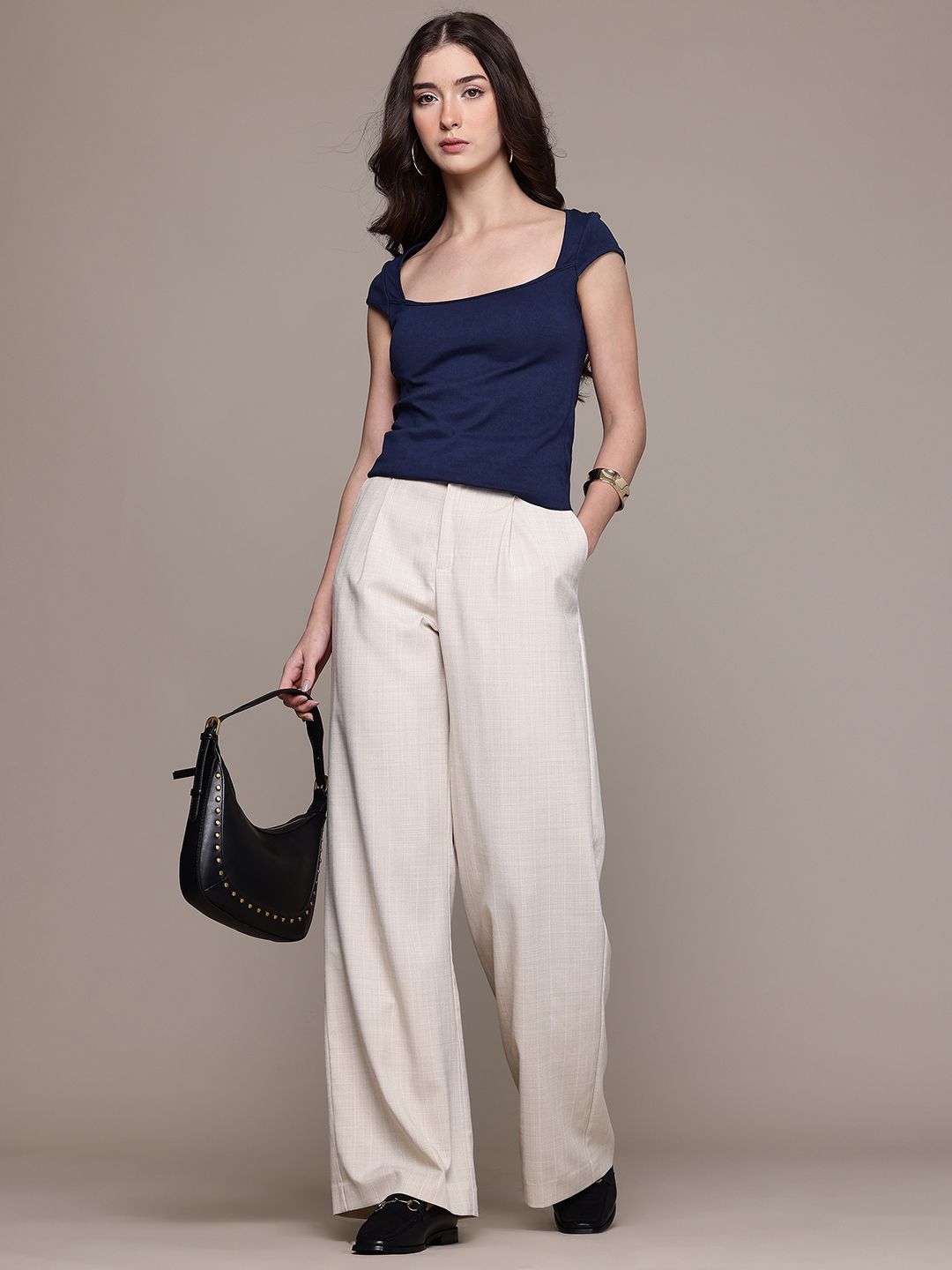
- **Fabric Physics:** The source garment is a navy blue knit or jersey blend with a matte finish. It possesses low specular reflection (does not shine) and high light absorption. The physics engine must simulate a medium-weight stretch fabric with soft pliability, allowing it to contour to the body without rigid folding.
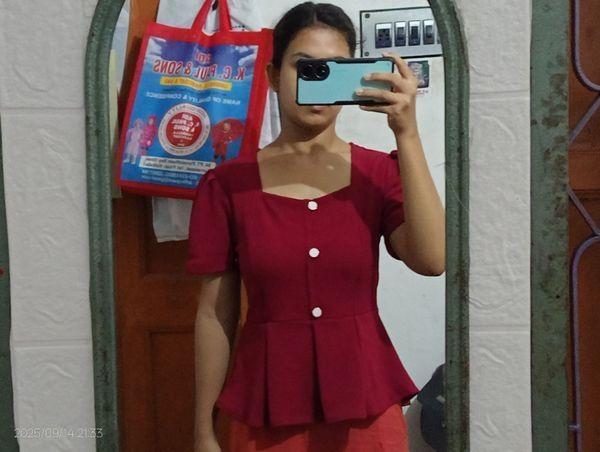
- **Key Features:** The distinctive square neckline is the primary anchor point. The cap sleeves (short, slight overlap on the shoulder) must be rendered accurately, replacing the user's current puffed sleeves. The hemline is a standard waist-length cut, which is significantly shorter and straighter than the user's current peplum/flared silhouette.
PHASE 2: FIT & DRAPE SIMULATION
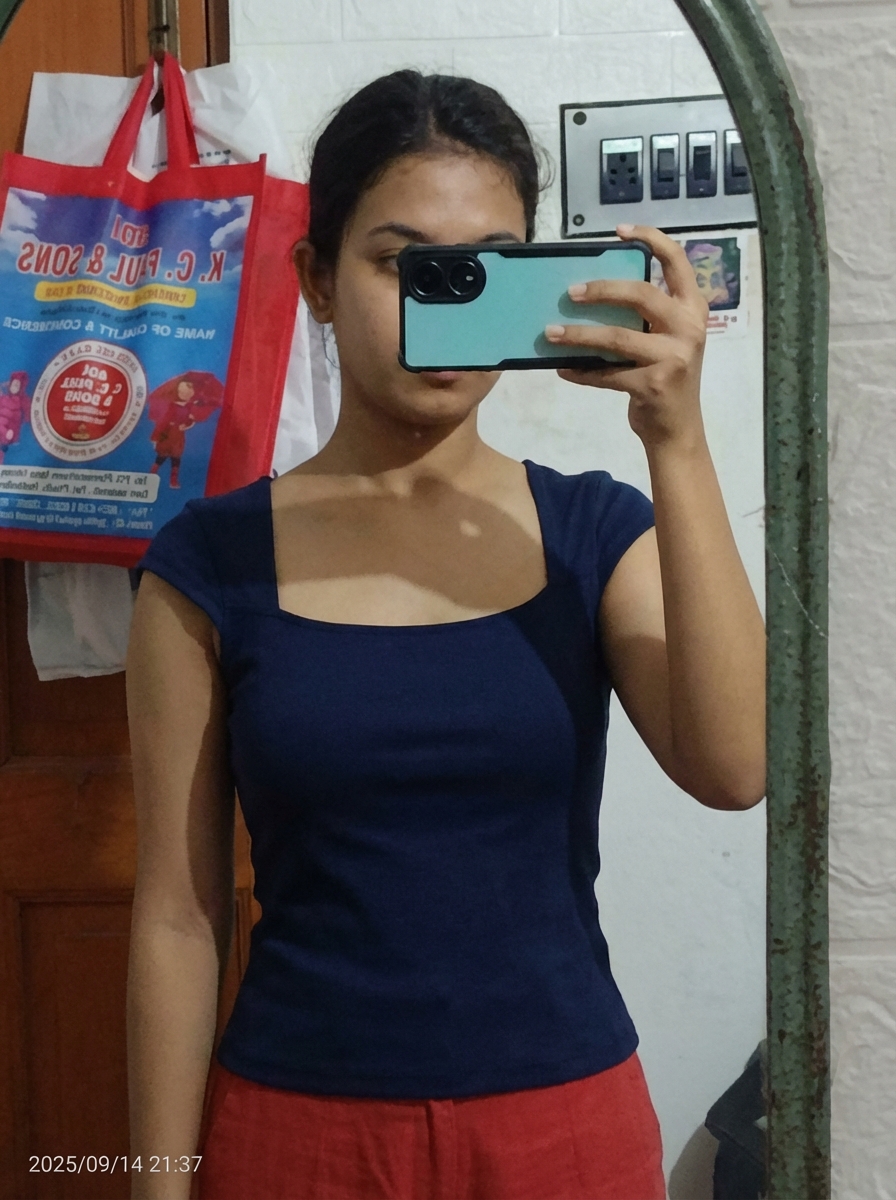
- **Body Mapping:** Due to the user's raised right arm (holding the phone), the garment mesh must exhibit tension lines pulling diagonally from the right armpit across the chest. The fabric on the left side (arm down) should hang naturally with vertical gravity. The waist area must be fitted but relaxed, eliminating the artificial volume of the user's current peplum top to reveal the true hip silhouette.
- **Occlusion Handling:** The smartphone and the user's right hand are the primary foreground layers; the new garment must generally render *behind* these elements (depth sorting). The junction where the red trousers meet the new top must be re-calculated, as the new top is shorter; the simulation may need to impaint or estimate the waistband of the trousers if the new hem rides higher.
PHASE 3: ENVIRONMENT & LIGHTING
- **Light Match:** The user environment features dim, warm, indoor artificial lighting (likely tungsten) casting soft, diffused shadows. The studio-lit source garment must be significantly darkened (exposure reduction) and subjected to a "warm" color temperature shift to match the ambient yellow hues of the room. Shadows must be generated under the bust and along the user's left side to match the scene's directionality.
- **Color Calibration:** Apply chromatic adaptation to the navy blue; it should appear nearly black or deep charcoal in this lighting condition. Introduce ISO grain/noise to the high-resolution source texture to match the lower-fidelity, grainy quality of the mirror selfie.
PHASE 4: IDENTITY PROTECTION
- **Facial Lock:** The user's visible forehead, hairline, ears, and neck structure must remain absolutely pixel-frozen. The area obscured by the phone must not be hallucinated or altered.
- **Body Integrity:** Strictly prohibit warping of the user's arm width, shoulder span, or waistline to match the source model. The garment must conform to the user's existing voxel volume, not the source model's measurements. Skin tone on the arms and exposed chest area must remain untouched.