Thinking Process
PHASE 1: VISUAL DECONSTRUCTION
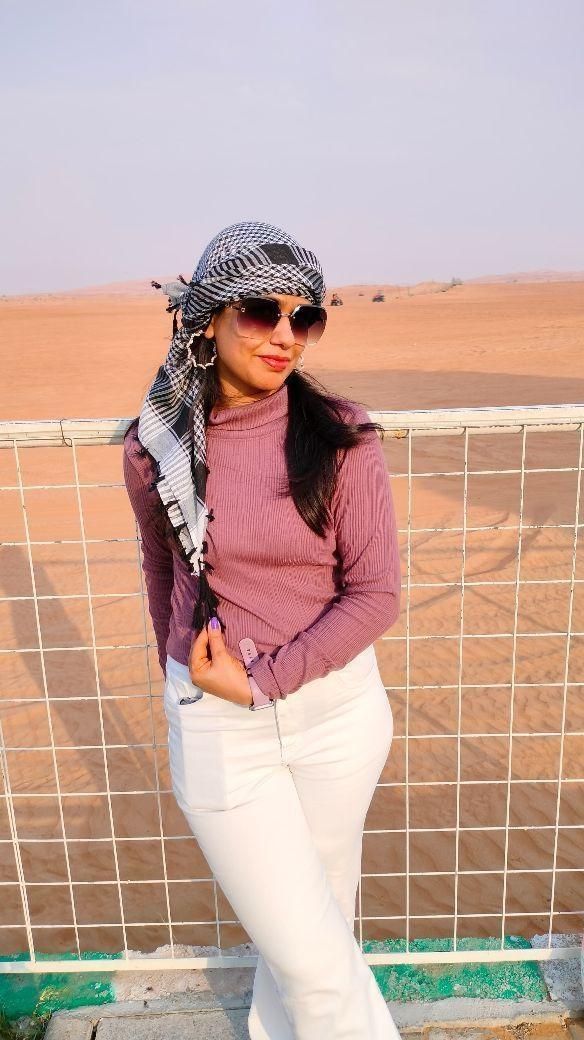
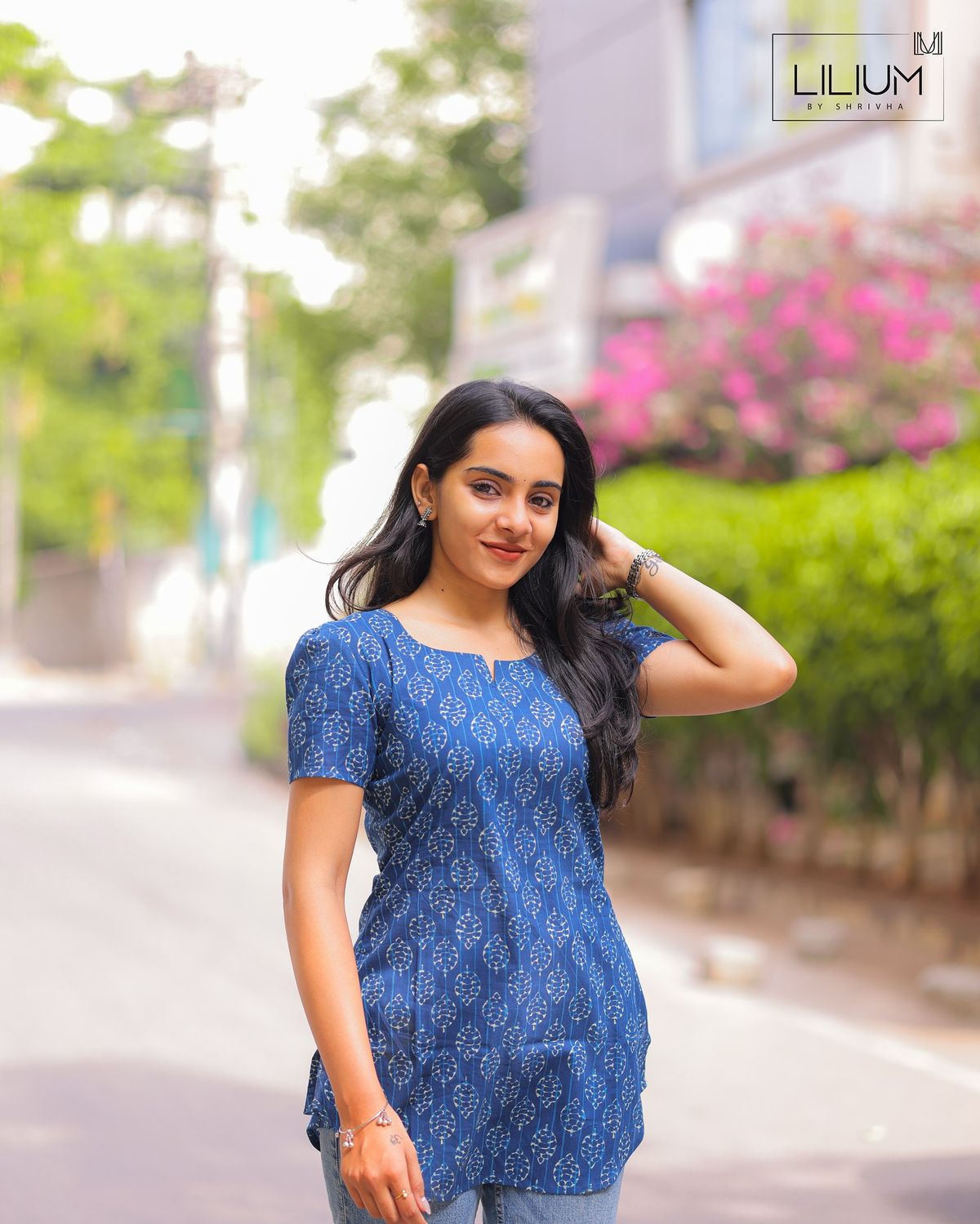
- **Fabric Physics:** The source garment is a woven cotton or cotton-blend kurti. Unlike the user's current ribbed knit (which relies on stretch and tension), the target fabric is non-elastic with a matte finish. It possesses medium stiffness, meaning it will create angular, crisp folds rather than clinging to the skin. Specularity should be low; light should diffuse across the surface rather than shine.
- **Key Features:** The specific indigo blue hue with white block-print leaf motifs and vertical pinstripes must be preserved. The neckline (round with a small central V-notch) and the short sleeve length (ending at the mid-bicep) are critical structural elements. The relaxed fit through the waist must replace the current tight silhouette.
PHASE 2: FIT & DRAPE SIMULATION
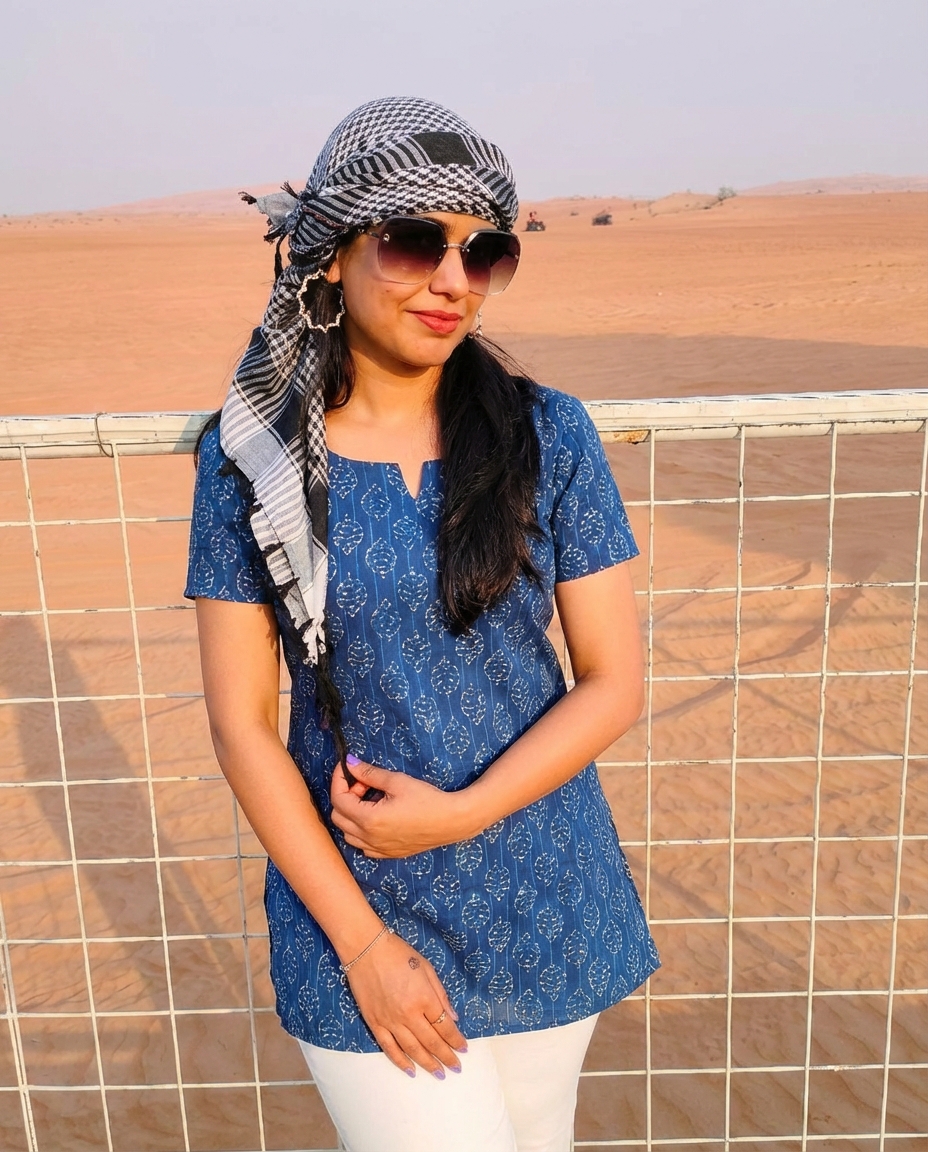
- **Body Mapping:** The garment must transition from the user's current form-fitting silhouette to a relaxed tunic fit. The fabric should hang vertically from the shoulders and bust, skimming past the waist rather than hugging it. Given the user's slight hip-cocked stance, the hemline should drape naturally, likely extending over the top of the white pants (tunic length) rather than sitting at the waistline like the current top.
- **Occlusion Handling:** This is a high-complexity occlusion scenario.
1. **The Scarf/Keffiyeh:** The scarf draping down the user's right shoulder (viewer's left) and the tassels must be segmented and layered *strictly on top* of the new blue garment.
2. **Hair:** The dark hair resting on the left shoulder/chest (viewer's right) must drape *over* the new fabric.
3. **Right Hand:** The user's right hand is positioned at the waist. The new garment (being a longer tunic) would naturally fall behind this hand, or the hand would press into the fabric. The hand must mask out the garment data to remain visible.
PHASE 3: ENVIRONMENT & LIGHTING
- **Light Match:** The user is in a high-intensity outdoor desert environment with hard, direct sunlight coming from the upper right. The new garment must shed its original soft, diffused urban lighting. Deep, high-contrast cast shadows must be generated within the fabric folds and under the bust to match the harshness of the desert sun.
- **Color Calibration:** The source garment is cool-toned (indigo/white). The target environment is dominated by warm, orange/sandy reflected light. A warm global illumination pass must be applied to the blue fabric to simulate "color bleeding" from the sand, preventing the blue from looking artificially cool or pasted on.
PHASE 4: IDENTITY PROTECTION
- **Facial Lock:** The entire head region, including the sunglasses, nose, mouth, chin, and the wrapping of the headscarf, is a strictly frozen zone. No pixel alteration is permitted above the neck seam.
- **Body Integrity:** The user's arm volume and shoulder width must remain constant. Do not slim the torso to match the model in the cloth image; fit the cloth to the user's existing biometric measurements. Since the target garment has short sleeves and the user wears long sleeves, skin tone generation (inpainting) is required for the forearms, matching the existing skin tone on the user's face.