Thinking Process
PHASE 1: VISUAL DECONSTRUCTION
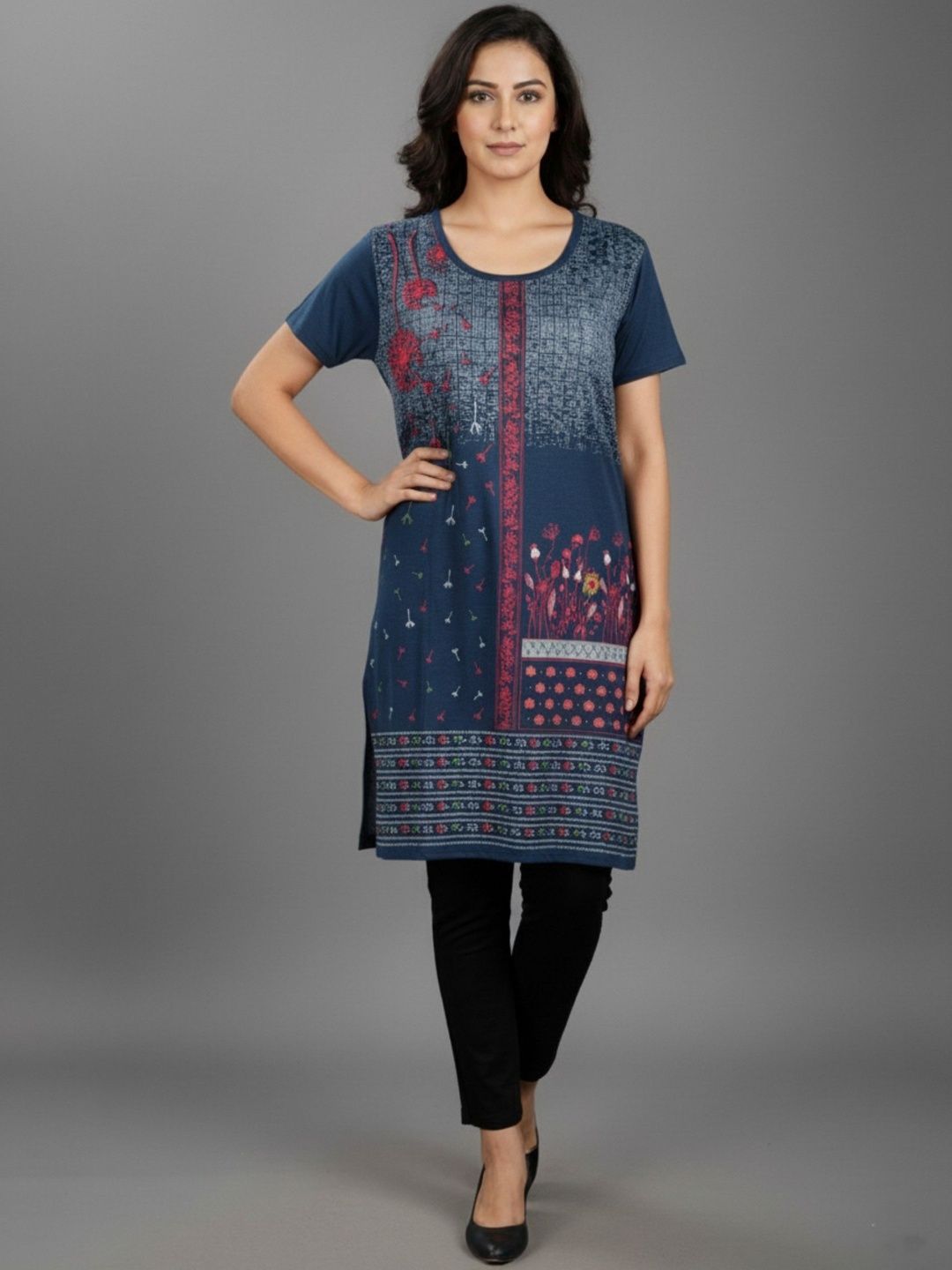
- **Fabric Physics:** The source garment appears to be a cotton or cotton-blend Kurti. It possesses a matte finish with medium-weight stiffness. Unlike the user's current knit t-shirt which clings, the Kurti has a structured drape that holds its shape away from the body slightly. It should not reflect high-specular highlights but rather diffuse the mixed ambient lighting.
- **Key Features:**
- **Central Panel:** The vertical red geometric strip with the floral overlay must remain perfectly centered on the user's sternum.
- **Hemline Border:** The horizontal patterned band at the bottom is critical; it must not be warped excessively.
- **Sleeve Construction:** Standard short sleeves, not cap sleeves. They should sit looser on the user's arm than the current red t-shirt.
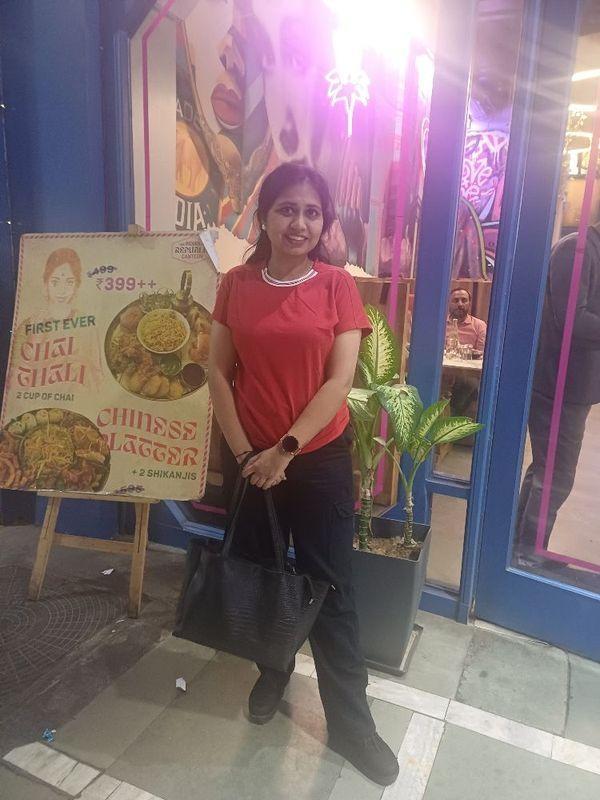
- **Neckline:** Simple round neck which must replace the white-rimmed crew neck of the source image entirely.
PHASE 2: FIT & DRAPE SIMULATION
- **Body Mapping:**
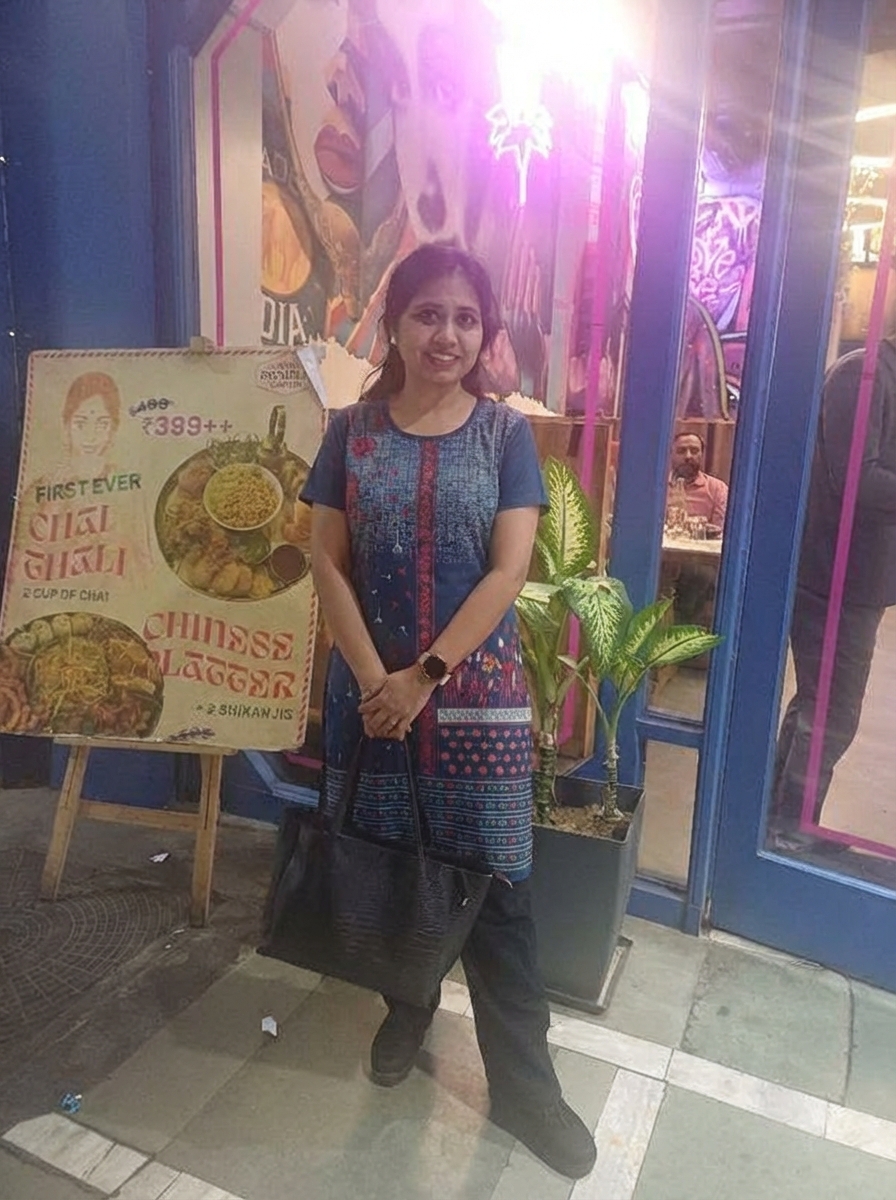
- **Length Extension:** The source garment is a tunic/kurti (mid-thigh length), whereas the user is wearing a tucked-in/short top. The simulation must generate new fabric geometry extending below the waistline, covering the hips and upper thigh area of the black trousers.
- **Gravity & Posture:** The user is leaning slightly back on their right leg. The Kurti should hang vertically due to gravity, meaning the hemline will not be parallel to the belt line but perpendicular to the ground.
- **Fabric Tension:** There should be minimal tension across the chest compared to the current t-shirt. The fabric should fall straight from the bust apex rather than curving under it.
- **Occlusion Handling:**
- **Hands & Wrists:** The user's hands are clasped low in front. The Kurti is long enough that the hemline will likely intersect with the wrists/forearms. The fabric must appear to flow *behind* the hands and wrists.
- **Tote Bag:** The black tote bag is held against the legs. The bottom hem of the Kurti must settle *behind* the bag handles and the top edge of the bag.
- **Hair:** The user's hair falls behind the shoulders, but the neckline simulation must ensure no hair strands are clipped by the new fabric collar.
PHASE 3: ENVIRONMENT & LIGHTING
- **Light Match:**
- **Complex Illumination:** The user is in a mixed-lighting environment (nighttime urban/cafe). There is a strong purple/pink neon cast from the background signage and warm artificial tungsten light from the front.
- **Shadow Mapping:** The garment needs to accept soft, diffuse shadows. The deepest shadows should occur under the bust and where the fabric meets the wrists/bag.
- **Color Calibration:**
- The "Studio Blue" of the source garment must be desaturated slightly and tinted with the ambient pink/purple hues of the scene. If left perfectly blue, it will look pasted on. The red panel on the Kurti should shift slightly towards magenta to match the lighting temperature.
PHASE 4: IDENTITY PROTECTION
- **Facial Lock:** The user's face, neck area above the clavicle, and hair must be completely frozen. The smart watch on the left wrist must remain visible and un-obscured.
- **Body Integrity:** Strictly maintain the user's natural shoulder width and arm volume. Do not warp the user's torso to match the slimmer silhouette of the model in the cloth image. The Kurti must expand to fit the user, not the user shrink to fit the Kurti.