Thinking Process
PHASE 1: VISUAL DECONSTRUCTION
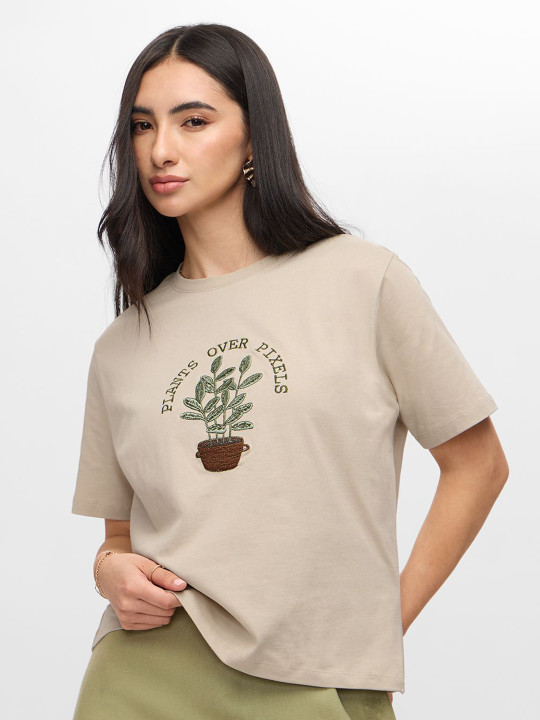
- **Fabric Physics:** The source garment is a medium-weight cotton jersey. It possesses a matte finish with high light absorption and virtually no specular highlights. The simulation must treat the fabric as semi-structured but pliable; it should hold a "boxy" shape around the torso rather than clinging tightly like spandex or flowing fluidly like silk.
- **Key Features:** The central embroidery ("PLANTS OVER PIXELS" text arc and potted plant graphic) is the primary focal point and must remain centered on the chest without distortion. The crew neck ribbing and the visible double-stitch hemline on the sleeves and waist are essential texture details to preserve.
PHASE 2: FIT & DRAPE SIMULATION
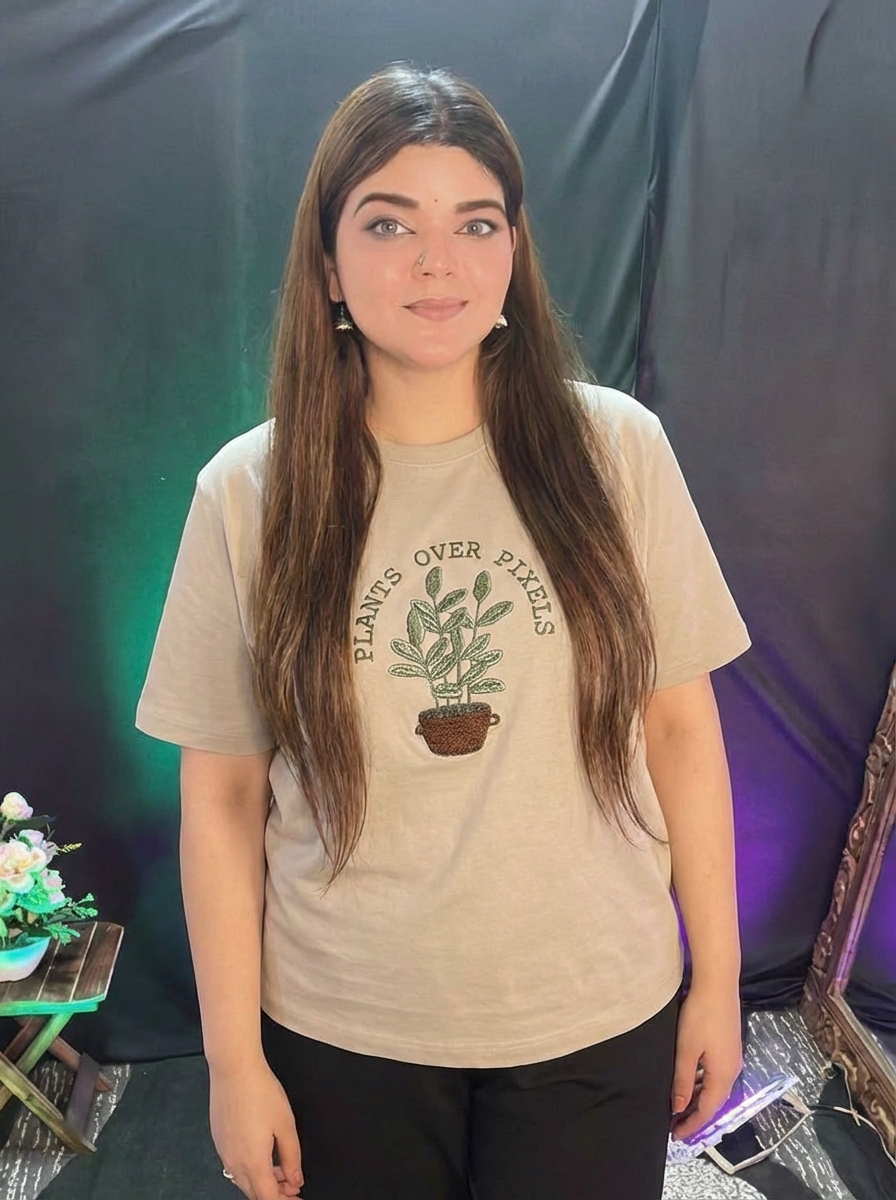
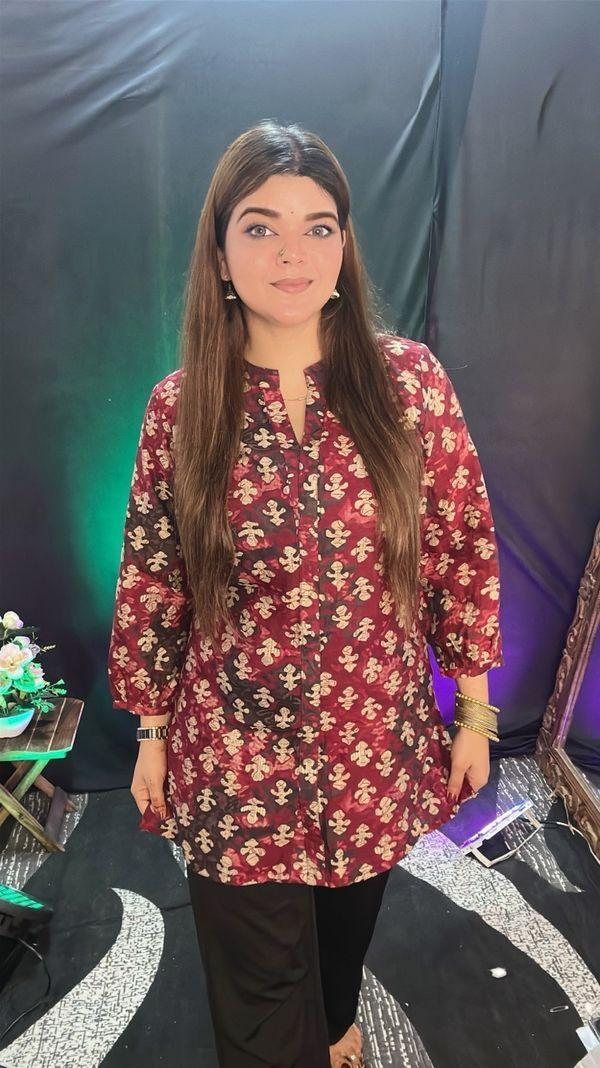
- **Body Mapping:** The source is a relaxed-fit T-shirt, whereas the user is currently wearing a long tunic (kurti). The new garment must hang loosely from the shoulders, draping vertically over the bust line with minimal gathering at the waist. Crucially, the system must generate skin for the user's forearms, as the source has short sleeves while the user's current garment has ¾ length sleeves. The hem of the new T-shirt will end at the hip, requiring the simulation to inpaint/generate the upper portion of the black trousers which are currently covered by the user's long tunic.
- **Occlusion Handling:** Severe occlusion detected regarding the hair. The user has long, thick hair cascading over both shoulders and covering the upper chest/clavicle area. The "Plants over Pixels" graphic and the shoulder seams of the new T-shirt must be rendered *underneath* the hair layer. The hands are positioned low; since the new shirt is shorter, the hands will likely no longer touch the hem, requiring clean separation from the garment physics.
PHASE 3: ENVIRONMENT & LIGHTING
- **Light Match:** The user is in a studio setting with a cool-toned, diffuse light source coming from the front-left (indicated by the highlight on the forehead and nose). The beige T-shirt must be relit to match this cool, slightly dimmer environment, casting soft contact shadows where the sleeves touch the arms and where the hair rests on the fabric.
- **Color Calibration:** The source image has warm, bright lighting. The beige tone of the T-shirt must be slightly desaturated and shifted towards a cooler temperature to blend realistically with the user's darker, cool-toned background and lighting setup.
PHASE 4: IDENTITY PROTECTION
- **Facial Lock:** The user's facial structure (eyes, nose, mouth, jawline) and specific makeup look must be strictly frozen.
- **Body Integrity:** The user's shoulder width, bust size, and arm thickness must remain unaltered. No "slimming" effects are permitted. The hair volume and texture are critical to the user's identity in this image and must remain pixel-perfectly preserved over the new garment.