Thinking Process
PHASE 1: VISUAL DECONSTRUCTION
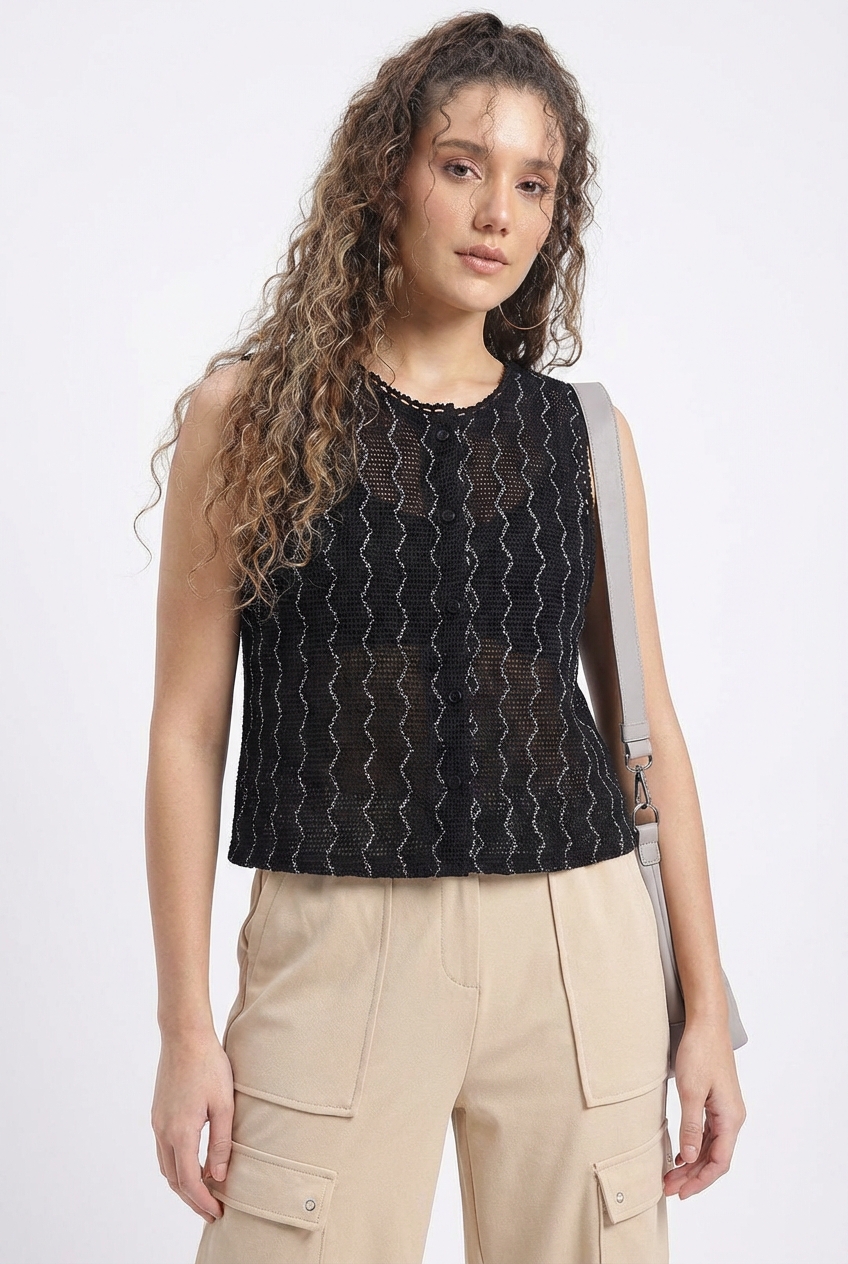
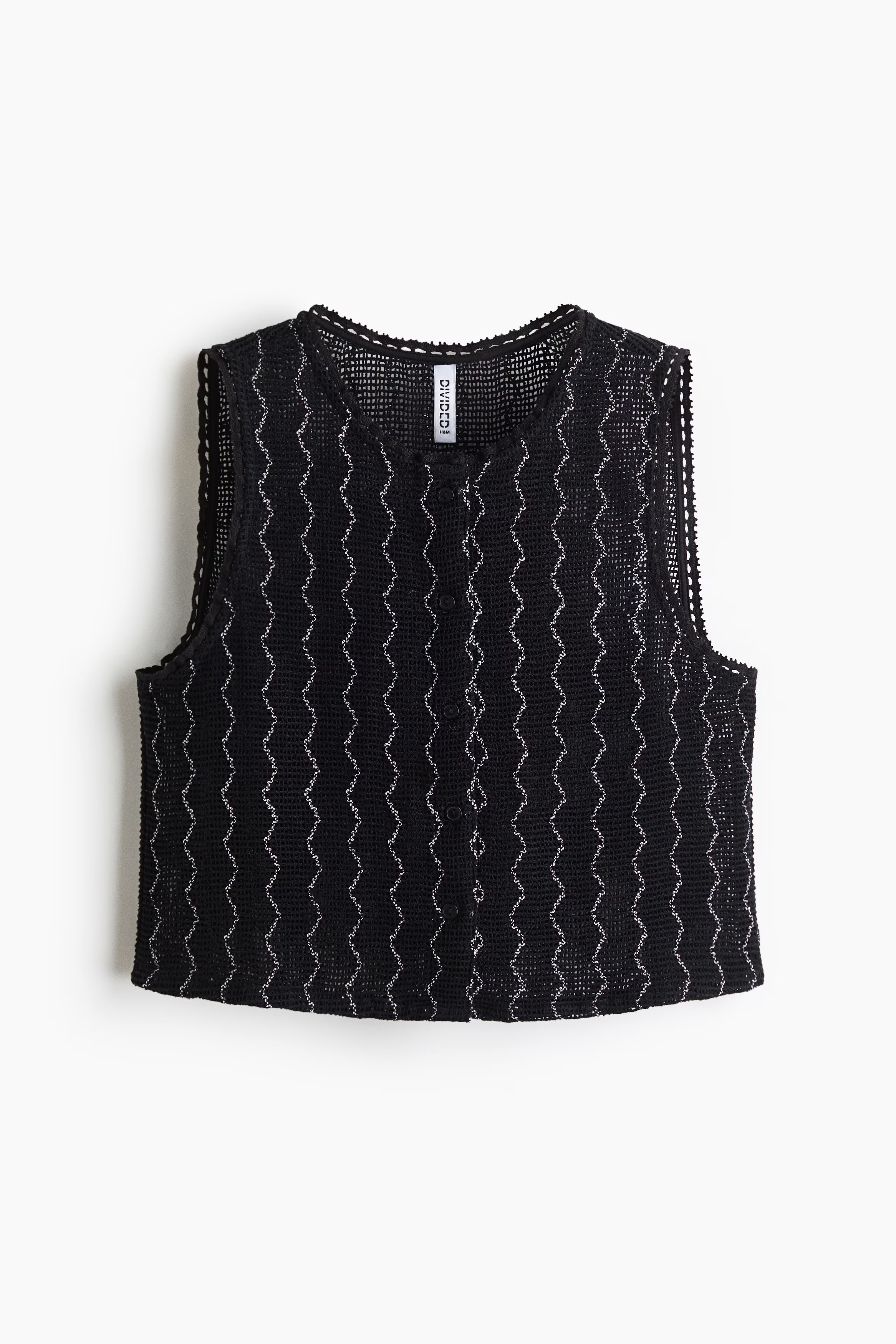
- **Fabric Physics:** The source garment is a structured open-knit or crochet mesh (likely cotton-acrylic blend). It possesses high textural friction and low specular reflection (matte finish). The simulation must account for the "holes" in the knit pattern; depending on the rendering density, the user's skin tone should be subtly perceptible through the larger mesh gaps, or at minimum, deep ambient occlusion is required to represent the weave depth.
- **Key Features:**
- The vertical white wavy/zigzag embroidery patterns must remain continuous and align vertically, deforming only with body curvature.
- The scalloped crochet trim along the armholes and neckline must be preserved with sharp alpha masking.
- The central button placket must align with the user's sternum.
- The "DIVIDED" tag at the inner neck should be removed/obscured as it is inside the garment.
PHASE 2: FIT & DRAPE SIMULATION
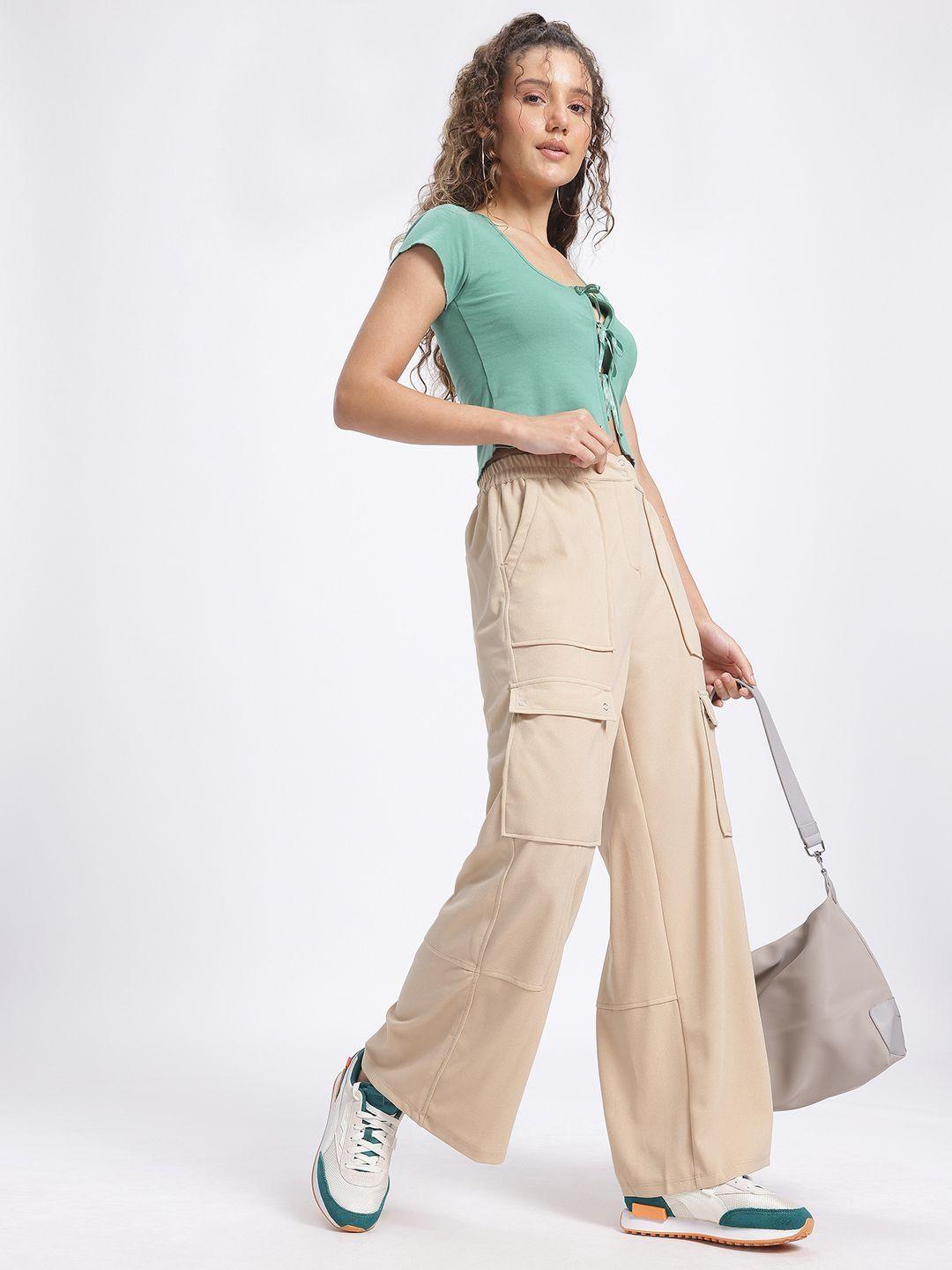
- **Body Mapping:** Unlike the user's current form-fitting green jersey top, the target vest has a boxy, semi-relaxed silhouette. It should not cling tightly to the waist. The hemline of the vest appears to be waist-length; it should hover near or slightly overlap the waistband of the beige cargo pants, maintaining a straight vertical drape that breaks away from the body at the lower back due to gravity.
- **Occlusion Handling:**
- **Hair:** The user's long curly hair falls over both shoulders and down the back. This hair data must be segmented and layered *over* the new vest to prevent the "wig" effect.
- **Right Hand/Waist:** The user's right hand is positioned near the waist. If the vest length extends past the waistband, the hand/fingers must properly occlude the fabric.
- **Bag Strap:** The grey bag strap on the left shoulder (viewer's right) must sit *on top* of the vest's shoulder seam.
PHASE 3: ENVIRONMENT & LIGHTING
- **Light Match:** The scene utilizes soft, diffuse studio lighting, predominantly from the front-left (viewer's perspective), indicated by the shadow on the floor to the user's right. The black vest must not be rendered as "Vantablack"; it requires soft diffuse highlights on the knit ridges to reveal texture.
- **Color Calibration:** The source image is high-contrast black and white. The black levels must be lifted slightly to match the ambient light of the studio shot so the garment looks integrated rather than pasted. The white zigzag pattern should reflect the cool white tone of the studio lights.
PHASE 4: IDENTITY PROTECTION
- **Facial Lock:** The user's entire head, including the specific curl pattern of the hair framing the face, eyes, nose, and jawline, must remain pixel-perfectly frozen.
- **Body Integrity:** The user's arm volume, shoulder width, and visible skin tone on the arms and décolletage must remain unaltered. No slimming filters or mesh warping should be applied to the underlying body geometry; the garment fits the body, the body does not fit the garment.