Thinking Process
PHASE 1: VISUAL DECONSTRUCTION
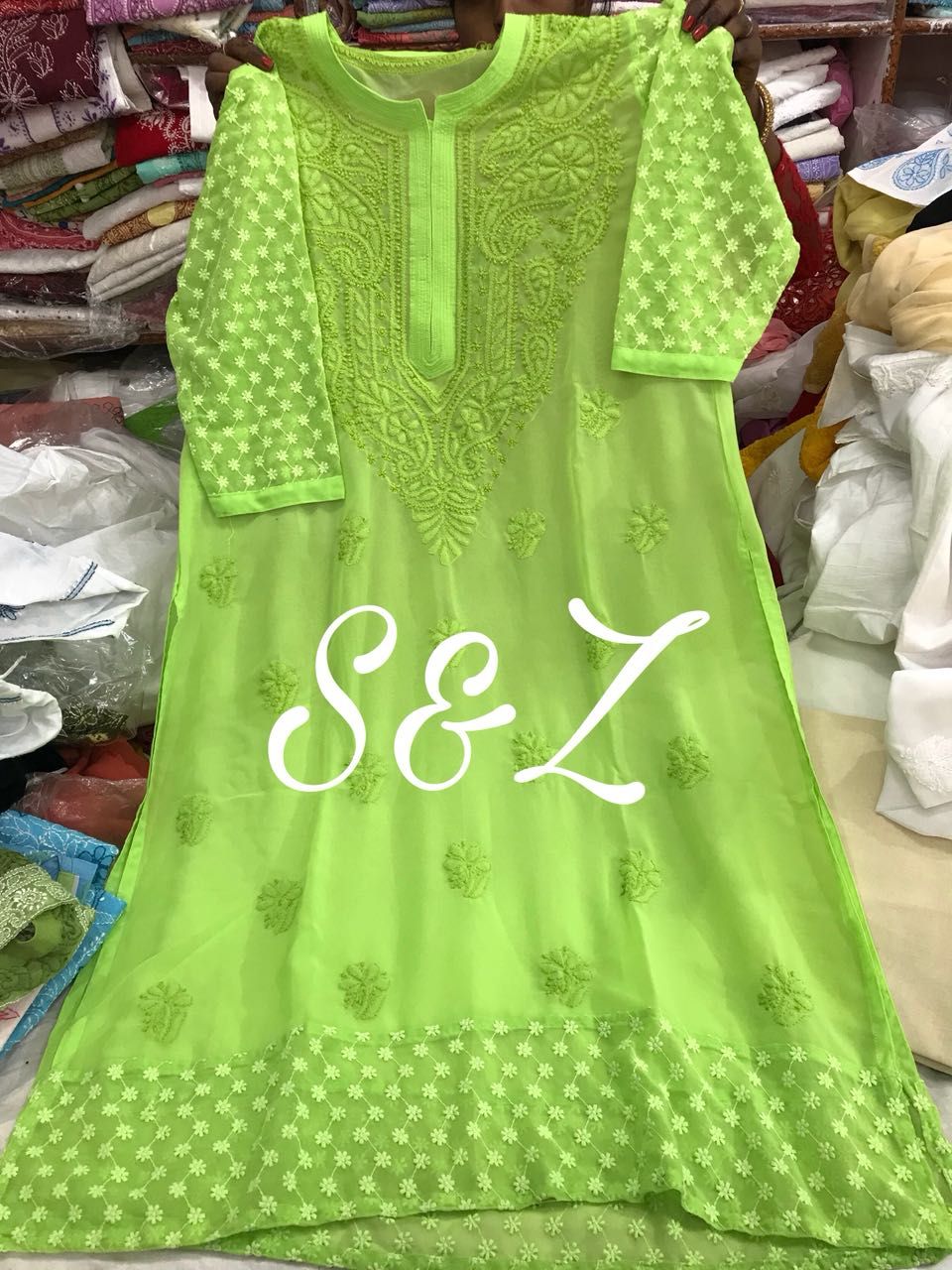
- **Fabric Physics:** The source garment is a semi-sheer Georgette or Chiffon blend featuring Chikankari embroidery. The physics engine must account for high drape and low bending resistance (flowy behavior), unlike the stiff vest the user is currently wearing. The material possesses subsurface scattering properties; it absorbs light but allows some transmission, meaning the user's skin tone should faintly influence the fabric color where there is direct contact, particularly on the arms and shoulders. The embroidery thread is matte and thicker, adding localized weight and stiffness.
- **Key Features:** The elaborate floral/paisley embroidery pattern on the chest and sleeves must be preserved with high-frequency texture mapping. The "S&Z" watermark must be inpainted out. The notched round neckline and the sheer paneling between embroidery motifs are critical. The hemline detail (dense embroidery at the bottom) should be preserved if the crop allows, or intelligently faded if only the upper torso is rendered.
PHASE 2: FIT & DRAPE SIMULATION
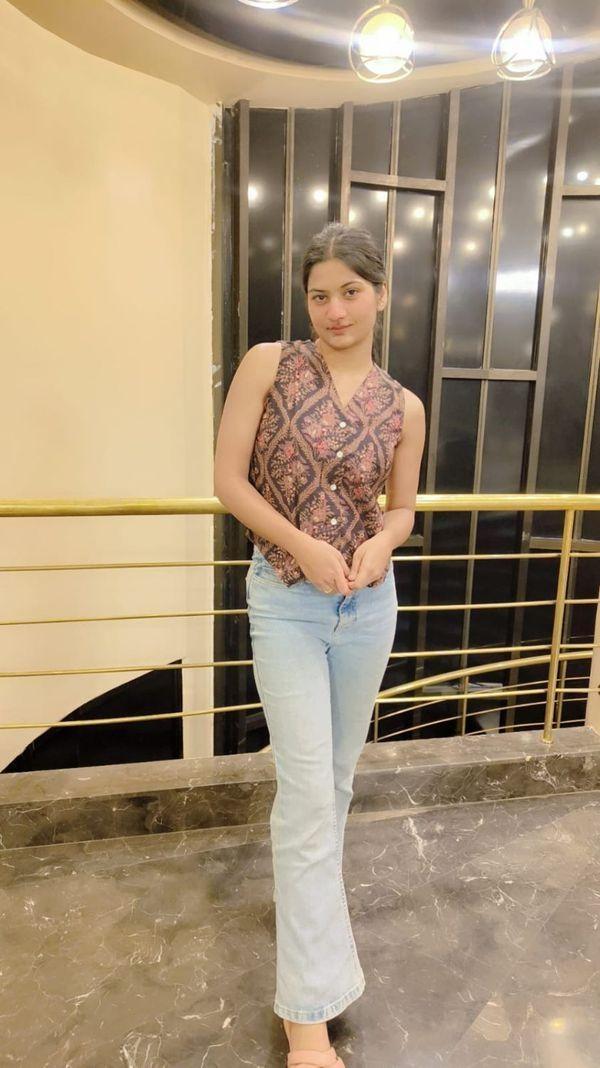
- **Body Mapping:** The source is a long kurta/tunic, while the user wears a cropped vest. The simulation must extend the garment past the user's waistline, draping loosely over the hips rather than cinching. Since the user is sleeveless and the source has long/3-quarter sleeves, the system must generate realistic cylindrical draping along the user's arms. Fabric must gather and crease naturally at the elbow bend and where the biceps press against the torso.
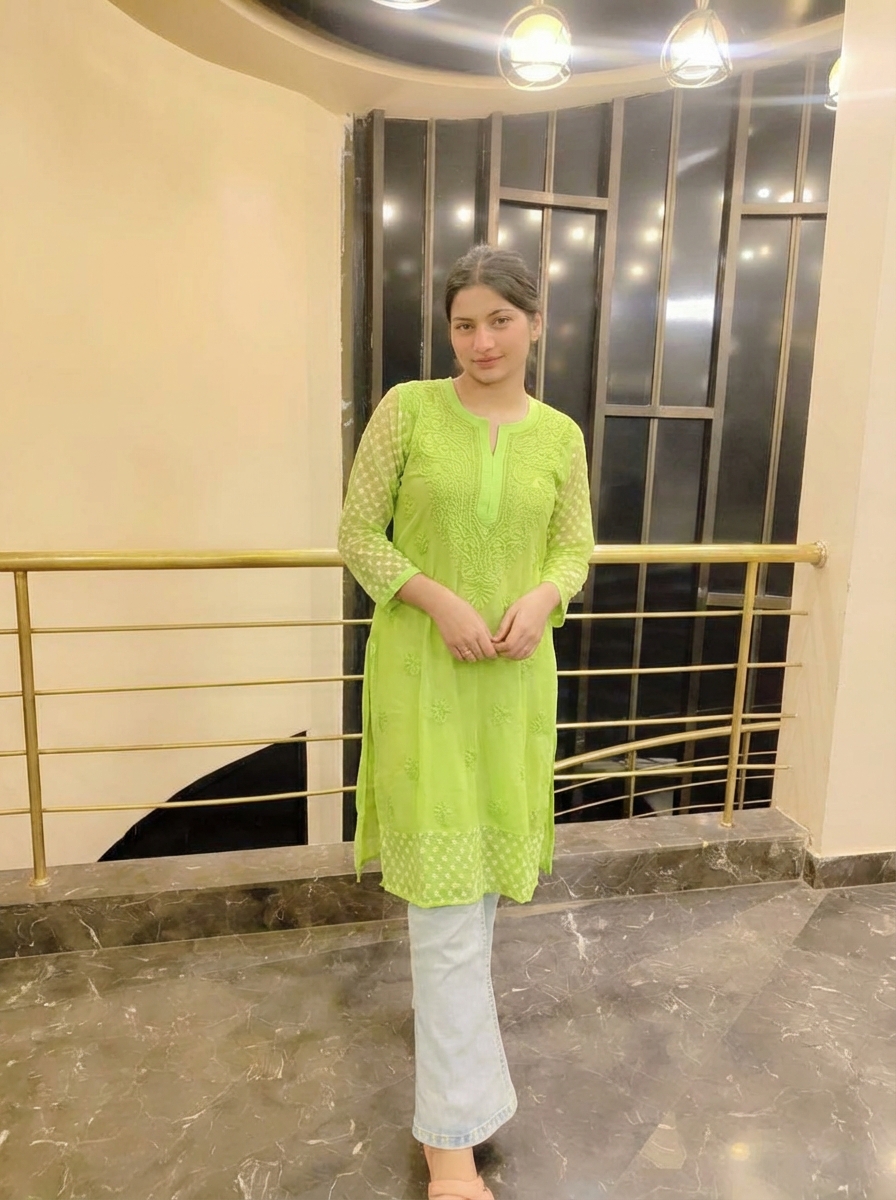
- **Occlusion Handling:** The user's hands are clasped at the waistline. This is a critical occlusion zone. The kurta fabric must flow *behind* the hands and wrists. Any portion of the garment that would naturally hang below the hands must be masked out or rendered as falling behind the forearms. The user's hair is tied back, minimizing shoulder occlusion, but the neckline must sit precisely around the neck base without intersecting the jaw.
PHASE 3: ENVIRONMENT & LIGHTING
- **Light Match:** The target environment features warm, overhead artificial lighting (tungsten/yellow hue) with multiple point sources (chandeliers) and floor reflections. The bright, cool lime green of the source cloth must be color-graded to accept this warm ambient light, shifting slightly towards a warmer chartreuse to avoid looking like a fluorescent "sticker." Shadows must be soft and cast downward, particularly under the bust and inside the elbow creases.
- **Color Calibration:** The source image has high-contrast, flat retail lighting. The texture maps must be de-lit (albedo extraction) before re-lighting to match the user's room. Specularity on the embroidery should be low (matte), while the sheer base fabric should have a slight sheen consistent with synthetic Georgette.
PHASE 4: IDENTITY PROTECTION
- **Facial Lock:** Absolute freeze on the facial region from the chin upwards, including the ears and the hairline. The neck skin texture above the new kurta neckline must be preserved or seamlessly blended if the new collar sits lower than the current vest.
- **Body Integrity:** The simulation must respect the user's natural shoulder width and arm volume. Do not slim the arms to fit the sleeves. The garment is a loose fit; it should add volume to the silhouette, not compress the user's torso to the shape of the mannequin/hanger. The user's hands and fingers must remain unaltered in size and skin tone.