Thinking Process
PHASE 1: VISUAL DECONSTRUCTION
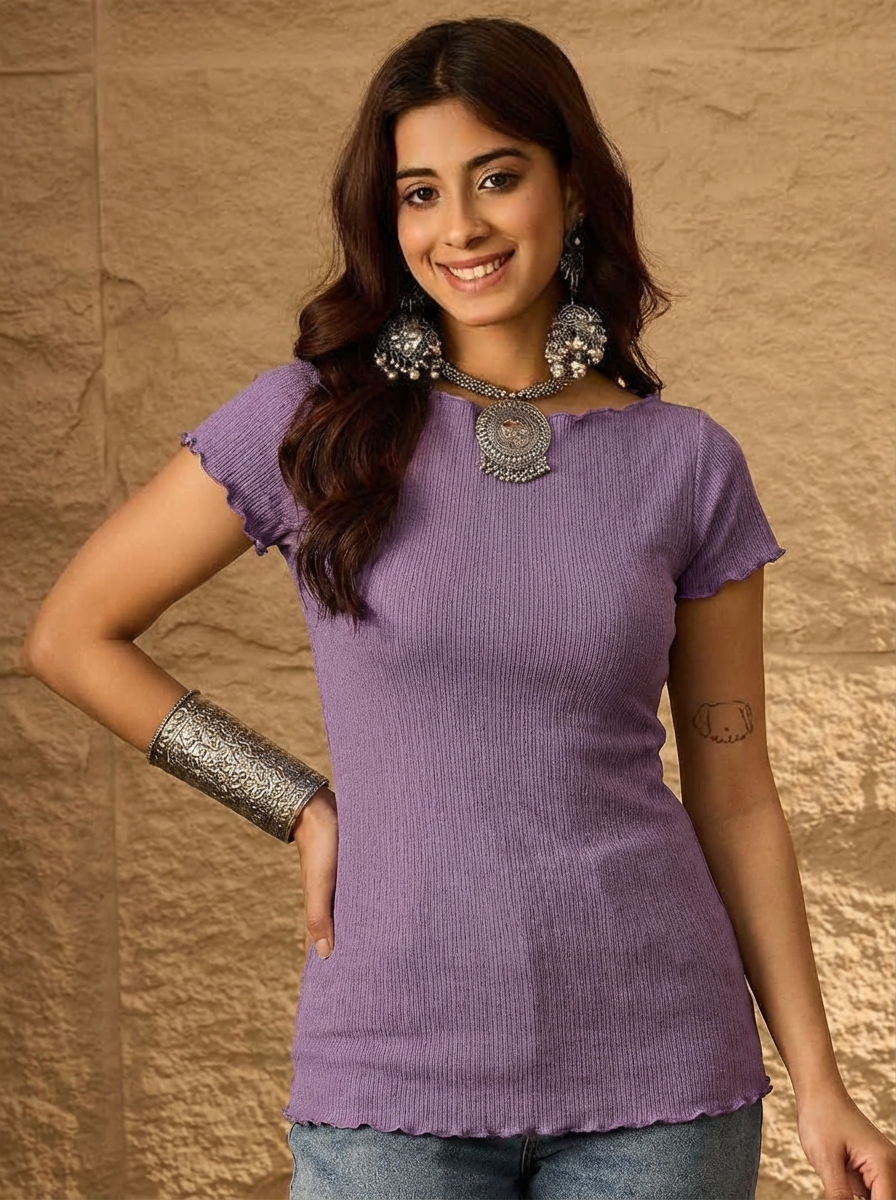
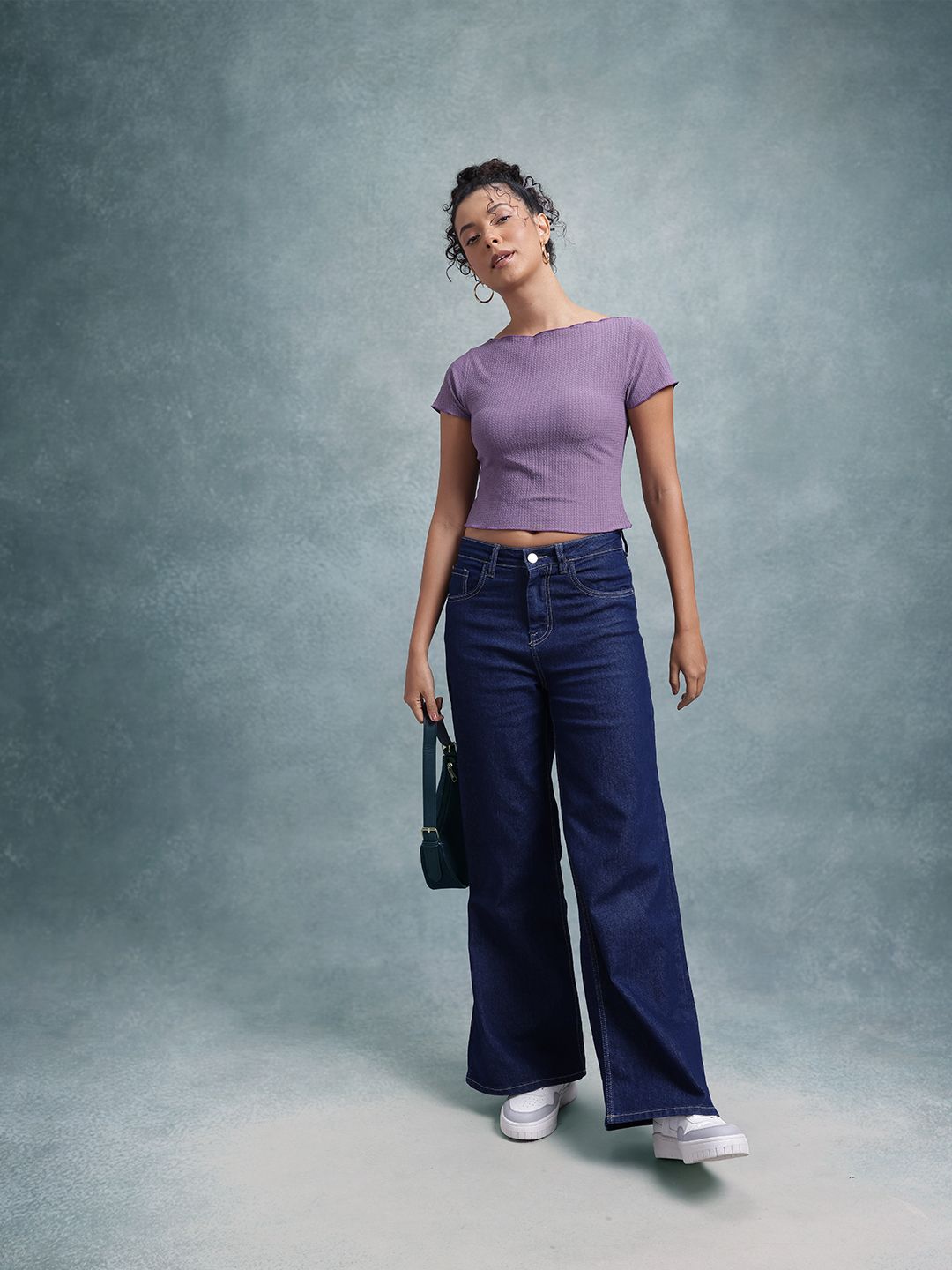
- **Fabric Physics:** The source garment is a ribbed knit jersey material (likely cotton-elastane blend). Physically, this fabric has high elasticity and low bending resistance. It should not render as rigid; it must demonstrate "hoop stress" (stretching) across the bust and relaxed tension at the waist. Light interaction should be matte with soft, diffuse specular highlights along the ridges of the ribbing structure.
- **Key Features:**
1. **Vertical Ribbing:** The texture map must preserve the vertical lines; these must distort slightly around body curvature to prove 3D geometry.
2. **Lettuce Edge Hem:** The wavy, unfinished-style "lettuce" hemline on the sleeves and bottom waist edge must be preserved and not flattened.
3. **Boat/Crew Neckline:** The high neckline cut is essential and differs significantly from the user's current strapless silhouette.
PHASE 2: FIT & DRAPE SIMULATION
- **Body Mapping:**
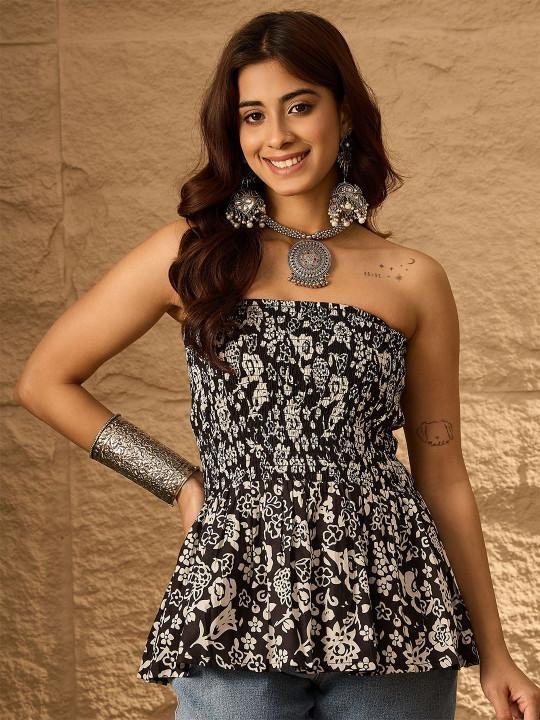
- **Torso:** Unlike the user's current loose peplum top, the target purple top is form-fitting. The simulation mesh must tighten around the waist and bust, replacing the current flared silhouette with a body-con silhouette.
- **Sleeves:** The source garment has short cap sleeves. The user's bare shoulders must be covered. The fabric should exhibit slight creasing at the axilla (armpit) where the user's right arm is bent, following the mechanics of a stretch knit.
- **Occlusion Handling:**
- **Hair:** The user's long, dark wavy hair falls over both shoulders and the chest. This is the primary occlusion layer. A high-fidelity hair mask must be generated to composite the hair *over* the new purple top.
- **Necklace:** The user's large silver necklace sits lower than the neckline of the new garment. The new garment physically covers the area where the necklace sits. The necklace must be masked out/removed, or the simulation must attempt to render the necklace *over* the fabric (though removal is cleaner for physics integrity given the high neck).
- **Bracelet:** The silver arm cuff is distal to the sleeve line and remains unaffected.
PHASE 3: ENVIRONMENT & LIGHTING
- **Light Match:** The user image features warm, directional lighting coming from the upper-left (creating shadows on the user's left side/viewer's right). The source garment (currently in cool, flat studio light) must receive a warm lighting wrap. A generated shadow map must be applied to the garment where the user's hair hangs over the chest to ground the composite.
- **Color Calibration:** The source purple/lavender is cool-toned. It requires a white-balance shift toward warm yellow/orange to match the ambient light reflected by the beige stone wall background. The black levels of the shirt's shadows must match the black levels of the user's hair shadows.
PHASE 4: IDENTITY PROTECTION
- **Facial Lock:** The user's facial features (eyes, nose, smile, jawline) and skin tone are frozen. No generative filling should encroach above the thyroid cartilage (Adam's apple area) except for the garment collar itself.
- **Body Integrity:** Strict prohibition on warping the user's skeletal structure or soft tissue volume. The ribbed fabric must stretch to accommodate the user's natural bust and waist measurements; the user's body must not be slimmed to fit the clothes. The skin tone on the user's arms and visible décolletage must remain unaltered.