Thinking Process
PHASE 1: VISUAL DECONSTRUCTION
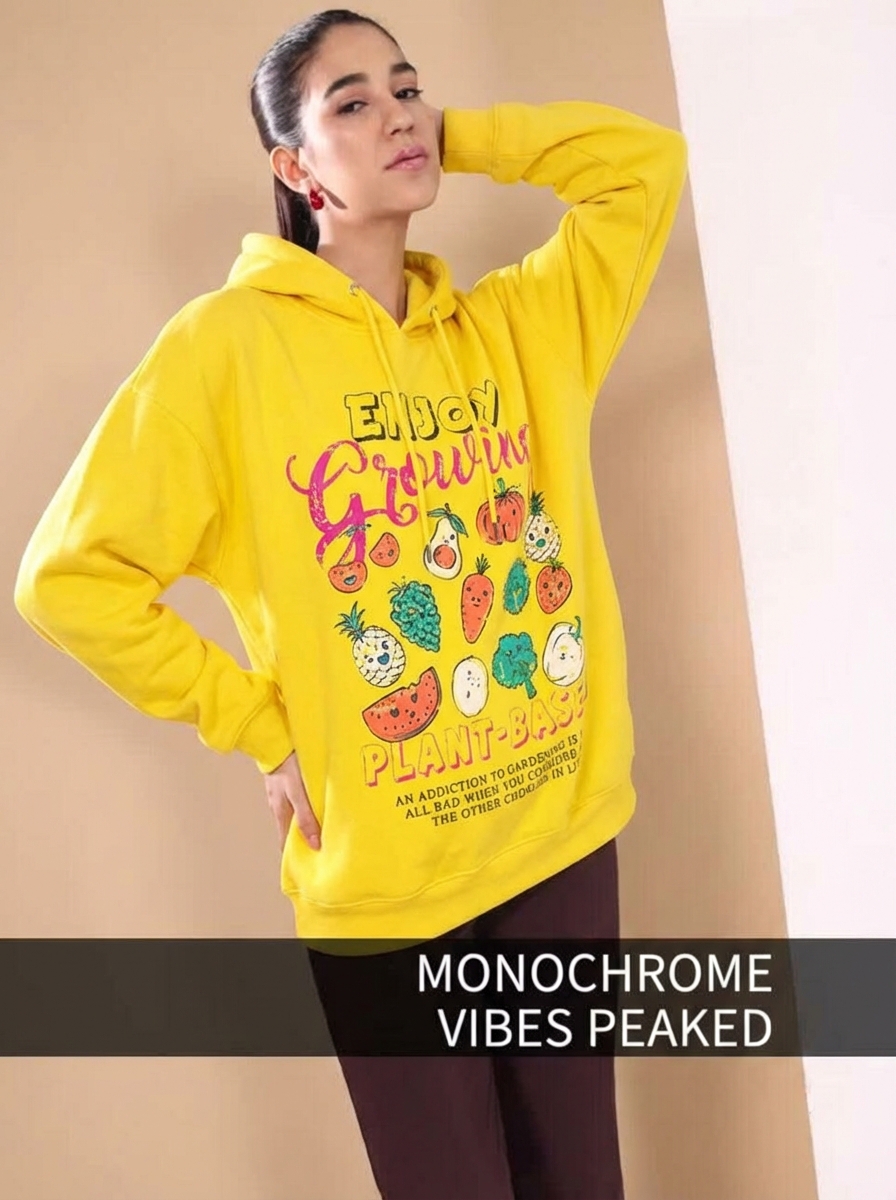
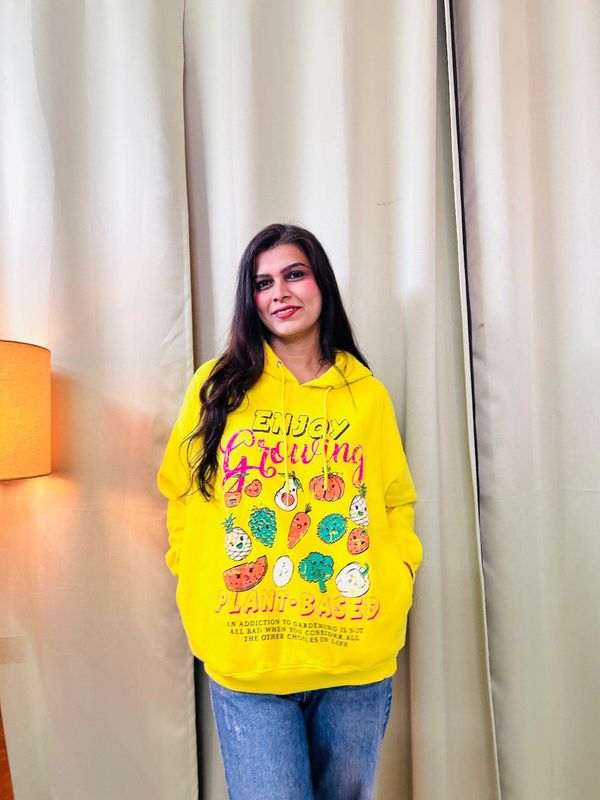
- **Fabric Physics:** The source garment is a heavyweight cotton-fleece blend hoodie. It possesses high volumetric weight and low elasticity. The surface has a matte finish with very low specularity (no shine), meaning it diffuses light evenly. The fabric stiffness prevents small wrinkles, favoring large, soft, tubular folds.
- **Key Features:** The central graphic print ("Enjoy Growing" + vegetable motifs) is the primary visual anchor and must remain legible despite folding. The drawstrings (yellow chords) are dynamic physics objects that must dangle vertically regardless of body tilt. The kangaroo pocket adds structural thickness to the lower abdomen area. The ribbed cuffs and bottom hem are tighter elastic points that create a "blousing" effect where the fabric bunches slightly above them.
PHASE 2: FIT & DRAPE SIMULATION
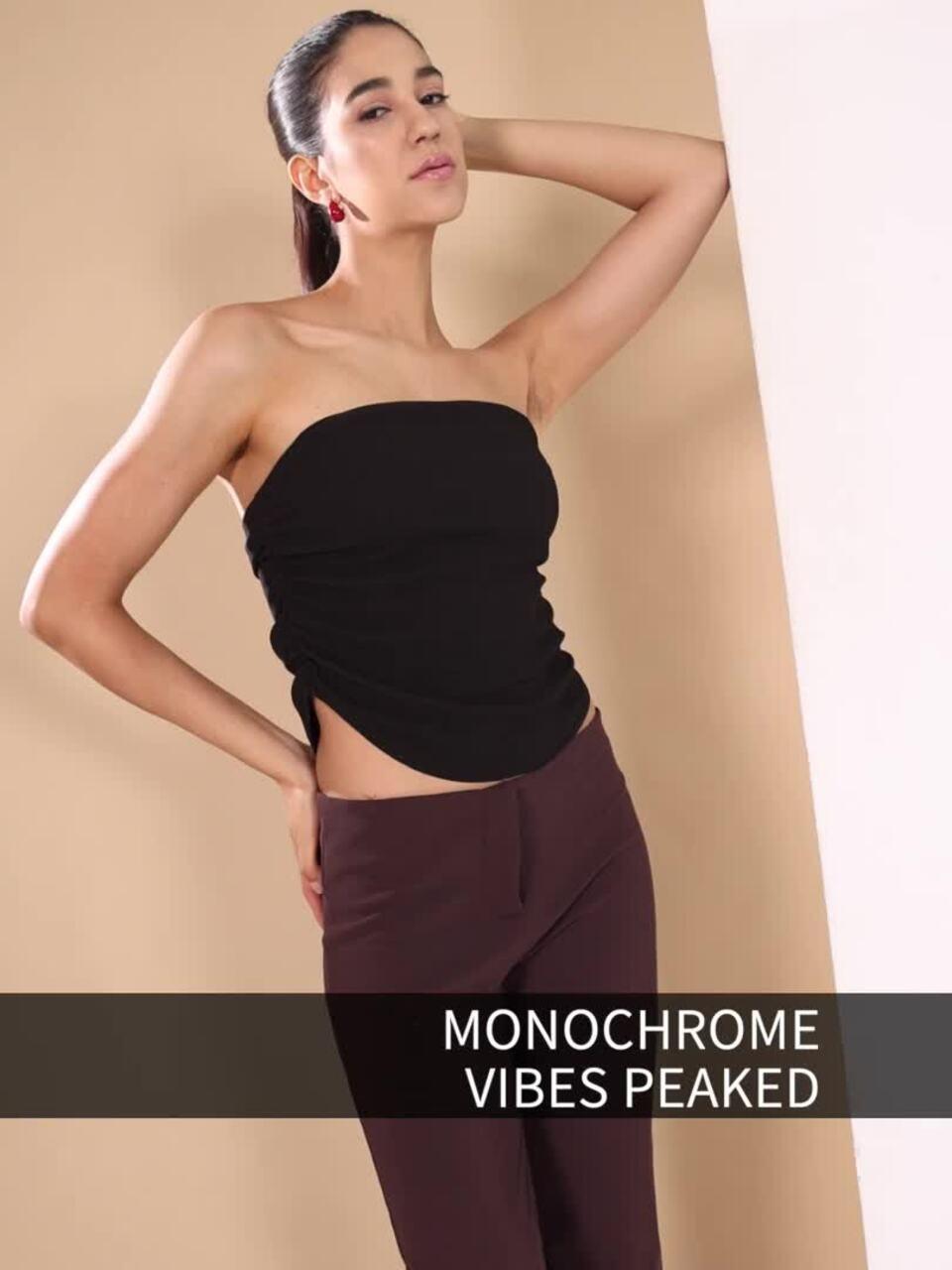
- **Body Mapping:** The transition is from a fitted tube top to an oversized silhouette.
- **Shoulders:** The drop-shoulder seam of the hoodie must sit lower on the target's deltoids, not on the shoulder bone.
- **Left Arm (Raised):** Gravity dictates that the left sleeve slides down toward the shoulder, bunching significantly at the armpit and exposing the target's forearm/wrist. The side seam of the hoodie must stretch upward, pulling the hemline slightly higher on the left side.
- **Right Arm (Bent):** The fabric must compress at the inner elbow (antecubital fossa) and billow slightly at the outer elbow.
- **Torso:** The garment should not hug the waist; it must hang straight down from the bust apex, creating negative space between the fabric and the user's midriff.
- **Occlusion Handling:**
- The source image contains long hair obscuring the chest graphics; this area must be reconstructed/inpainted before transfer.
- On the target, the **right hand** rests near the hip. The hoodie is long and baggy; it will likely drape *over* the top of the trousers. The simulation must decide if the hem covers the hand or if the hand tucks under the hem. Ideally, the hem falls *behind* the hand if the hand is pressing against the body, causing a localized compression fold.
- The target's **left ear/neck area** is exposed and must remain distinct from the hood collar.
PHASE 3: ENVIRONMENT & LIGHTING
- **Light Match:** The target environment utilizes soft, warm studio lighting coming from the upper-left (user's right), casting shadows toward the bottom-right. The yellow hoodie must generate self-shadowing (ambient occlusion) in the folds, particularly under the bust, inside the hood neck, and under the raised left arm.
- **Color Calibration:** The source yellow is cool/neon. To integrate with the target's "warm beige/brown" environment, the yellow albedo map must be color-graded slightly warmer (shifted toward amber) to reflect the ambient bounce lighting of the room. The black shadows in the garment folds should align with the dark brown/black contrast levels of the user's trousers.
PHASE 4: IDENTITY PROTECTION
- **Facial Lock:** Absolute freeze on the target's facial geometry, jawline, and the sleek, pulled-back hairstyle. The target's neck definition (sternocleidomastoid muscles) visible due to the raised arm must be preserved where the hood collar doesn't cover it.
- **Body Integrity:** Do not warp the user's underlying skeletal structure to fit the oversized nature of the hoodie. The user's exposed arms (skin texture and tone) must remain unaltered. The "Monochrome Vibes" overlay text should ideally be masked out or the garment rendered behind it if it is a UI element, but physically, the garment replaces the torso pixels entirely.