Thinking Process
PHASE 1: VISUAL DECONSTRUCTION
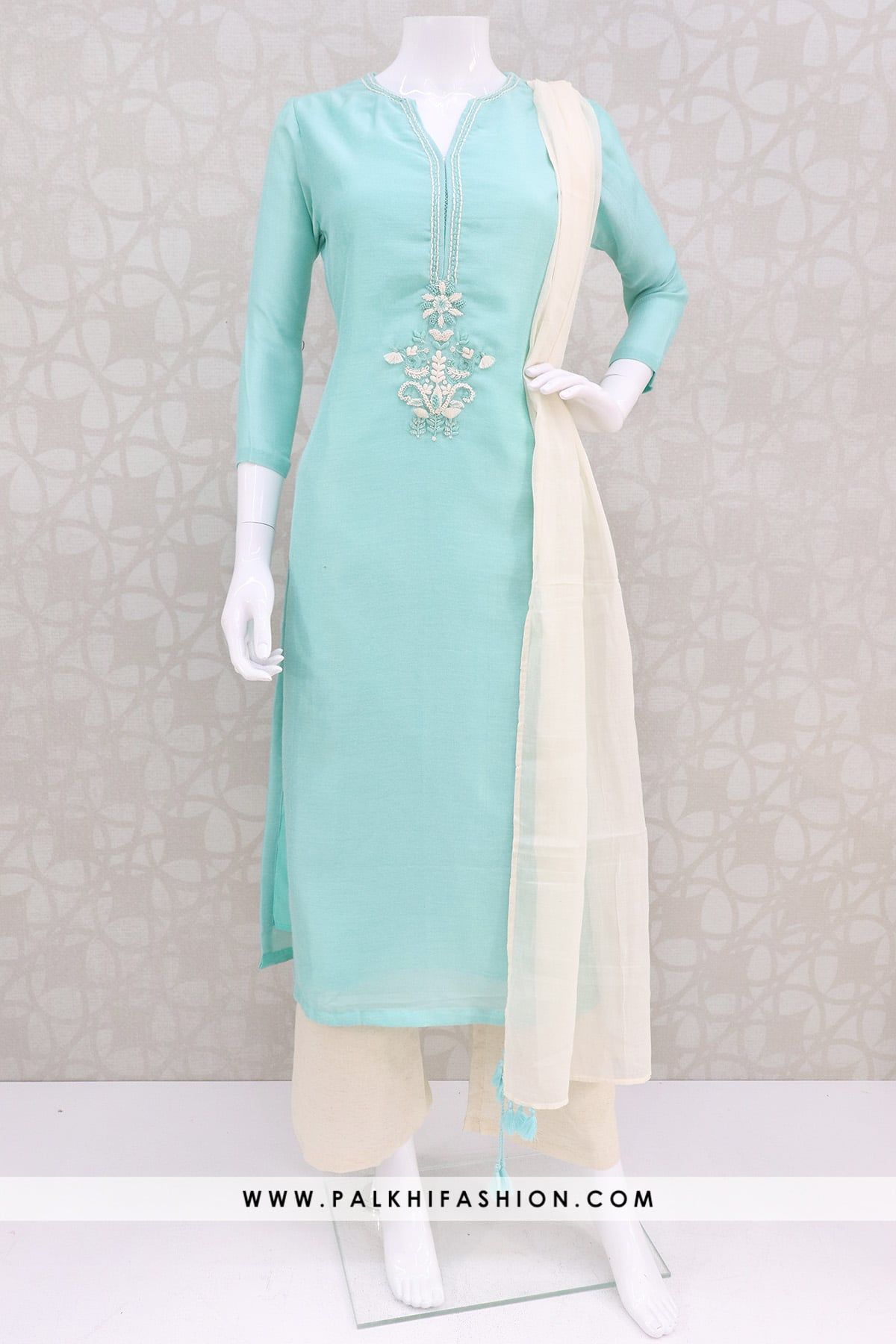
- **Fabric Physics:** The source garment is a semi-structured "Kurta" (tunic), likely a cotton-silk or linen blend. It has a matte finish with low specularity (minimal shine). The physics engine must treat this as medium-weight fabric—lighter than denim but heavier than chiffon—allowing for crisp folds rather than fluid ripples. The cream Dupatta (scarf) is a lighter, gauzier material (chiffon or fine cotton) and requires high-flexibility cloth simulation.
- **Key Features:** The central chest embroidery (white floral motif) is a rigid texture map that must not distort excessively. The V-split neckline with decorative stitching must align with the user's suprasternal notch. The 3/4 length sleeves must be preserved. The side slits (chak) of the Kurta are critical for the sitting pose context.
PHASE 2: FIT & DRAPE SIMULATION
- **Body Mapping:**
* **Torso:** The Kurta is a loose fit (not body-con). It should drape vertically from the shoulders but must "break" and fold significantly at the hip/waist area due to the user's seated position.
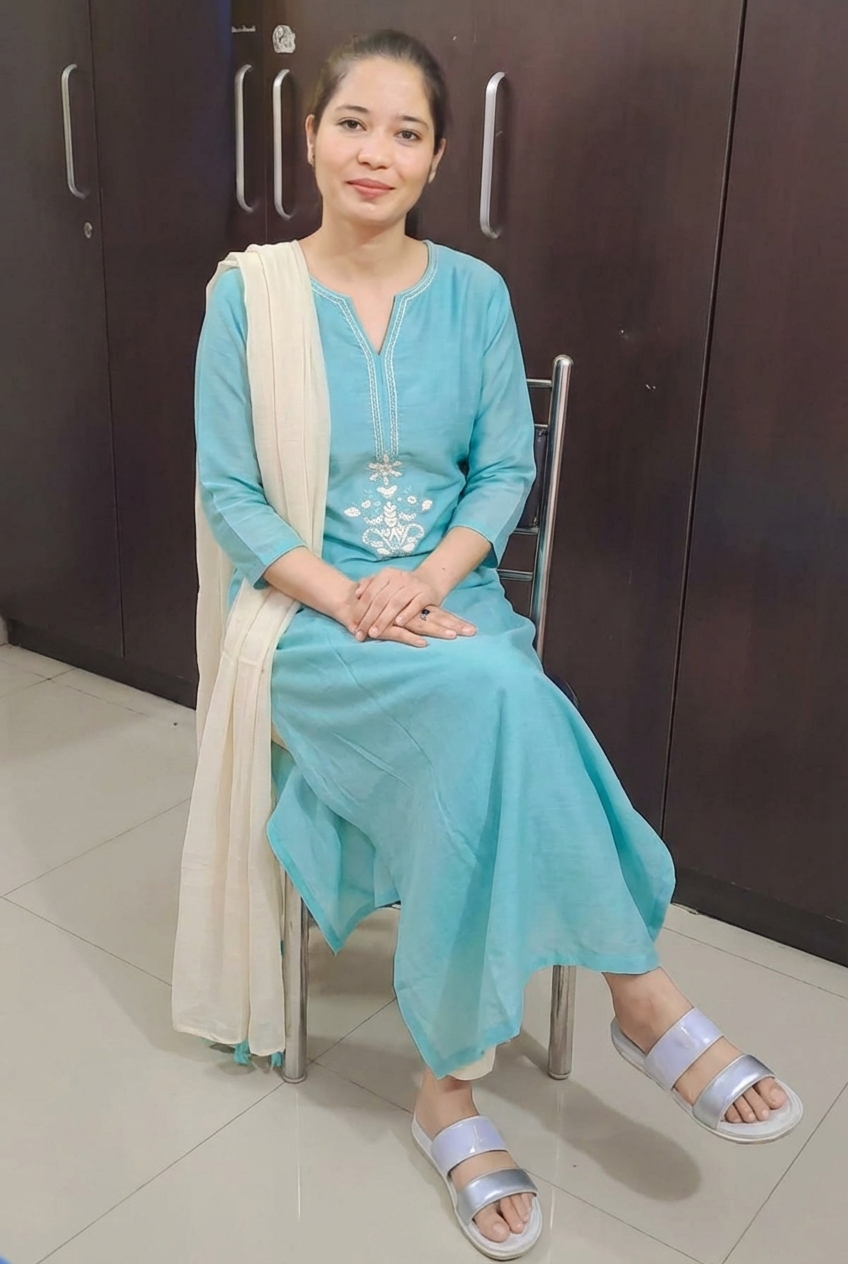
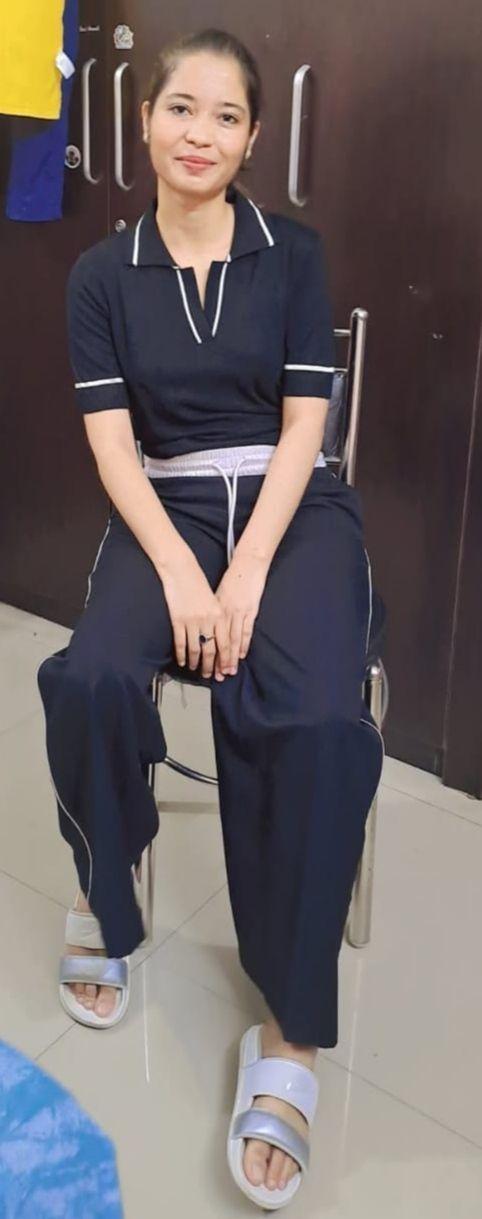
* **Lap Interaction:** Unlike the standing mannequin, the user is seated. The lower half of the Kurta must not clip through the legs. Instead, it must pool and bunch horizontally across the upper thighs and hang down the sides of the legs.
* **Shoulders:** The Dupatta (scarf) on the left shoulder requires a gravity simulation to drape naturally over the user's left shoulder, falling vertically toward the chair seat.
- **Occlusion Handling:**
* **Hands:** The user's hands are clasped on her lap. This is a high-priority occlusion zone. The fabric of the Kurta must appear to pass *under* the hands and forearms, compressed against the thighs.
* **Neck/Hair:** The user's neck is visible; the new collar must mask behind the neck skin but over the clavicle. No hair occlusion issues are present as hair is tied back.
PHASE 3: ENVIRONMENT & LIGHTING
- **Light Match:** The user image has soft, diffuse indoor lighting (likely overhead LED) casting soft shadows downwards. The studio lighting of the source garment is too bright and flat. Generative shading must introduce ambient occlusion in the fabric folds (especially at the lap bunching) and cast a subtle shadow from the chin onto the new neckline.
- **Color Calibration:** The source Turquoise is highly saturated. To match the user's indoor environment, the albedo of the garment must be slightly desaturated and the exposure lowered by approximately 10-15% to match the dynamic range of the user's room.
PHASE 4: IDENTITY PROTECTION
- **Facial Lock:** Absolute freeze on the facial region from the chin up, including the jawline definition and ears. The user's skin tone on the neck and forearms must be sampled and preserved where the new 3/4 sleeves end.
- **Body Integrity:** The user's seated volume (width of hips and thighs spread on the chair) must remain unaltered. Do not slim the figure. The Kurta typically hides the waist curve; the simulation must reflect the garment's silhouette, not shrink-wrap the user's torso.