Thinking Process
PHASE 1: VISUAL DECONSTRUCTION
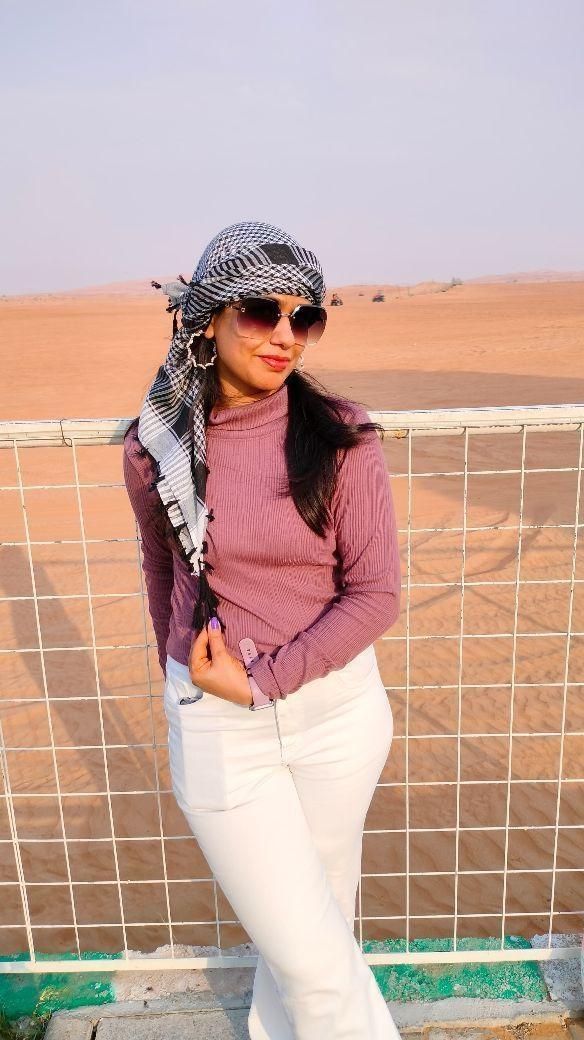
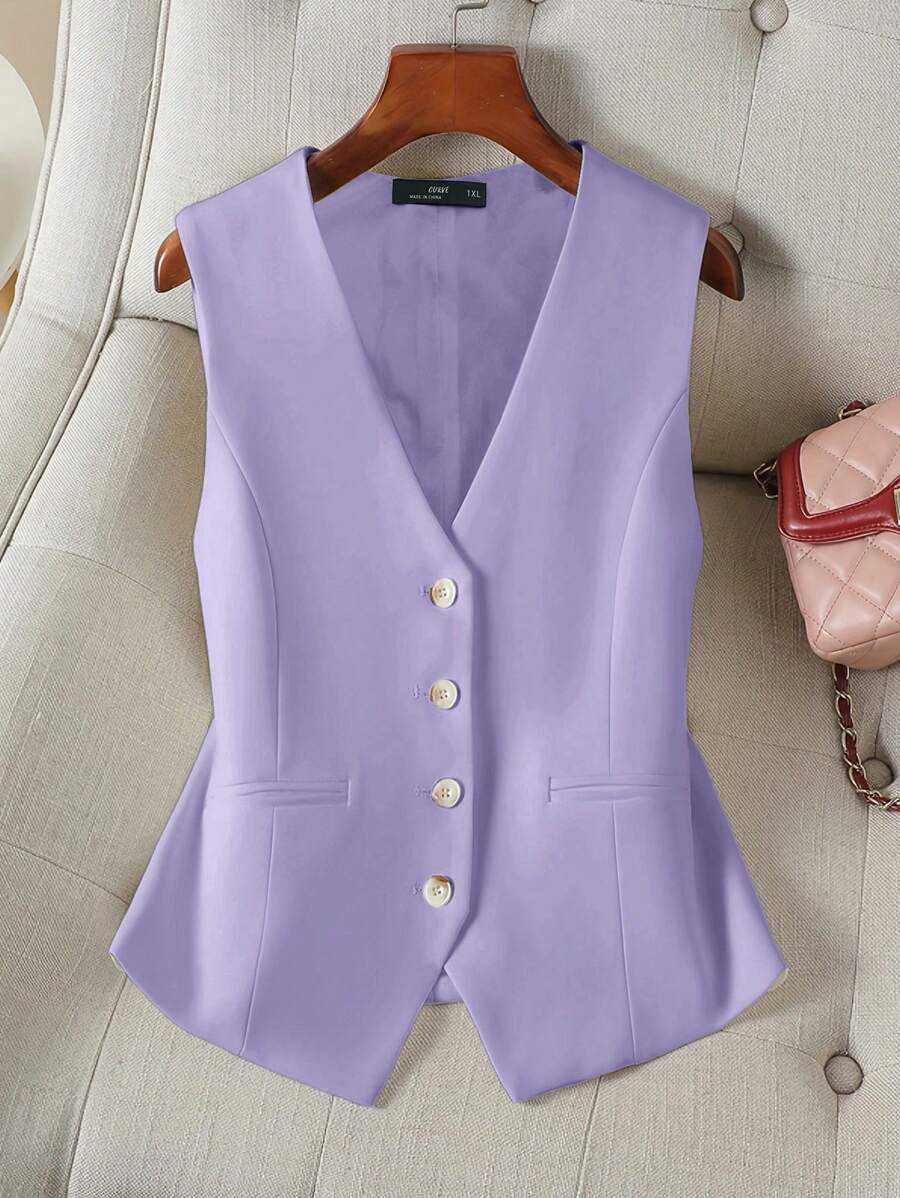
- **Fabric Physics:** The source garment is a tailored waistcoat, likely a structured polyester or viscose blend with medium weight. Unlike the user's current ribbed knit which clings, this fabric has high structural integrity and stiffness. It should hold its shape at the waist and shoulders rather than conforming strictly to the skin. It possesses a subtle, matte sheen that should catch the sunlight broadly rather than in sharp specular highlights.
- **Key Features:** The deep V-neckline, the four central white buttons (which must retain their pearlescent texture), the decorative welt pocket slits, and the specific inverted-V hemline at the bottom front must be preserved. The darting details on the bust are essential for conveying the tailored fit.
PHASE 2: FIT & DRAPE SIMULATION
- **Body Mapping:** This is a sleeveless garment replacing a long-sleeved turtleneck. The simulation must generate natural skin textures for the user's arms (replacing the purple ribbed sleeves) or layer the vest accurately if a base layer is implied. The vest should sit flush against the bust but bridge the curve of the waist, creating a semi-fitted silhouette rather than a skin-tight fit. The shoulders of the vest must align with the user's natural shoulder line without drooping.
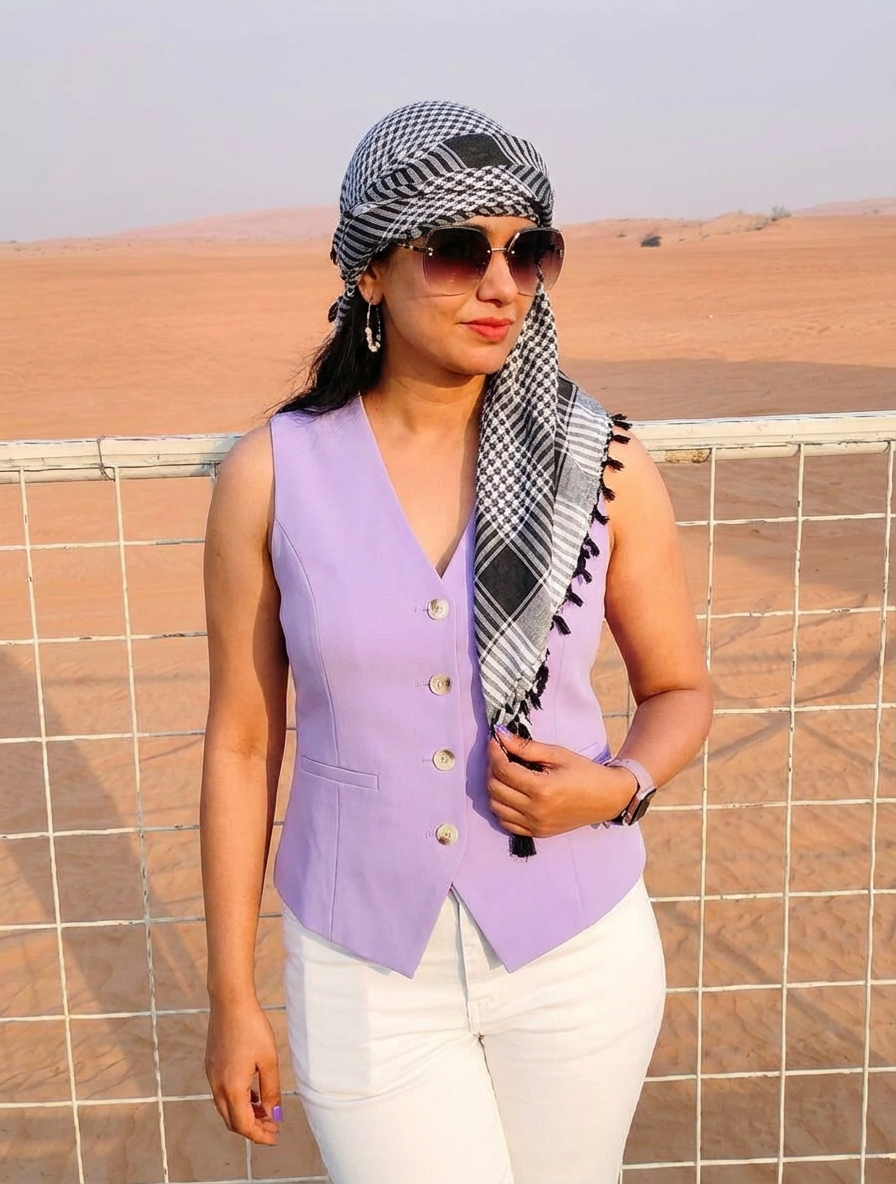
- **Occlusion Handling:** **CRITICAL:** The black and white keffiyeh (scarf) draping over the user's right shoulder (viewer's left) and chest is a complex occlusion layer. The vest must be rendered *underneath* this scarf. Additionally, the user's right hand is gripping the scarf/shirt hem; the fingers and the scarf tail must overlay the new garment. Long hair falling over the left shoulder (viewer's right) must also be masked and composited over the vest.
PHASE 3: ENVIRONMENT & LIGHTING
- **Light Match:** The user is in a high-exposure outdoor desert environment with bright, diffuse sunlight coming from above. The flat, cool studio lighting of the source garment must be relit to match this harsh, warm exterior light. Shadows on the vest should be soft but distinct, particularly under the lapels and buttons, consistent with the overhead sun.
- **Color Calibration:** The source garment is a cool lavender. To integrate realistic Global Illumination, the fabric color must be color-graded to accept the warm, orange/yellow ambient bounce light from the desert sand. The white buttons should reflect the warm environmental tone, avoiding a stark, artificial bright white.
PHASE 4: IDENTITY PROTECTION
- **Facial Lock:** The user's face, sunglasses, and the head-wrap portion of the keffiyeh are strictly frozen. No alteration to the jawline or neck position is permitted.
- **Body Integrity:** The user's torso width and hip stance must remain unchanged. The simulation is forbidden from slimming the waist to match the mannequin shape of the source image; the vest must expand or contract to fit the user's existing biometric measurements.