Thinking Process
PHASE 1: VISUAL DECONSTRUCTION
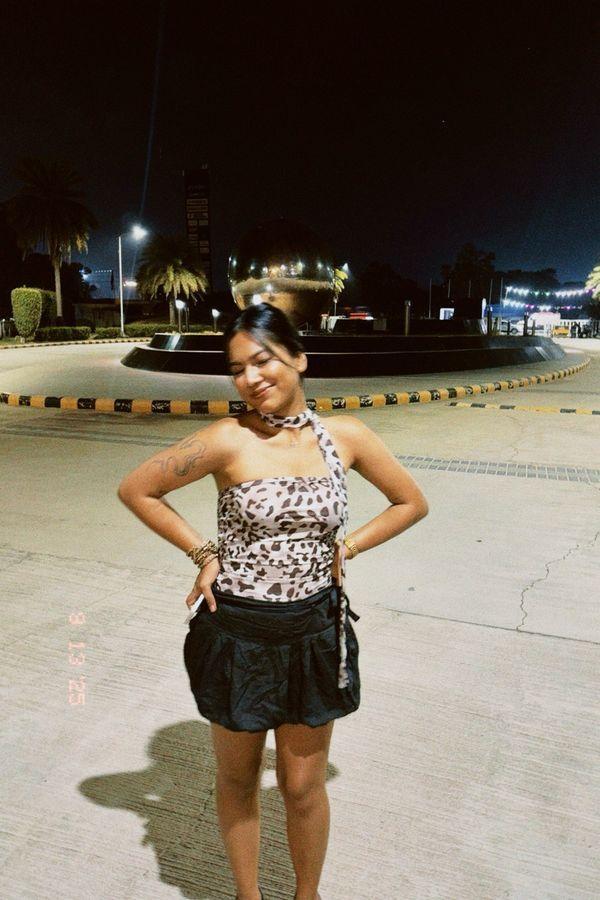
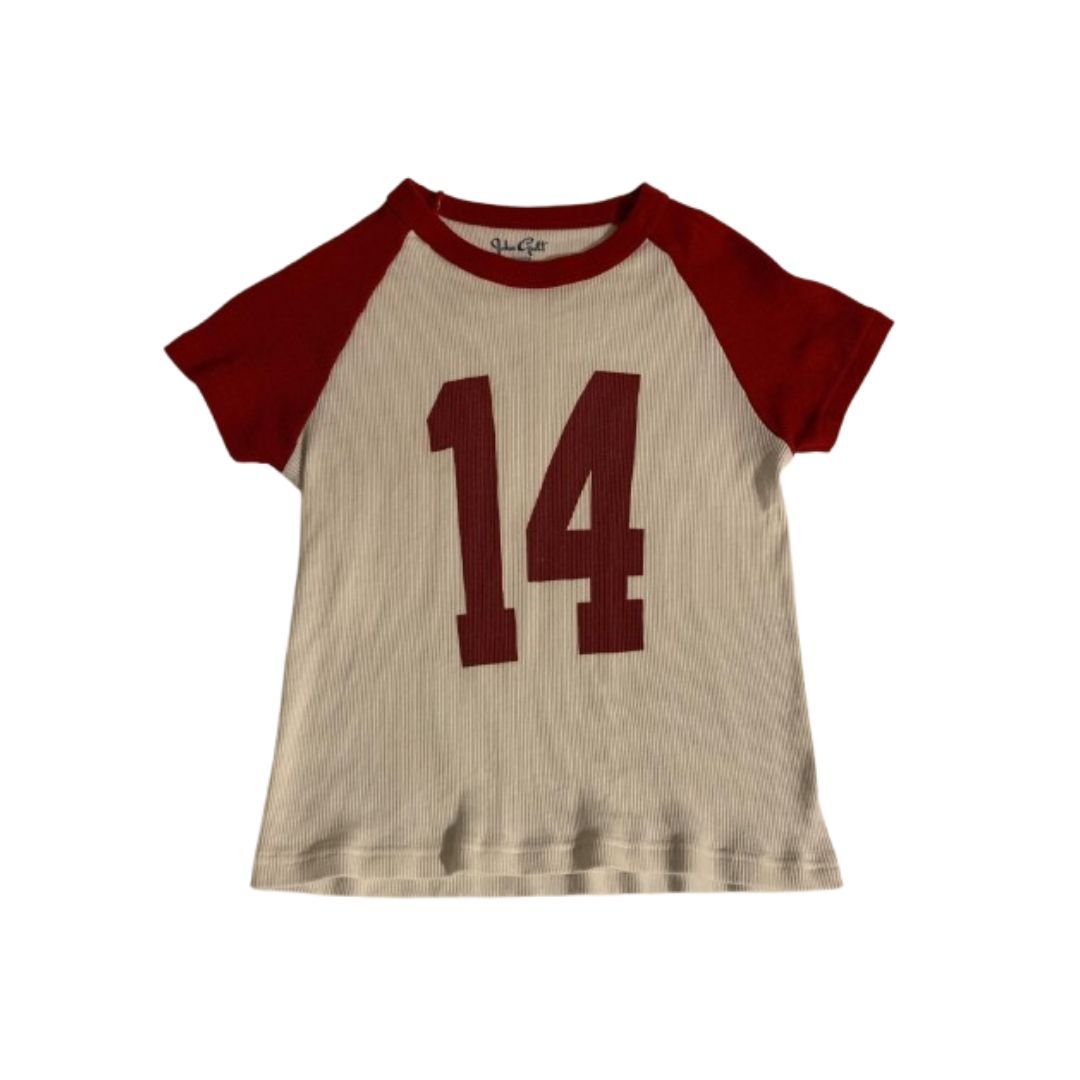
- **Fabric Physics:** The source garment is a ribbed knit jersey (likely cotton or cotton-blend). It has a matte finish with low specularity. The simulation must render the vertical ribbing texture, which gives the fabric mechanical stretch properties. Unlike the user's current smooth tube top, this fabric has weight and will not cling perfectly tight; it will exhibit micro-shadows within the rib channels.
- **Key Features:** The central maroon "14" print is the primary focal point and must deform correctly across the chest curvature. The raglan sleeve construction (diagonal seams from underarm to collar) must be distinct. The contrast between the cream body and maroon sleeves/collar must be preserved. The slight hem rolling typical of this knitwear at the bottom edge should be maintained.
PHASE 2: FIT & DRAPE SIMULATION
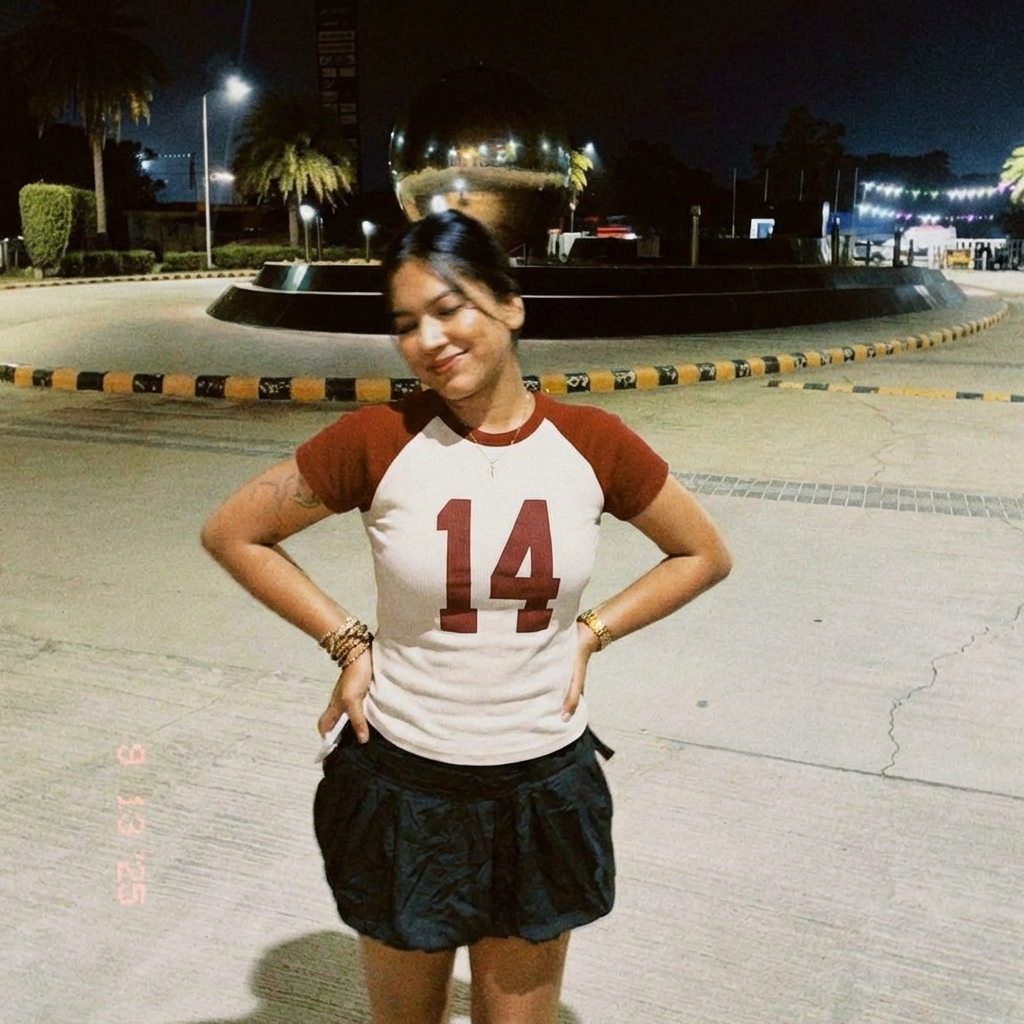
- **Body Mapping:** Due to the "hands on hips" pose, the sleeves (which are short) will experience compression and upward bunching at the deltoids. The neckline is a crew neck, significantly higher than the user's current tube top, so it will cover the clavicle area. The torso of the shirt is loose-fitting; it should drape vertically from the chest, bridging the gap between the ribs and the hips without sucking into the waistline. The hem should fall naturally over the top of the bubble skirt, likely creating a slight flare at the bottom due to the skirt's volume.
- **Occlusion Handling:** The user's hands and wrists are placed on the hips. The garment generation must be masked heavily here; the shirt must appear *behind* the hands and wrists. The current neck scarf/tie feature of the original top must be completely erased and inpainted with skin or the new shirt collar. The necklace currently worn should ideally be layered *over* the high crew neck or removed if it clashes with the collar line.
PHASE 3: ENVIRONMENT & LIGHTING
- **Light Match:** The user image utilizes a direct, frontal flash or strong strobe street lighting in a night setting, creating hard shadows behind the subject and high-contrast highlights on the skin. The new garment must reflect this hard lighting: bright center luminosity on the cream fabric with a rapid fall-off to shadow at the sides. Cast shadows from the sleeves onto the arms are required.
- **Color Calibration:** The user image has a distinct "film grain" or high-ISO noise texture (visible in the date stamp and night sky). The clean, high-resolution cloth image must be down-sampled and overlaid with a matching noise/grain layer to integrate seamlessly. The cream color of the shirt must be color-graded to match the slightly warm/yellow cast of the artificial street lighting rather than remaining studio white.
PHASE 4: IDENTITY PROTECTION
- **Facial Lock:** The user's facial expression (closed eyes, smile), head tilt, and hair structure (excluding the neck scarf interaction) must remain completely frozen. The jawline definition must not be altered by the new collar.
- **Body Integrity:** The user's arm volume and shoulder width must remain identical. The "slimming" of the waist is strictly forbidden; the shirt must add volume on top of the torso, not reshape the torso to fit the shirt. The tattoo on the right arm must be preserved and remain fully visible below the short sleeve of the new garment.