Thinking Process
PHASE 1: VISUAL DECONSTRUCTION
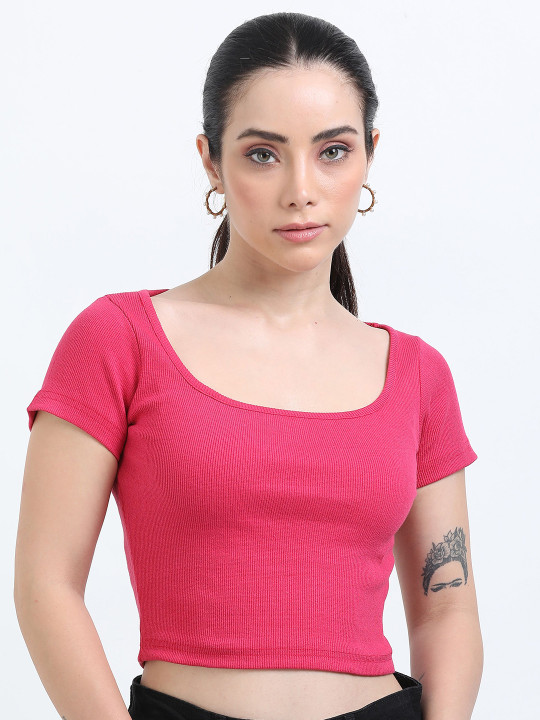
- **Fabric Physics:** The source garment is a ribbed knit fabric (likely a cotton-elastane blend). It possesses high elasticity and tensile strength, meaning it behaves as a "second skin" rather than hanging loosely. It has a matte finish, but the vertical ribbing structure creates micro-specular highlights along the ridges when hit by direct light.
- **Key Features:** The distinct vertical ribbing texture is the primary visual anchor and must be preserved without blurring. The wide U-shaped scoop neckline and the reinforced stitching at the hem and sleeve cuffs are critical structural details. The cropped length must remain consistent with the source design.
PHASE 2: FIT & DRAPE SIMULATION
- **Body Mapping:** Due to the stretch physics, the fabric must generate a tension map across the bust and shoulders, smoothing out rather than wrinkling. The garment will not hang vertically due to gravity; instead, it will contour tightly to the torso. The cap sleeves must wrap around the user's deltoids, slightly stretching at the armpit due to the user's arms-down pose.
- **Occlusion Handling:**
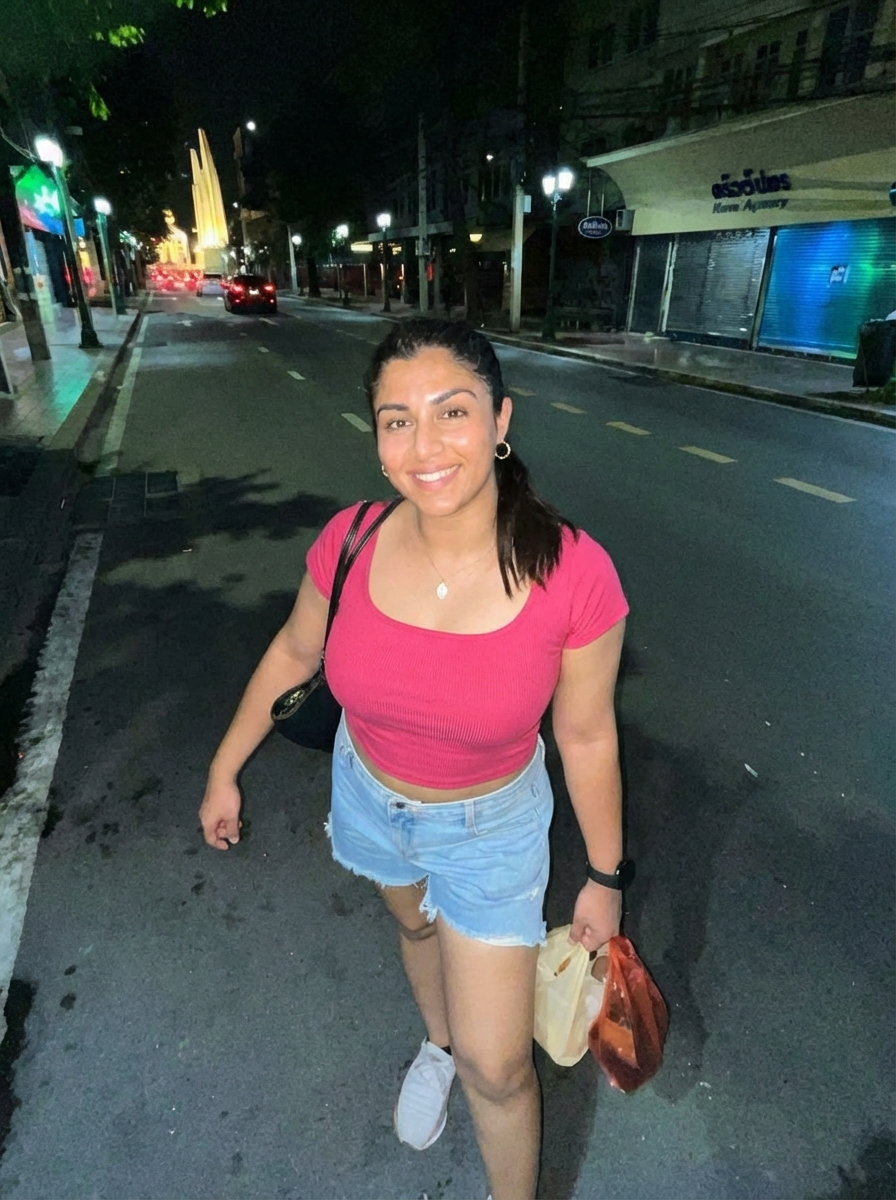
1. **Hair:** The ponytail strands resting on the user's left shoulder (viewer's right) must be segmented and layered *over* the new pink garment.
2. **Accessories:** The black bag strap on the user's right shoulder (viewer's left) and the gold pendant necklace resting on the sternum must be preserved and composited on top of the new fabric.
3. **Arms/Hands:** The inner arms slightly obscure the side seams of the torso and must remain in the foreground.
PHASE 3: ENVIRONMENT & LIGHTING
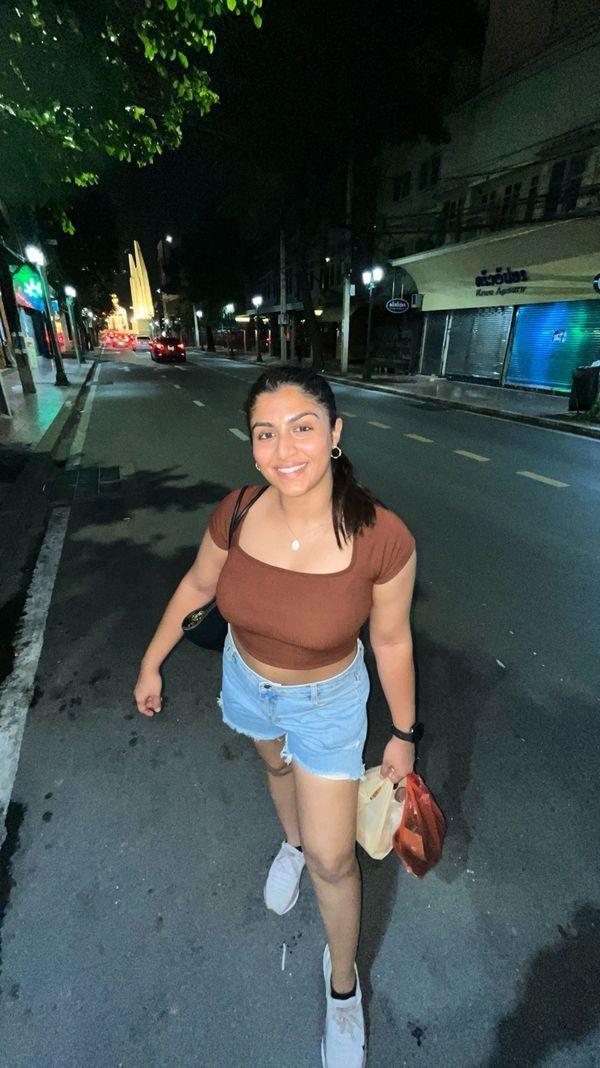
- **Light Match:** The target environment is a night scene illuminated by a harsh, frontal light source (likely camera flash or strong overhead street lamp). The new garment must simulate this "spotlight" effect: the center of the chest should be highly illuminated with cool-toned specular highlights, while the sides of the torso (flanks) must drop off rapidly into deep, high-contrast shadow.
- **Color Calibration:** The source garment is studio-lit and flat. To integrate, the magenta pink must be subjected to a high-contrast curve adjustment. The saturation should be slightly desaturated in the highlight areas (simulating flash washout) and deepened in the shadows. Noise/grain must be added to the garment texture to match the high-ISO characteristics of the night photo.
PHASE 4: IDENTITY PROTECTION
- **Facial Lock:** The user's entire head region—specifically the eyes, smile lines, jawline, and hairline—is strictly frozen.
- **Body Integrity:** The user's natural torso width, bust volume, and arm musculature must be preserved. The simulation must fit the cloth to the body, not warp the body to fit the cloth. No slimming filters or skin smoothing should be applied to the exposed midriff or legs.