Thinking Process
PHASE 1: VISUAL DECONSTRUCTION
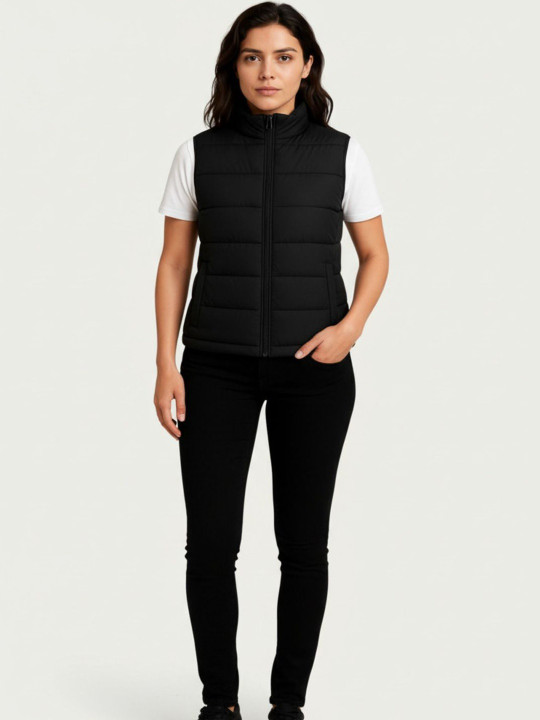
- **Fabric Physics:** The source garment is a quilted puffer vest, likely composed of a nylon or polyester shell with synthetic or down fill. It exhibits high structural rigidity and volume; it will not flow or drape like cotton but will instead compress and bulge. The surface has a semi-gloss finish, requiring anisotropic specular highlights where light hits the curved "baffles" (horizontal sections).
- **Key Features:** The horizontal quilting lines (baffles) must remain equidistant but curve around the volumetric form of the torso. The center zipper line, the high standing collar (mandarin style), and the slight puffiness at the hemline are critical structural elements. The sleeveless nature of the garment requires precise rendering of the armholes.
PHASE 2: FIT & DRAPE SIMULATION
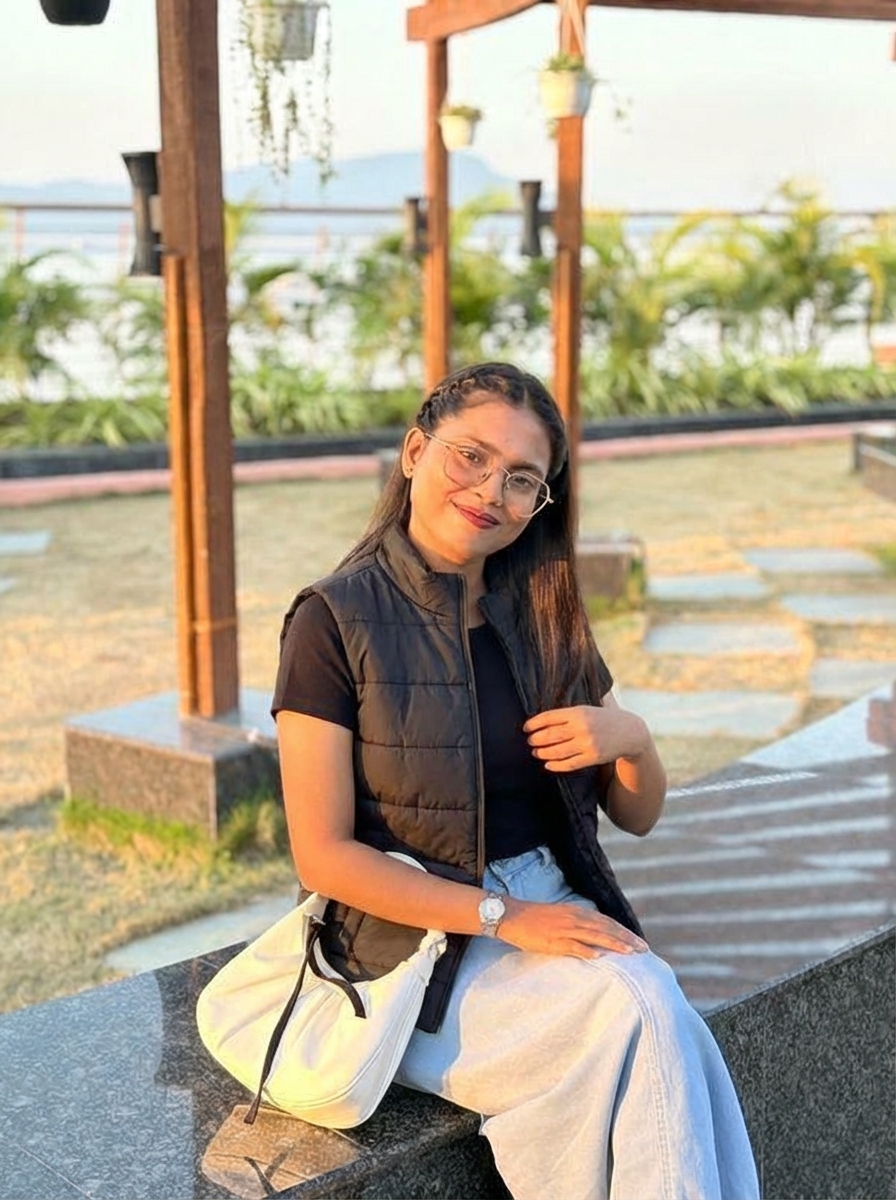
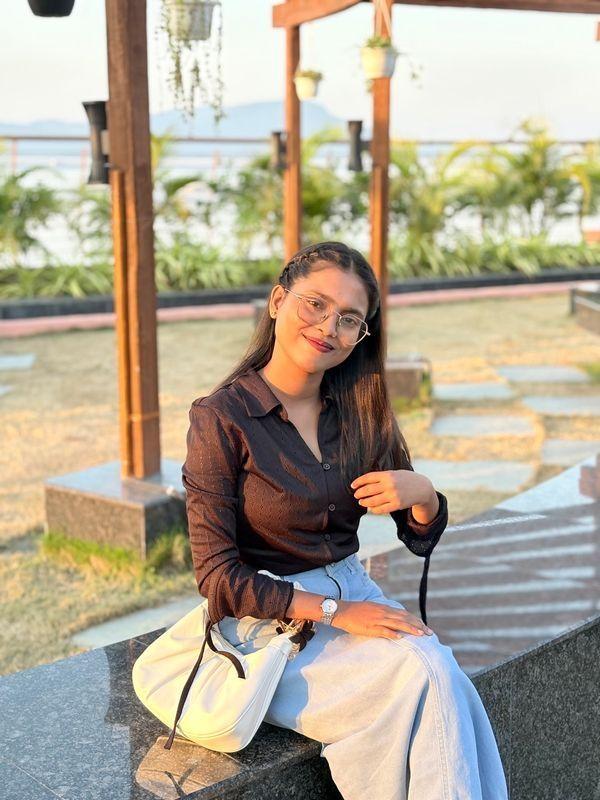
- **Body Mapping:** Due to the user's seated posture, the vest must simulate geometric compression at the lower abdomen/lap area; the stiff material will likely bulge slightly outward rather than folding flat against the stomach. The high collar must maintain its cylindrical structure around the neck without intersecting the jawline. The shoulders of the vest are structured and should sit slightly elevated off the user's natural shoulder line due to the padding.
- **Occlusion Handling:**
1. **Hair:** The user's long hair falls over both shoulders and down the back; this must be segmented and layered *over* the vest collar and shoulders.
2. **Handbag & Strap:** The white handbag and its strap traverse the lower right torso/hip area. The vest must be rendered *behind* these objects.
3. **Left Hand:** The user's left hand is positioned near the waist; the vest material must pass behind the wrist and fingers.
4. **Watch:** The watch on the left wrist must remain visible and unobstructed.
PHASE 3: ENVIRONMENT & LIGHTING
- **Light Match:** The target environment features warm, directional outdoor lighting (likely "golden hour") coming from the back-left, creating strong rim lighting and lens flare artifacts. The new black vest must reflect this warm environmental light, particularly on the left shoulder and left side of the collar (Rim Light). The front of the vest should be slightly shadowed, matching the exposure of the user's current shirt, rather than fully illuminated like the studio source image.
- **Color Calibration:** The stark black of the source vest must be color-graded to accept a warm, yellowish/orange tint to match the ambient temperature of the outdoor setting. The black levels should be lifted slightly to match the dynamic range of the user photo, ensuring it doesn't look like a "black hole" in the image.
PHASE 4: IDENTITY PROTECTION
- **Facial Lock:** Absolute freeze on the facial region including eyes, nose, mouth, glasses, and the specific lighting hitting the face. The hairline and forehead interaction must remain untouched.
- **Body Integrity:** The simulation must respect the user's natural torso width. Do not perform "digital dieting" or waist slimming. The puffer vest naturally adds volume/bulk; the final render must reflect this added silhouette width realistically compared to the thin shirt currently worn. If the underlying long-sleeve shirt is removed to display the sleeveless vest, generated skin on the arms must perfectly match the user's facial skin tone and lighting conditions.