Thinking Process
PHASE 1: VISUAL DECONSTRUCTION
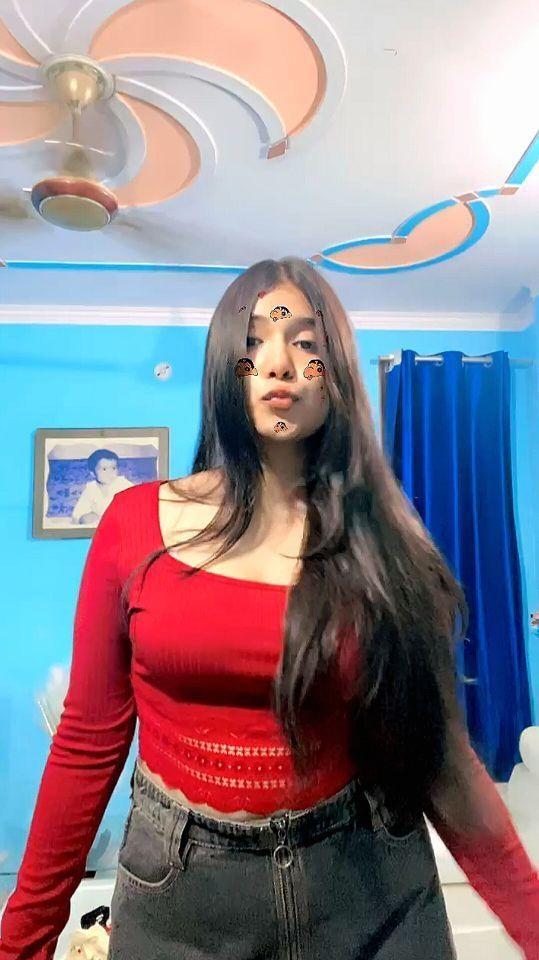
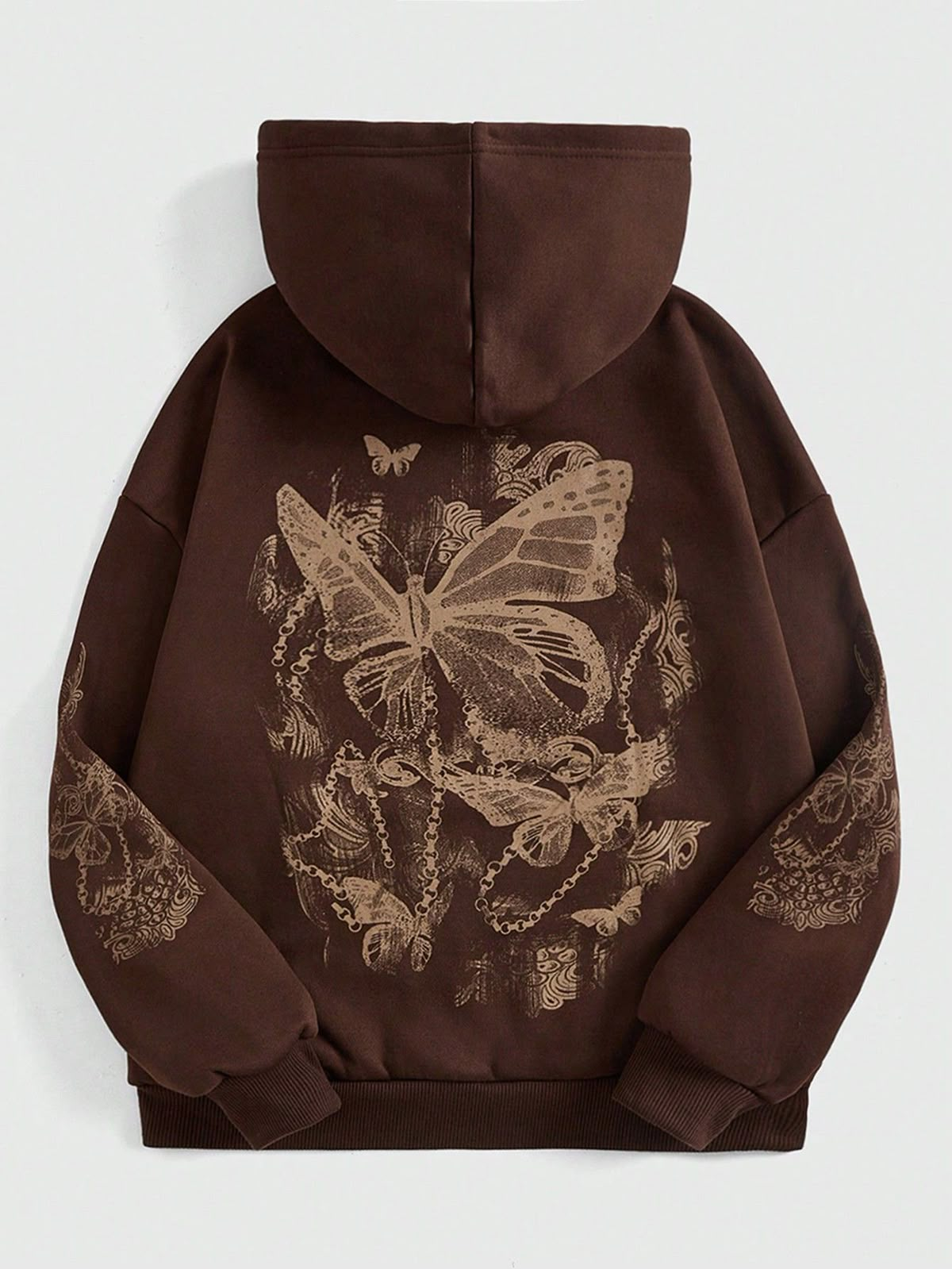
- **Fabric Physics:** The source garment is a high-GSM (grams per square meter) heavyweight cotton-fleece blend. Unlike the user's current form-fitting ribbed top, this material is structured and stiff. It has a matte finish with very low specularity; it absorbs light rather than reflecting it. The simulation must account for significant fabric weight, causing straight, heavy folds rather than micro-creases.
- **Key Features:**
- **Oversized Silhouette:** The drop-shoulder construction is distinct and must replace the current set-in sleeve seam.
- **Ribbed Trims:** The elasticated cuffs and bottom hem (waistband) create a gathered tension point that creates a "blousing" effect above the hips.
- **Graphic Integrity:** The beige butterfly/grunge graphic and sleeve prints must be texture-mapped to flow over folds without distorting the artwork's recognizability.
- **Hood Geometry:** As the source is a back view, the front generation must simulate the bulk of the hood gathering around the neckline/trapezius area, rather than lying flat.
PHASE 2: FIT & DRAPE SIMULATION
- **Body Mapping:**
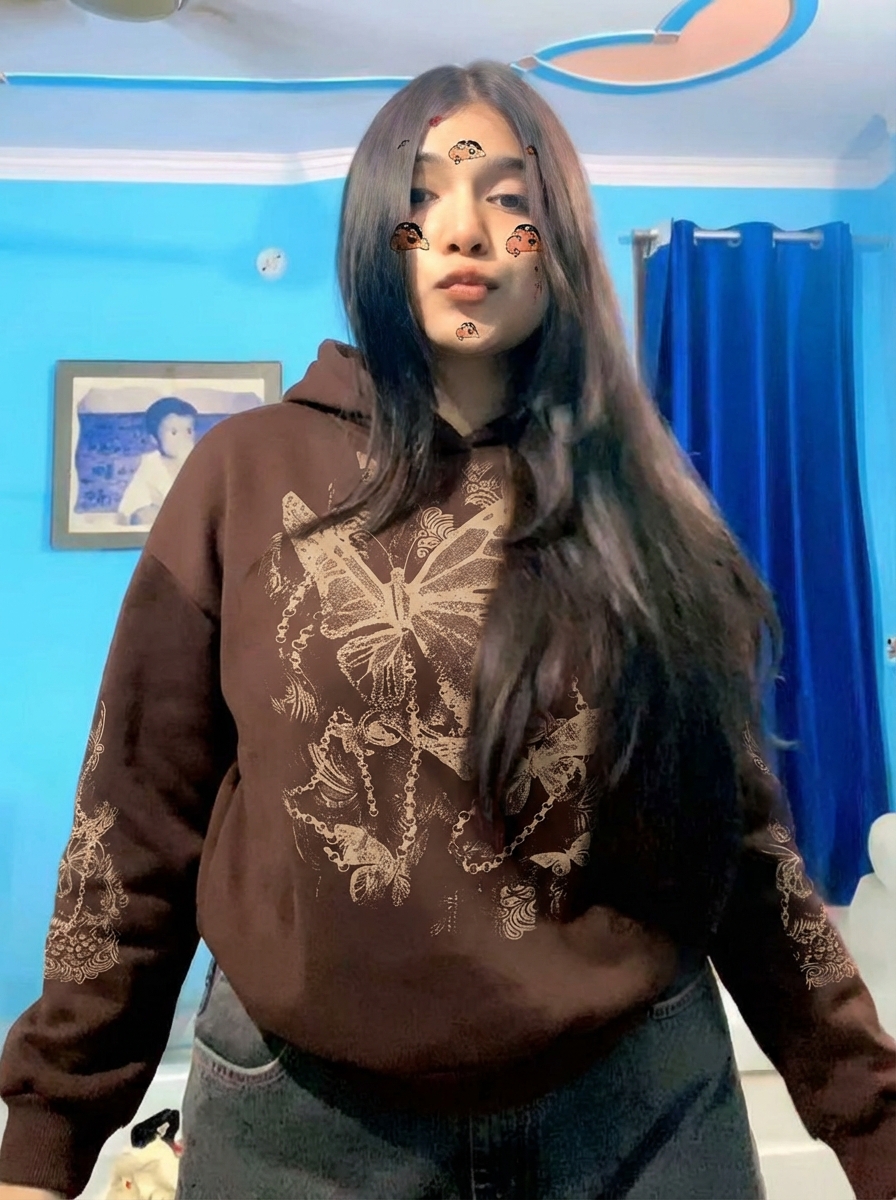
- **Volumetric Expansion:** The current red top is skin-tight. The simulation must *expand* the user's silhouette significantly to represent the "oversized" fit of the hoodie. The fabric should hang loosely from the shoulders and bridge over the curve of the waist, distinct from the body.
- **Arm Interaction:** On the straight right arm, the sleeve should stack slightly at the wrist due to the ribbed cuff. On the obscured left side, the fabric must balloon slightly around the elbow bend.
- **Occlusion Handling:**
- **Hair Segmentation (CRITICAL):** The user has voluminous long hair draping over both shoulders and the chest. A high-precision segmentation mask must isolate the hair strands. The brown hoodie must be rendered *behind* this hair layer. The hair should not interact with the hoodie texture but must cast shadows onto it.
- **Waistline:** The hoodie is likely longer than the current crop top; it needs to drape *over* the top of the jeans waistband, potentially obscuring the belt loops currently visible.
PHASE 3: ENVIRONMENT & LIGHTING
- **Light Match:** The target environment has a strong cool/cyan ambient cast due to the blue walls, with a primary overhead light source (ceiling fan shadow) and a frontal fill (ring light/screen glow).
- **Shadows:** The hoodie must cast a soft shadow onto the jeans and a deeper, sharper shadow inside the hood opening (if visible) and under the voluminous hair.
- **Color Calibration:** The warm chocolate brown of the source garment must be color-graded to accept the cool blue spill from the room. Without this, the hoodie will look like a sticker. The beige graphics should reflect a slight bluish tint to integrate into the scene.
PHASE 4: IDENTITY PROTECTION
- **Facial Lock:** The user's face, including the specific jawline contour, makeup/filters, and the exact positioning of the eyes, must be completely frozen.
- **Body Integrity:** Strict prohibition on body slimming. The user's hip width and pose must remain constant. The only change in silhouette should be the *additive* volume of the thicker garment. The jeans texture and shape below the hoodie's hemline must remain unaltered.