Thinking Process
PHASE 1: VISUAL DECONSTRUCTION
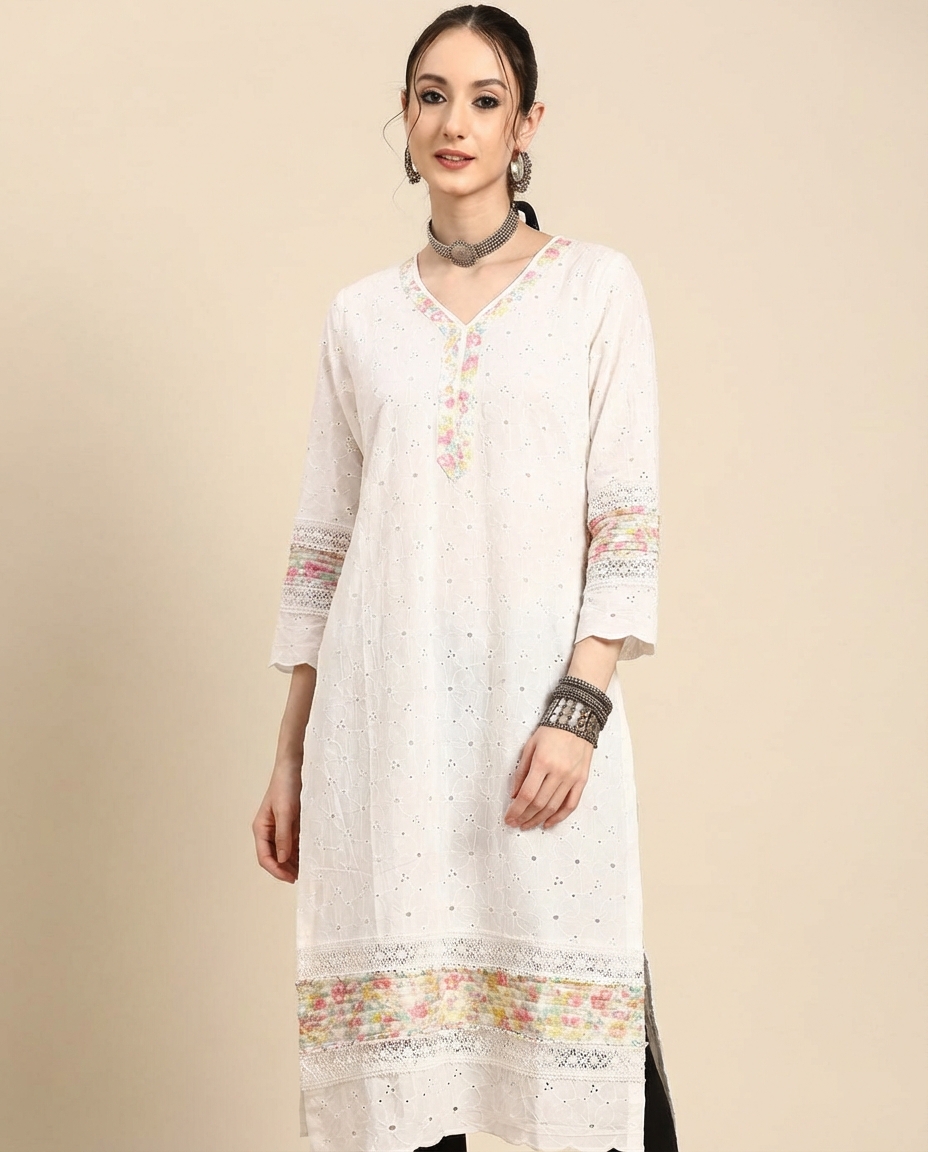
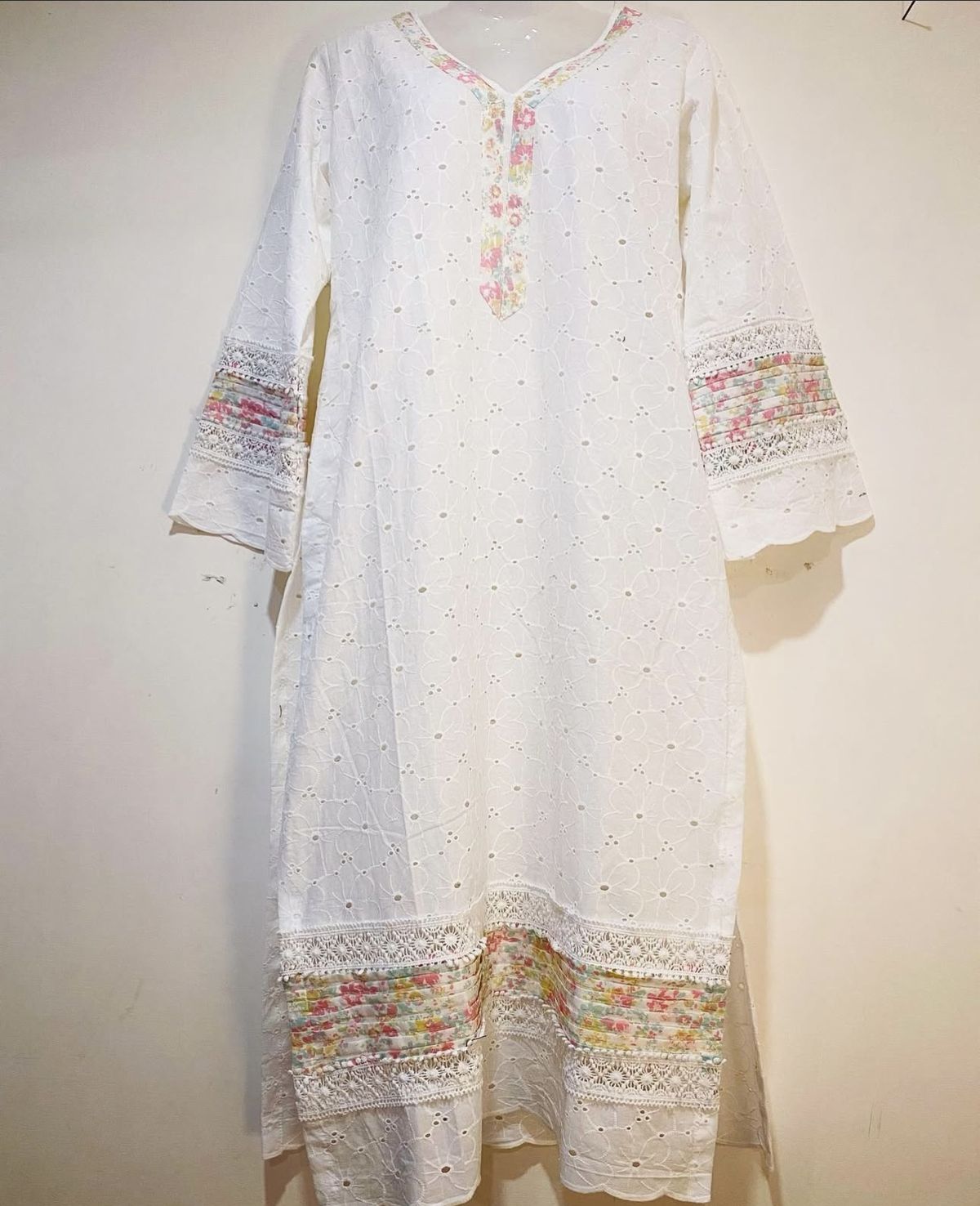
- **Fabric Physics:** The source garment appears to be a cotton or cotton-blend "Hakoba" or "Schiffli" style fabric with eyelet embroidery. It has a matte finish with zero specular reflection. The physics engine must simulate a semi-structured drape—it is breathable but has stiffness due to the embroidery density and layered hem, meaning it will fold in angular creases rather than fluid ripples like silk.
- **Key Features:** The specific eyelet perforation pattern (holes in the fabric) must render with depth, not just as a flat texture. The multi-tiered hemline (lace insert, floral block print panel, and scalloped lace edge) and matching sleeve cuffs are critical design elements. The central floral placket at the neckline must be preserved.
PHASE 2: FIT & DRAPE SIMULATION
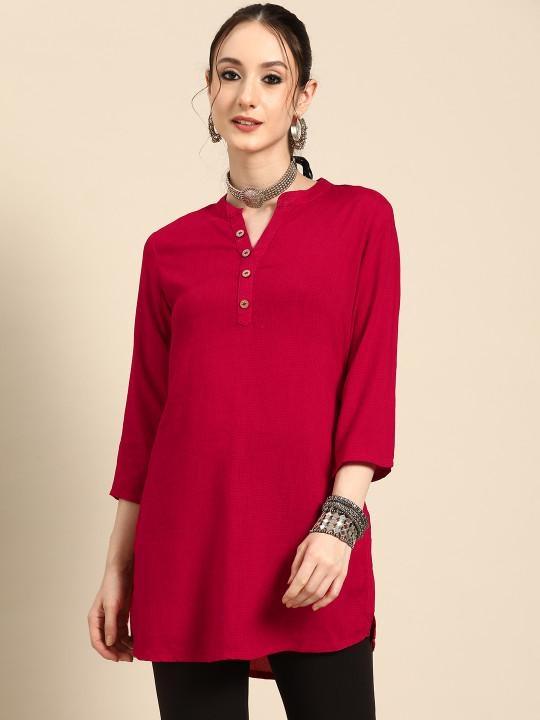
- **Body Mapping:** The source garment is significantly longer (below knee) than the user's current red tunic. The simulation must extend the geometry down the thighs, draping straight past the hips due to the weight of the embroidered hem. The shoulders must align precisely with the user's clavicle. At the user's left elbow (bent arm), the fabric needs to bunch horizontally (compression wrinkles) while maintaining the structural integrity of the lace cuff.
- **Occlusion Handling:**
1. **Necklace:** The silver choker sits high on the neck; the source garment has a V-neck. The choker must be layered *over* the garment or clearly visible on the skin above the neckline.
2. **Left Wrist/Hand:** The large silver cuff bracelet on the left wrist is a hard occlusion layer; the new sleeve must appear to terminate before it or tuck slightly under it, not cover it. The user's left hand fingers resting on the thigh must be segmented and placed *in front* of the new, longer hemline.
3. **Hair:** Loose strands near the jawline and ears must remain on top of the shoulder seam.
PHASE 3: ENVIRONMENT & LIGHTING
- **Light Match:** The user is in soft, diffuse studio lighting with shadows casting slightly to the viewer's right and rear. The bright white source garment is currently flat-lit; it requires ambient occlusion mapping to generate micro-shadows inside the eyelet holes and lace textures to prevent it from looking like a flat white sticker.
- **Color Calibration:** The source white is cool/neutral. It must be warmed slightly (shifted toward warm cream/ivory) to match the user's skin tone warmth and the studio environment. Exposure on the white fabric must be clamped to prevent "blooming" or loss of texture detail in the highlights.
PHASE 4: IDENTITY PROTECTION
- **Facial Lock:** Absolute pixel freeze required for the face (eyes, eyebrows, nose, lips), ears, and the specific hairline/parting. The silver earrings must remain untouched.
- **Body Integrity:** Do not warp the user's underlying skeletal structure. The user is slim; the white garment is loose-fitting. Allow the garment to add natural volume to the silhouette rather than warping the user's waist to fit the cloth or shrinking the cloth artificially to look "fitted." The legs (black leggings) below the new hemline must remain unchanged.