Thinking Process
PHASE 1: VISUAL DECONSTRUCTION
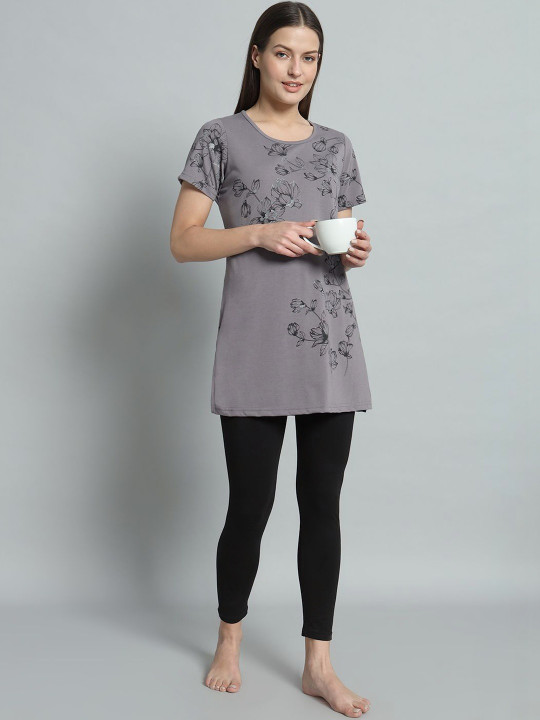
- **Fabric Physics:** The source garment is a cotton-jersey blend tunic. It is soft, pliable, and has a matte finish with low light reflectivity. It has a medium weight, meaning it will follow gravity closely but maintains some structure in an A-line silhouette rather than clinging tightly to the skin like spandex.
- **Key Features:** The specific black floral line-art prints (located on the left shoulder sleeve and right hip area) must be preserved in high fidelity. The heather grey base color, the round crew neckline, and specifically the extended tunic length (falling to mid-thigh) are critical design elements that distinguish this from a standard t-shirt.
PHASE 2: FIT & DRAPE SIMULATION
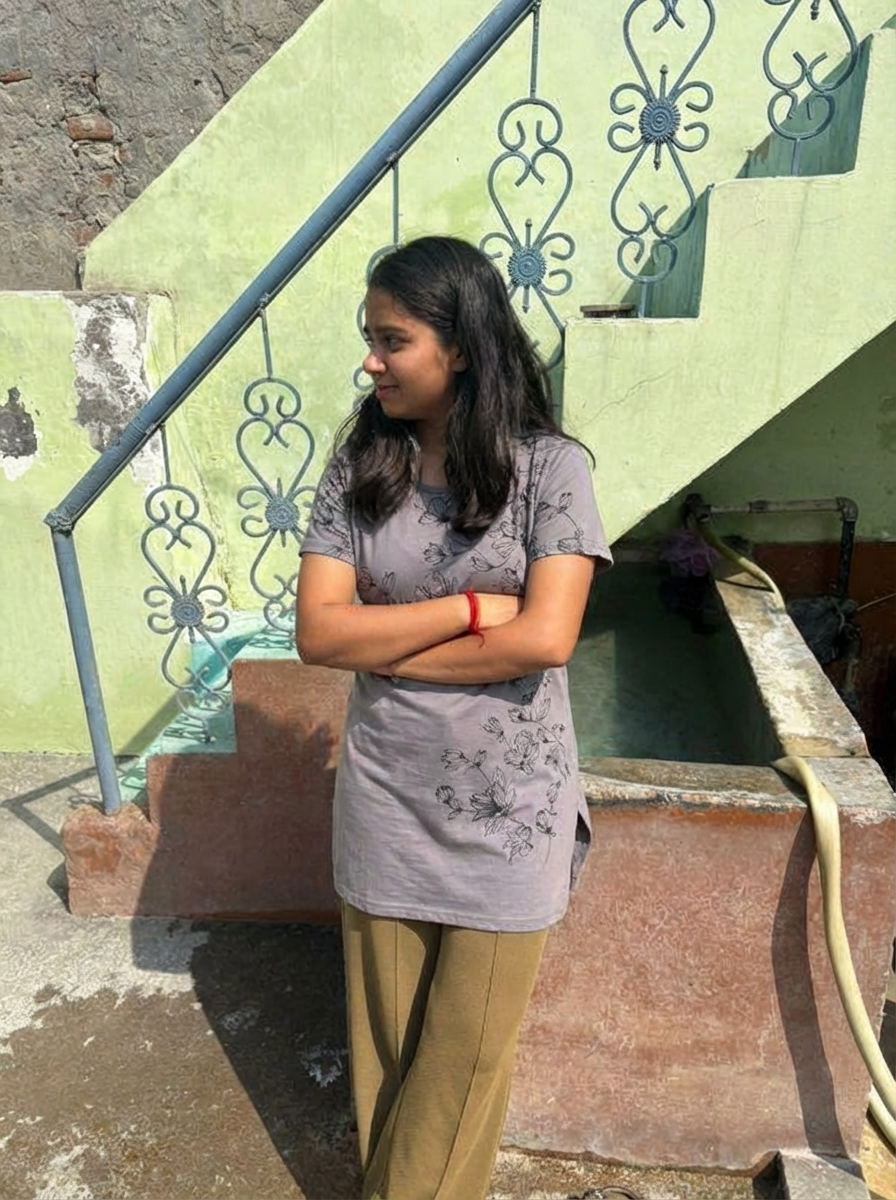
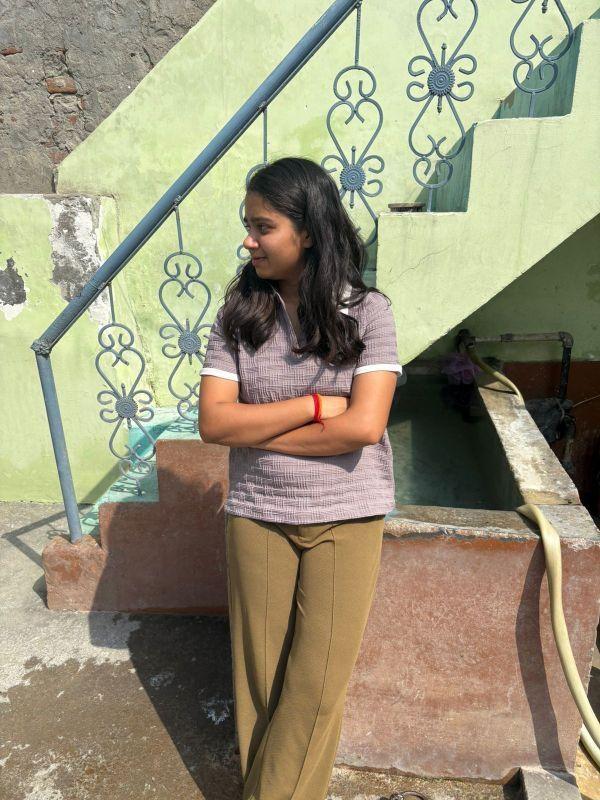
- **Body Mapping:** Due to the user's crossed-arm pose, the fabric simulation requires high tension mapping. The garment must appear compressed under the forearms and biceps, creating realistic bunching/wrinkles across the chest and midriff. The lower half of the tunic must drape vertically past the waistline, hanging loosely over the hips and covering the upper portion of the olive trousers, respecting the fabric's A-line cut.
- **Occlusion Handling:** This creates a complex segmentation challenge. The user's crossed arms and hands must be strictly segmented and layered *over* the new garment. Additionally, the long dark hair cascading over both shoulders must be masked and composited on top of the floral tunic to maintain realism.
PHASE 3: ENVIRONMENT & LIGHTING
- **Light Match:** The user is in a high-contrast outdoor environment with strong, hard sunlight coming from the top-right. The new garment must replicate this harsh lighting: bright highlights on the right shoulder/chest and deep, hard shadows cast by the crossed arms onto the abdomen. The left side of the garment (user's right side) should be in shadow.
- **Color Calibration:** The source image has neutral studio lighting. The target environment has warm sunlight and significant green bounce light from the wall/railing. The grey tone of the tunic must be color-graded to a warmer hue, with subtle green tints added to the shadow areas to simulate global illumination from the surrounding green walls.
PHASE 4: IDENTITY PROTECTION
- **Facial Lock:** The user's profile, including the nose, jawline, cheek, and ear, must remain pixel-perfectly frozen. The hair volume and texture must not be altered.
- **Body Integrity:** The simulation must respect the user's natural torso width and arm volume. Do not warp the user's body to fit the model's silhouette; the tunic must drape over the user's existing geometry without slimming the waist or altering the posture.