Thinking Process
PHASE 1: VISUAL DECONSTRUCTION
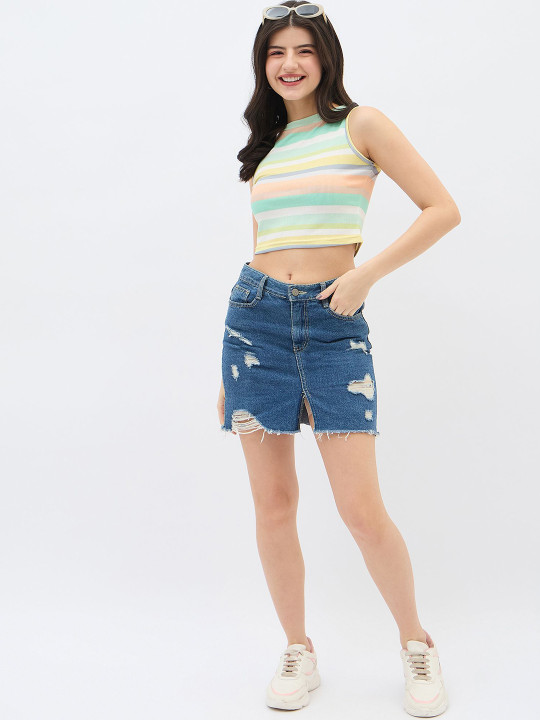
- **Fabric Physics:** The source garment is a ribbed knit jersey (cotton-elastane blend). It has high elasticity and a matte finish. Light should diffuse softly across the surface without specular highlights (unlike silk or leather). The physics simulation must account for stretch tension across the bust while maintaining structural integrity at the armholes.
- **Key Features:**
- **Pattern:** Horizontal pastel stripes (mint, yellow, peach, white) must wrap naturally around the body curvature, avoiding linear distortion.
- **Texture:** Vertical ribbing texture must be preserved to provide depth.
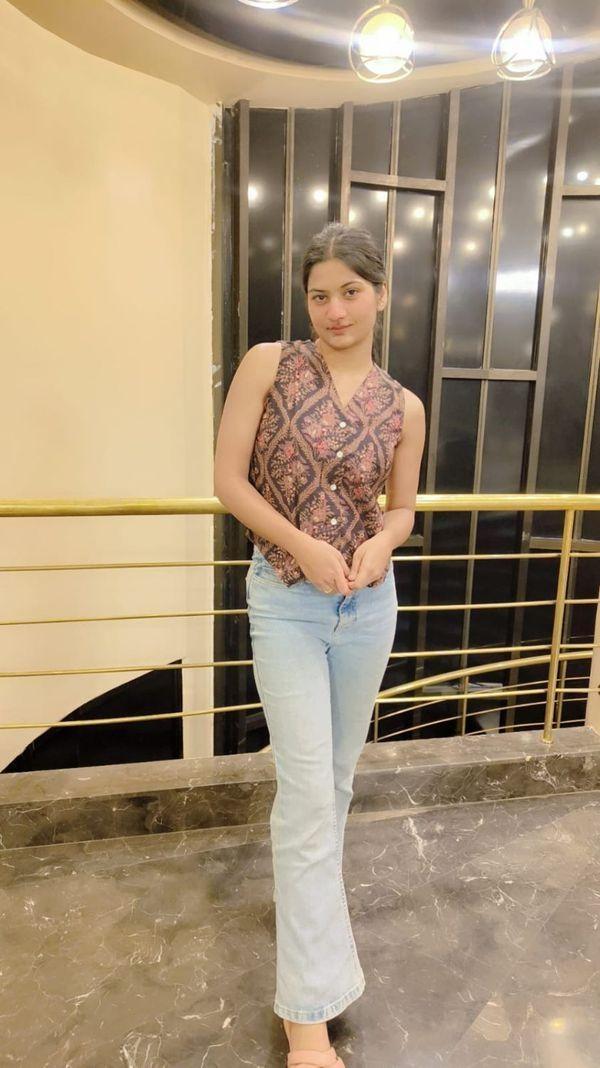
- **Hemline:** This is a crop top. The hem sits significantly higher than the user's current vest.
- **Neckline:** High crew-neck cut (contrasts with the user's current deep V-neck).
PHASE 2: FIT & DRAPE SIMULATION
- **Body Mapping:**
- **Torso Fit:** The garment is form-fitting. It should contour closely to the user's torso without the loose bunching seen in the current vest.
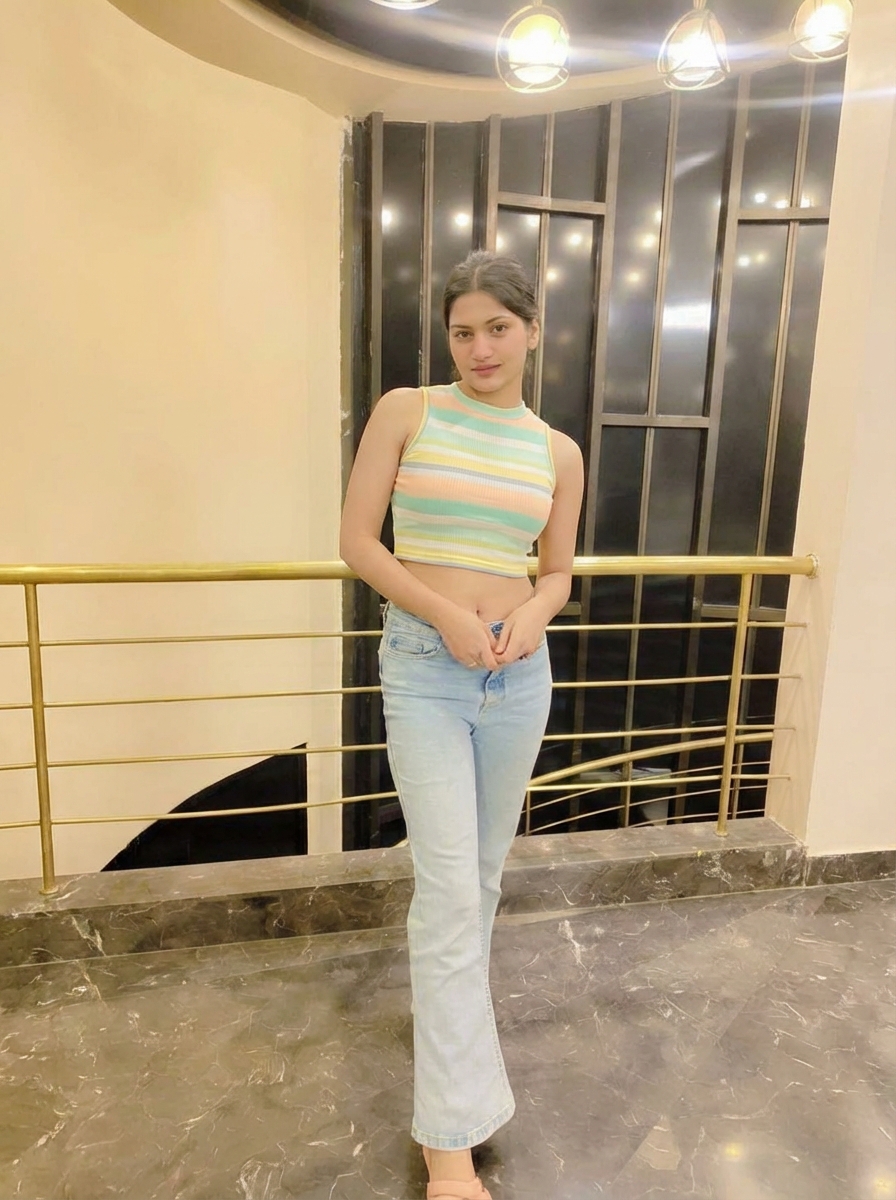
- **Midriff Interaction:** Since the source is a crop top and the user's current top covers the waist, the simulation must generate accurate skin texture and lighting for the exposed midriff area between the new hemline and the user's existing denim waistband.
- **Armholes:** The cut is sleeveless but high. The fabric should sit flush against the skin near the axilla (armpit) area.
- **Occlusion Handling:**
- **Hands/Arms:** The user's hands are clasped low. While they do not overlap the chest, the inner forearms near the waist must be segmented cleanly from the torso to prevent texture bleeding.
- **Neck:** The user's current V-neck reveals chest skin that the new crew-neck will cover. The simulation must occlude the existing skin and collarbones with the new fabric.
PHASE 3: ENVIRONMENT & LIGHTING
- **Light Match:**
- **Direction:** The user environment has strong overhead, warm artificial lighting (visible ceiling fixtures). Shadows must be cast downward from the bust and slightly under the hemline onto the midriff.
- **Reflections:** The matte fabric will not reflect the environment, but it must accept the *color* of the light.
- **Color Calibration:**
- **Temperature Shift:** The source image has cool, neutral studio white balance. The target image has a warm, yellow/gold ambient cast. The pastel colors of the crop top must be color-graded warmer (shift white points toward yellow/orange) to integrate into the staircase environment.
- **Contrast:** Increase contrast slightly to match the dynamic range of the user's photo, ensuring the blacks/shadows in the ribbing match the depth of the background shadows.
PHASE 4: IDENTITY PROTECTION
- **Facial Lock:** The user's entire head, including the hairline, pulled-back hairstyle, ears, and neck structure, must be frozen and masked out of the generation area.
- **Body Integrity:**
- **Skin Tone:** The generated midriff skin (exposed by the crop top) must perfectly match the user's facial and arm skin tone.
- **Shape Preservation:** Strictly forbid warping the user's shoulder width or arm thickness. The user's natural waist width must be maintained; do not impose the source model's thinner waist measurement onto the user.