Thinking Process
PHASE 1: VISUAL DECONSTRUCTION
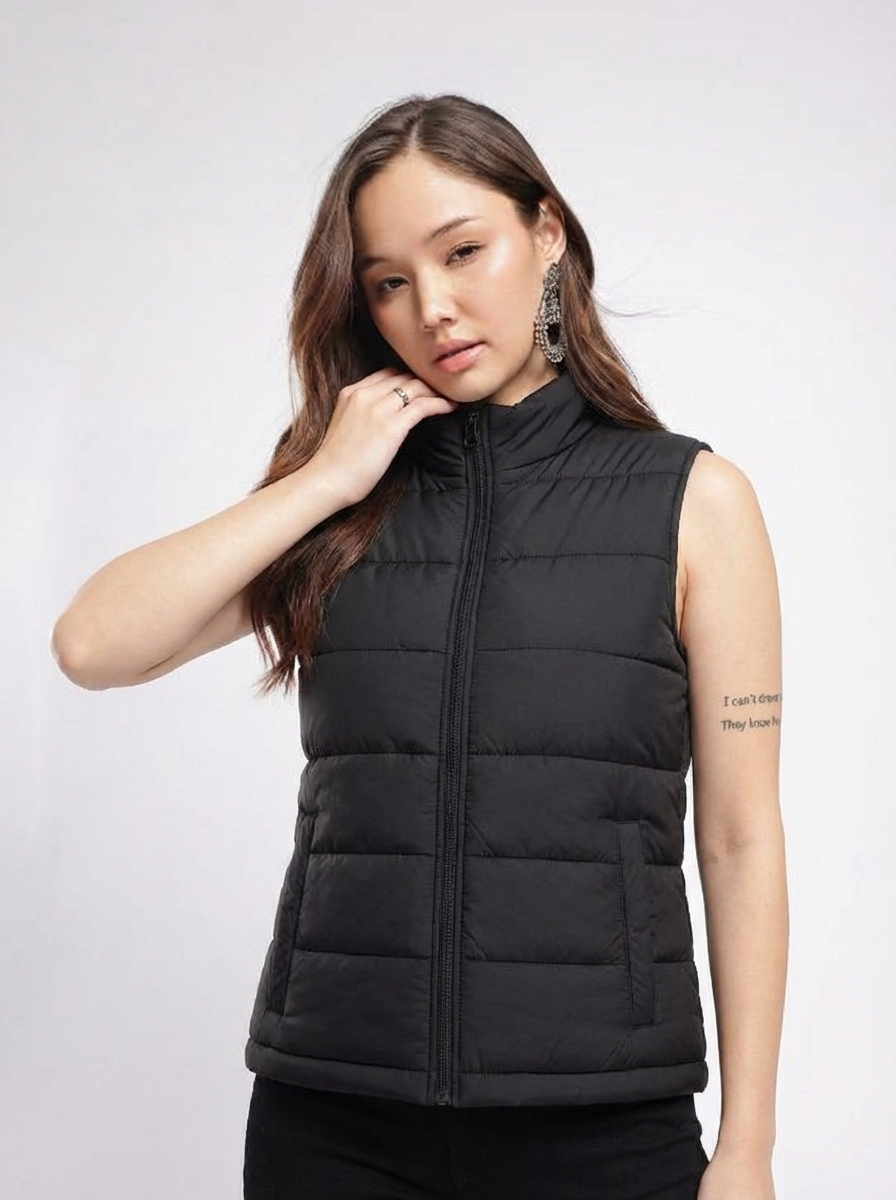
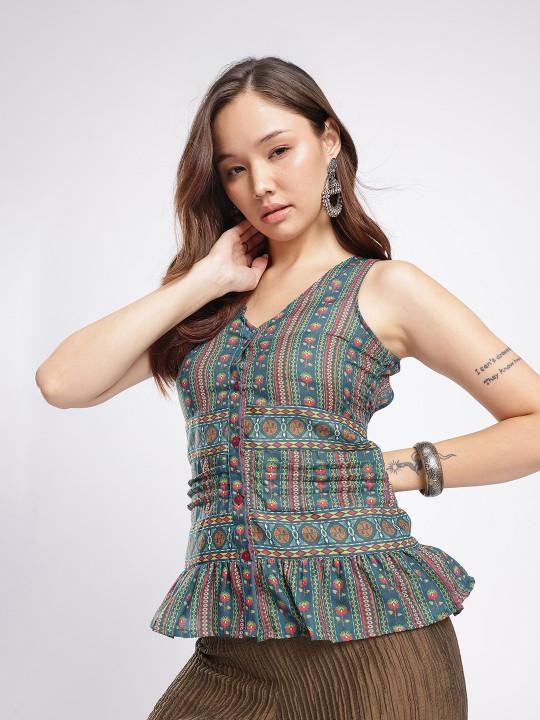
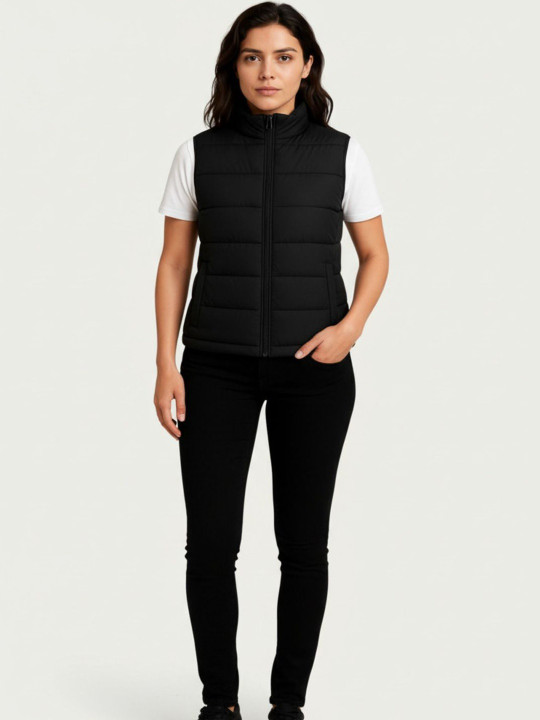
- **Fabric Physics:** The source garment is a padded puffer vest (gilet), likely composed of a synthetic nylon or polyester shell with down or synthetic filling. Unlike the user's current flowy cotton blend, this material has high structural rigidity and volume. It features a semi-glossy surface that creates distinct specular highlights on the peaks of the quilting and deep shadows in the crevices.
- **Key Features:** The horizontal quilting (baffle) pattern must be preserved with its volumetric "puff" appearance. The high stand-up funnel collar is a critical structural element. The central zipper line, side pocket welts, and the sleeveless armhole binding must be retained. The white t-shirt worn underneath in the source image should be discarded, transferring only the black vest.
PHASE 2: FIT & DRAPE SIMULATION
- **Body Mapping:** Due to the garment's padded nature, the fit must not cling to the skin. It requires a calculated offset from the user's torso to simulate the thickness of the insulation. The high collar must encircle the user's neck without clipping into the jaw. Since the user's right arm is raised/bent, the right armhole of the vest should lift slightly and gap, maintaining the stiff structure of the shoulder yoke rather than crumpling like soft fabric. The bottom hem should sit at the hip, replacing the current peplum flare.
- **Occlusion Handling:**
1. **Hair:** The user's long hair falls over both shoulders and the back of the neck. The vest collar must be rendered *behind* the hair strands, or the hair must be segmented and layered *over* the puffed collar.
2. **Right Hand:** The user's right hand is positioned near the neck/shoulder area. If the high collar rises to that level, the fingers must properly occlude (overlap) the collar, not disappear behind it.
3. **Accessories:** The large earrings must remain visible and swing free of the new high collar.
PHASE 3: ENVIRONMENT & LIGHTING
- **Light Match:** The user is illuminated by soft, diffuse studio lighting, primarily from the front-left (viewer's perspective), casting soft shadows to the right. The black material of the vest must be calibrated to reflect this light source; the specular highlights on the nylon baffles should shift to align with the user's light direction to define the 3D shape.
- **Color Calibration:** The source vest is deep black. To prevent it from looking like a flat "void" in the user's bright environment, the black levels must be lifted slightly (dark grey tones in highlights) to ensure the quilting texture remains visible against the white background.
PHASE 4: IDENTITY PROTECTION
- **Facial Lock:** The user's face, jawline, makeup, and neck shape must be rigorously frozen. The large earrings and the tattoo on the left inner bicep must be preserved and remain visible.
- **Body Integrity:** The simulation must respect the user's natural arm width and shoulder breadth. While the vest adds bulk/volume to the torso, the underlying body mesh must not be slimmed or warped to compensate for the garment's size.