Thinking Process
PHASE 1: VISUAL DECONSTRUCTION
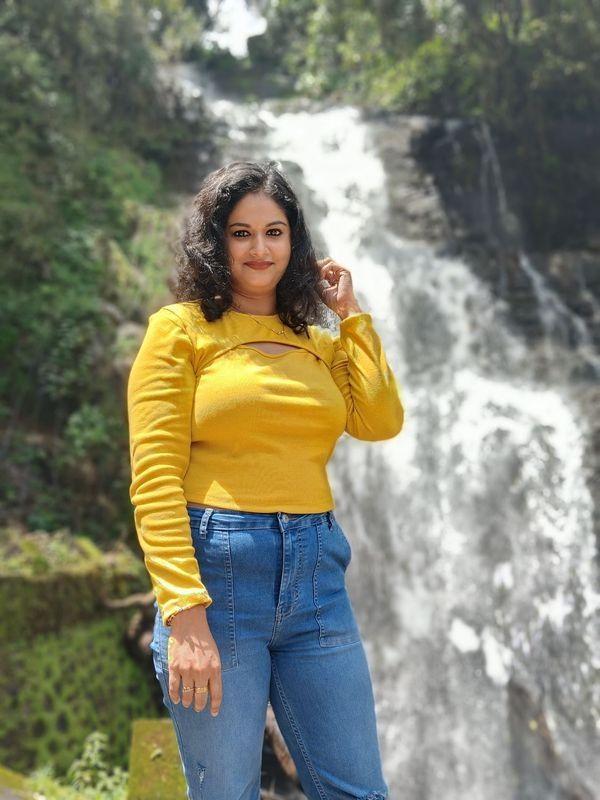
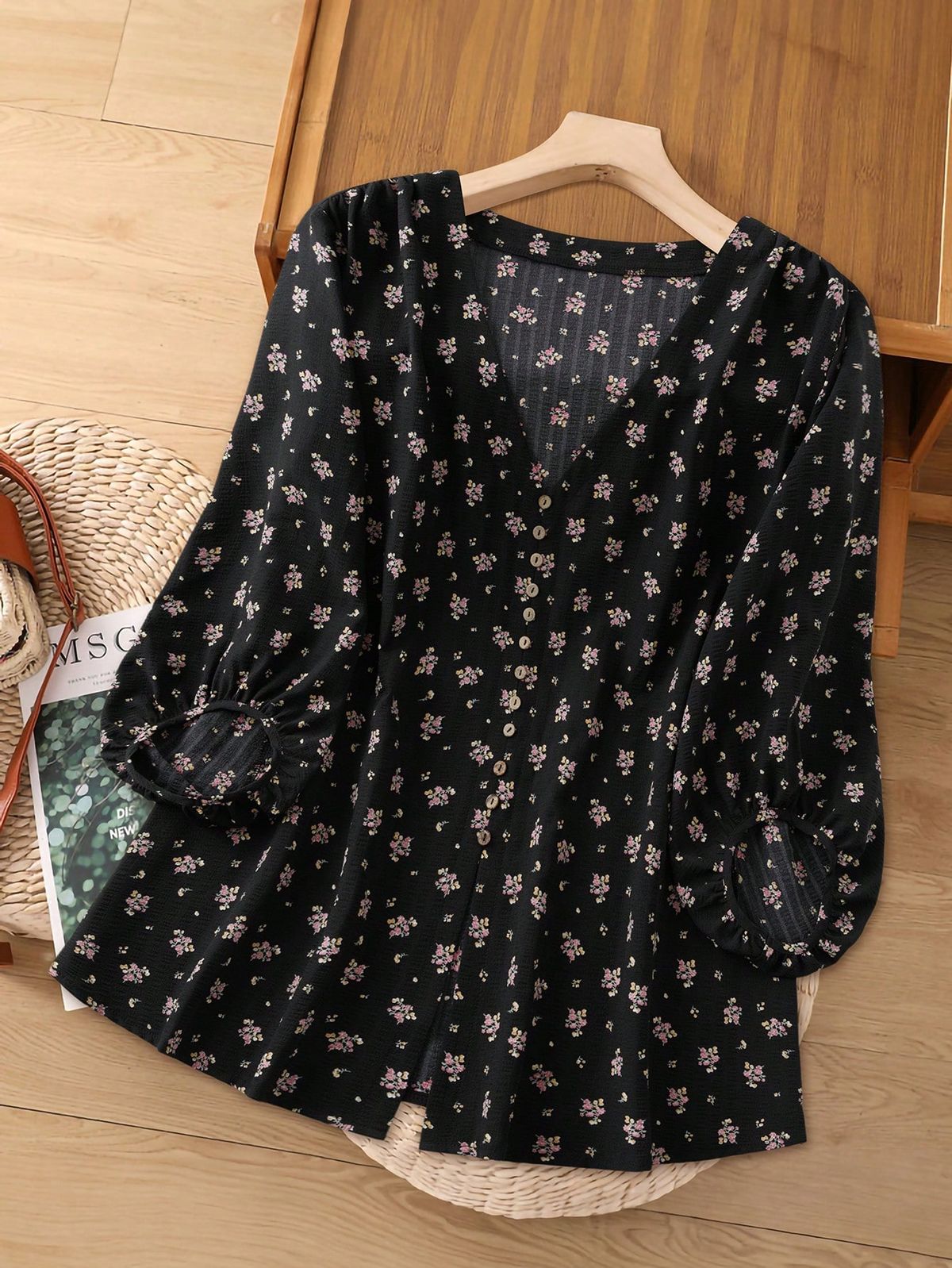
- **Fabric Physics:** The source garment appears to be a lightweight, woven fabric (likely rayon, viscose, or crepe) with a matte finish. Unlike the user's current tight knit top, this material is non-elastic and flowy. It absorbs light rather than reflecting it strongly, but will show soft highlights on folds. The simulation must account for a lower friction coefficient, allowing the fabric to glide rather than cling.
- **Key Features:** The central vertical button placket must remain structurally aligned and not warp excessively over the bust. The V-neckline geometry needs to be preserved. The 3/4 length "puff" sleeves with elasticated/ruffled cuffs are critical to the silhouette. The all-over ditsy floral pattern (pink/white on black) must maintain consistent scale and not stretch pixel-wise across the chest.
PHASE 2: FIT & DRAPE SIMULATION
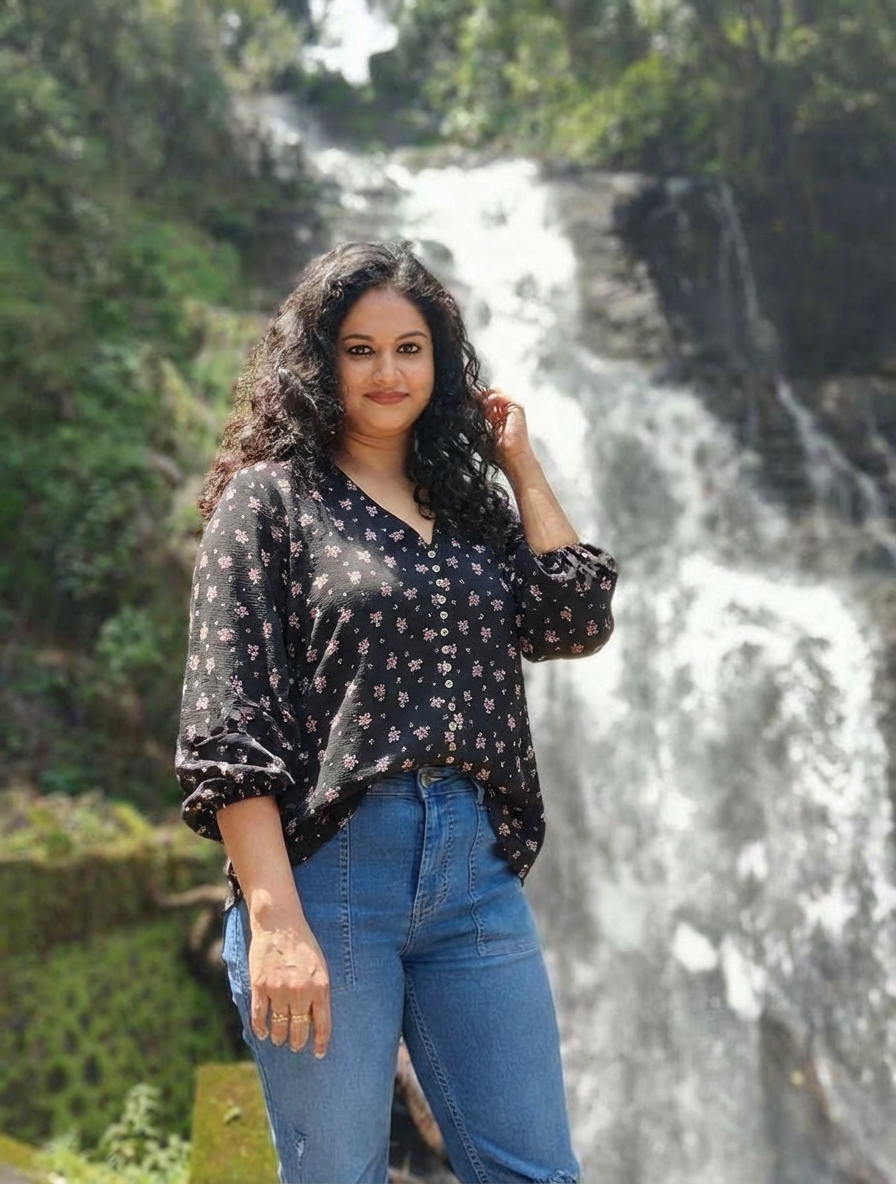
- **Body Mapping:** The current tight silhouette must be replaced with a relaxed fit. The new garment will drape vertically from the bust apex, creating a slight "tenting" effect over the midriff rather than hugging the waist. On the user's left arm (raised), the sleeve fabric must bunch and slide down towards the elbow due to gravity, exposing the forearm. On the right arm (straight), the sleeve should hang loosely with the cuff resting near the mid-forearm. The hemline should fall naturally over the hips, obscuring the waistband of the jeans.
- **Occlusion Handling:** The user's voluminous curly hair resting on the shoulders and upper chest is a primary occlusion layer; the new fabric must be composited *underneath* these hair locks. The user's left hand and wrist are exposed and must be masked out to appear in front of the garment if the sleeve interacts with that area, though the 3/4 sleeve length likely leaves the wrist clear.
PHASE 3: ENVIRONMENT & LIGHTING
- **Light Match:** The user is in a diffuse, outdoor daylight environment with a bright, high-key background (waterfall). The lighting is soft and omnidirectional with low contrast. The deep black of the source garment must be lifted (black levels raised) to match the atmospheric haze of the environment so it doesn't look like a "hole" in the image. Shadows cast by the hair onto the shoulders and by the bust onto the stomach must be soft and diffused, not hard-edged.
- **Color Calibration:** Apply a cool-toned ambient light filter to the garment to match the color temperature of the waterfall mist and forest greenery. The pink flowers on the shirt should slightly desaturate to match the outdoor lighting conditions.
PHASE 4: IDENTITY PROTECTION
- **Facial Lock:** Absolute freeze required on the user's facial features (eyes, nose, mouth), jawline, and neck skin texture. The user's specific hairstyle and volume must be preserved pixel-perfectly.
- **Body Integrity:** Strict prohibition on body morphing. The user's bust volume, shoulder width, and arm thickness must serve as the collision mesh for the cloth simulation. Do not slim the waist; the garment must drape over the user's actual topology.