Thinking Process
PHASE 1: VISUAL DECONSTRUCTION
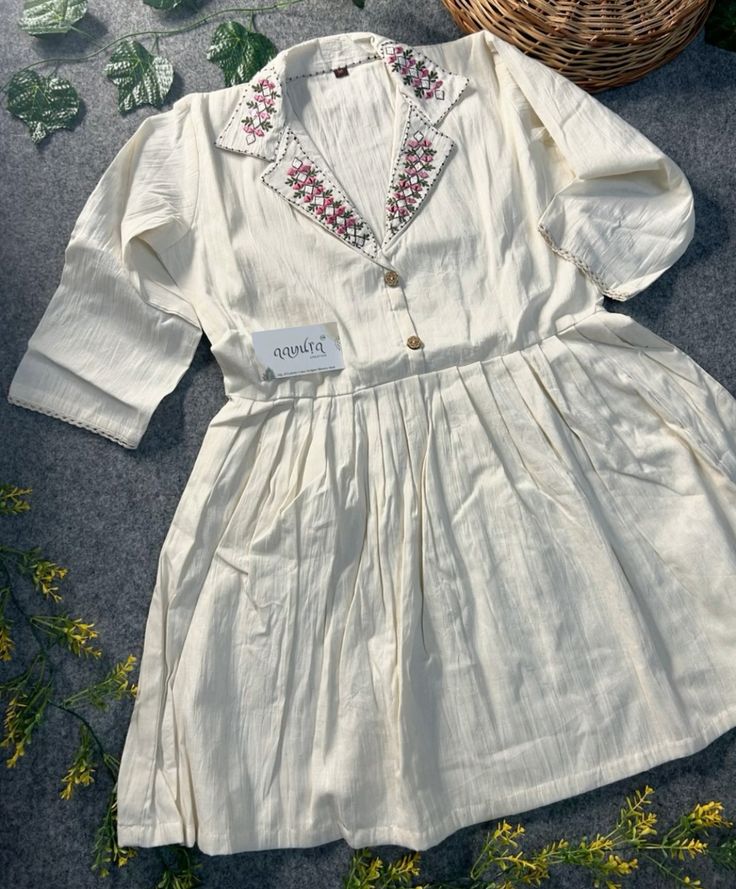
- **Fabric Physics:** The source garment appears to be a textured cotton or linen blend with a matte finish. It possesses a moderate stiffness at the collar and button placket but transitions into a softer, gravity-driven drape below the waistline due to the gathered pleating. It should diffuse light rather than reflect it; there should be no specular highlights.
- **Key Features:** The pink and green floral embroidery on the notched lapel collar is the primary focal point and must remain high-resolution. The distinct gathered waistline (empire or natural waist cut), the central button line, the "crinkle" texture of the fabric, and the brand tag (if visible in the final crop, though likely omitted) must be rendered realistically. The 3/4 length sleeves with delicate hem stitching must be preserved.
PHASE 2: FIT & DRAPE SIMULATION
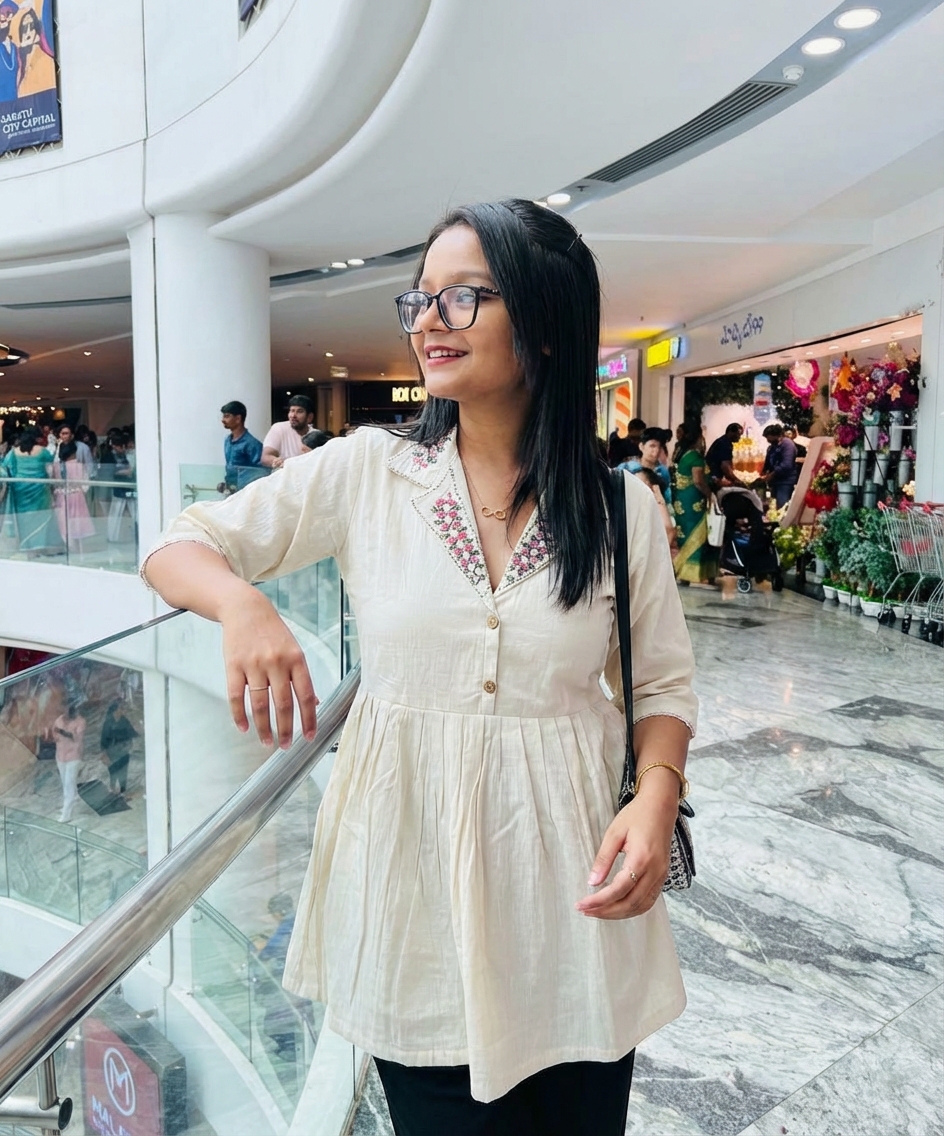
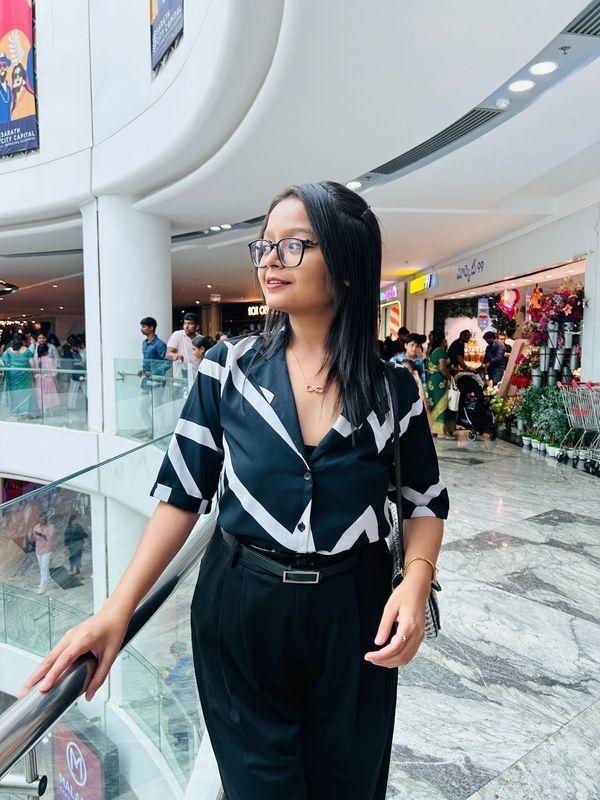
- **Body Mapping:** The garment is a tunic/short dress style. Unlike the user's current tucked-in shirt, this garment must hang *over* the waist of the black trousers. The skirt portion of the tunic will flare slightly outward and downward from the user's mid-section. On the user's right arm (extended to railing), the sleeve should be relatively straight with tension at the shoulder. On the left arm (bent), the fabric must pool and crease at the inner elbow.
- **Occlusion Handling:** The user's long, dark hair falls over both shoulders and significantly covers the upper chest; this hair mask must be segmented and layered *on top* of the new garment to maintain realism. The shoulder bag strap on the user's right shoulder creates a complex occlusion; the new fabric must appear compressed under the strap, or the strap must be digitally repainted over the new cloth. The necklace may be obscured by the new garment's higher V-neck and collar.
PHASE 3: ENVIRONMENT & LIGHTING
- **Light Match:** The target environment utilizes diffuse, cool-toned artificial mall lighting from overhead. The source garment (currently in warm, directional studio light) must be color-corrected to match the cooler ambient temperature of the mall. Shadows should be soft and fall downwards, particularly underneath the collar lapels and within the folds of the gathered waist sections.
- **Color Calibration:** The cream/off-white tone of the source garment needs to be slightly desaturated and cooled to prevent it from looking yellow against the stark white architectural elements of the mall. The pink embroidery should retain its vibrancy but interact with the ambient light intensity.
PHASE 4: IDENTITY PROTECTION
- **Facial Lock:** The user's entire facial structure, including the glasses, eyes, nose, and jawline, must remain completely frozen. The hair geometry and texture must not be altered.
- **Body Integrity:** The user's torso width, arm volume, and posture must be preserved exactly. The simulation must not slim the waist or alter the user's BMI to fit the garment; the garment must warp to fit the user's existing volume. The black trousers below the tunic's hemline must remain untouched.