Thinking Process
PHASE 1: VISUAL DECONSTRUCTION
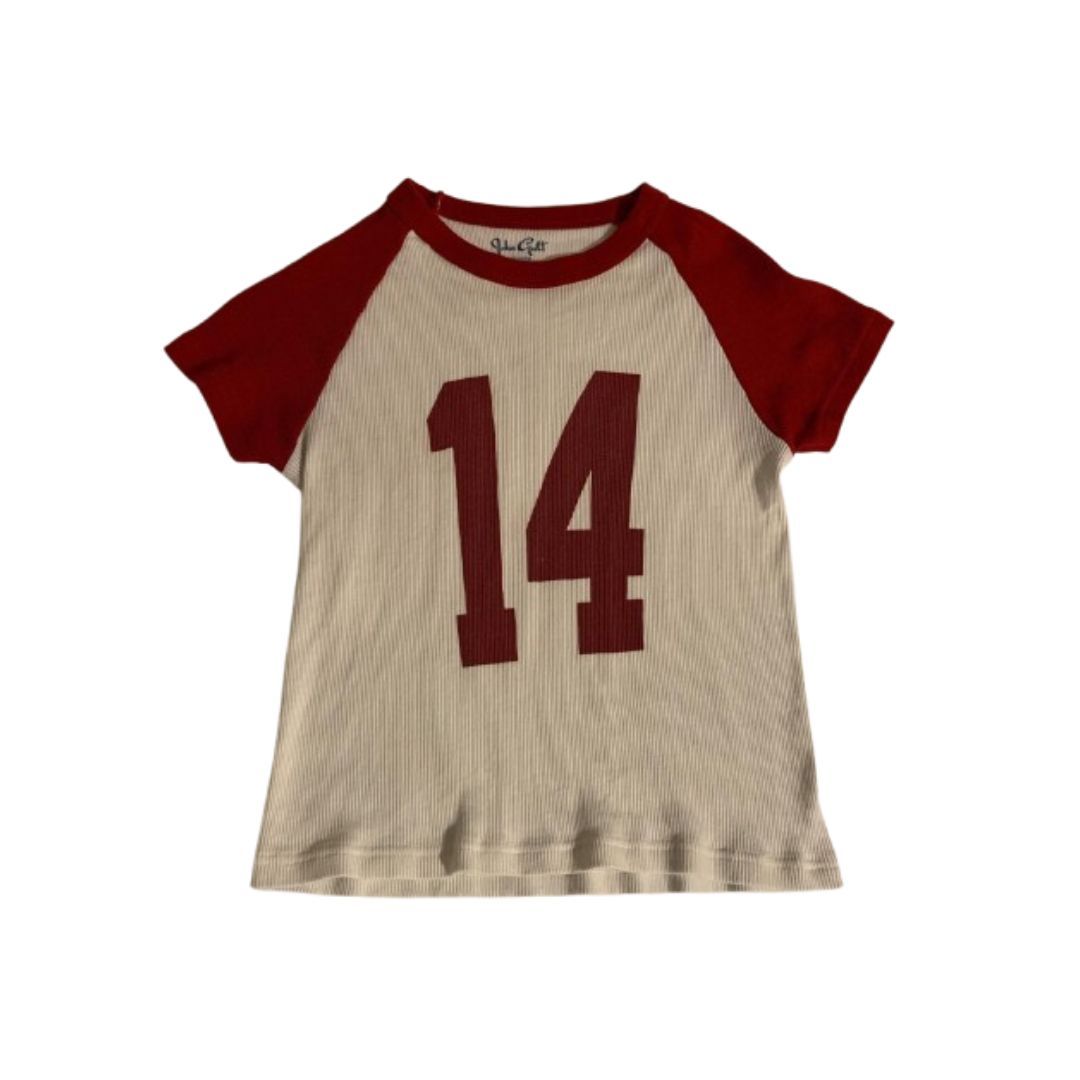
- **Fabric Physics:** The source garment is a ribbed cotton jersey knit. It possesses high flexibility and moderate elasticity but low stiffness. The texture map is matte with micro-surface vertical ribbing, meaning it should diffuse light softly with no specular highlights (unlike silk or polyester).
- **Key Features:**
- **Raglan Sleeves:** The distinct diagonal seam line from the underarm to the collarbone (color-blocked in dark red) must be structurally accurate.
- **Graphic Integrity:** The "14" print is central; warping must occur only to account for chest curvature, not texture stretching.
- **Hemlines:** The visible double-stitched hem at the waist and sleeves must be preserved.
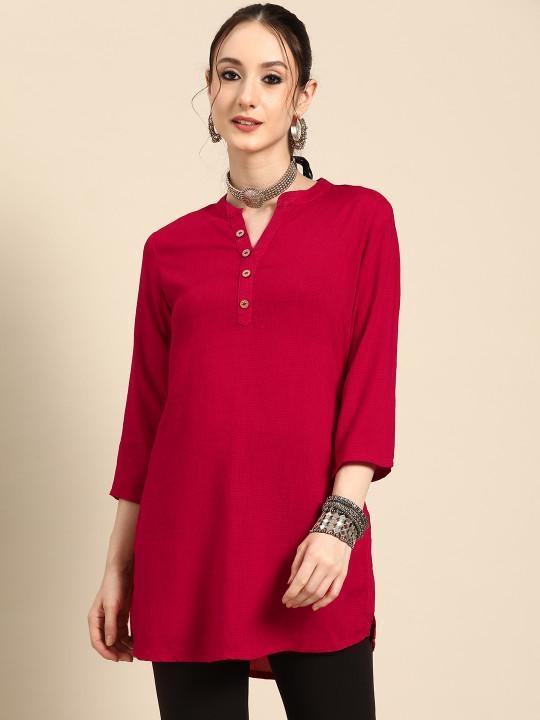
- **Collar:** The dark red crew neck ribbing is thicker than the body fabric and must sit higher than the current V-neck placket.
PHASE 2: FIT & DRAPE SIMULATION
- **Body Mapping:**
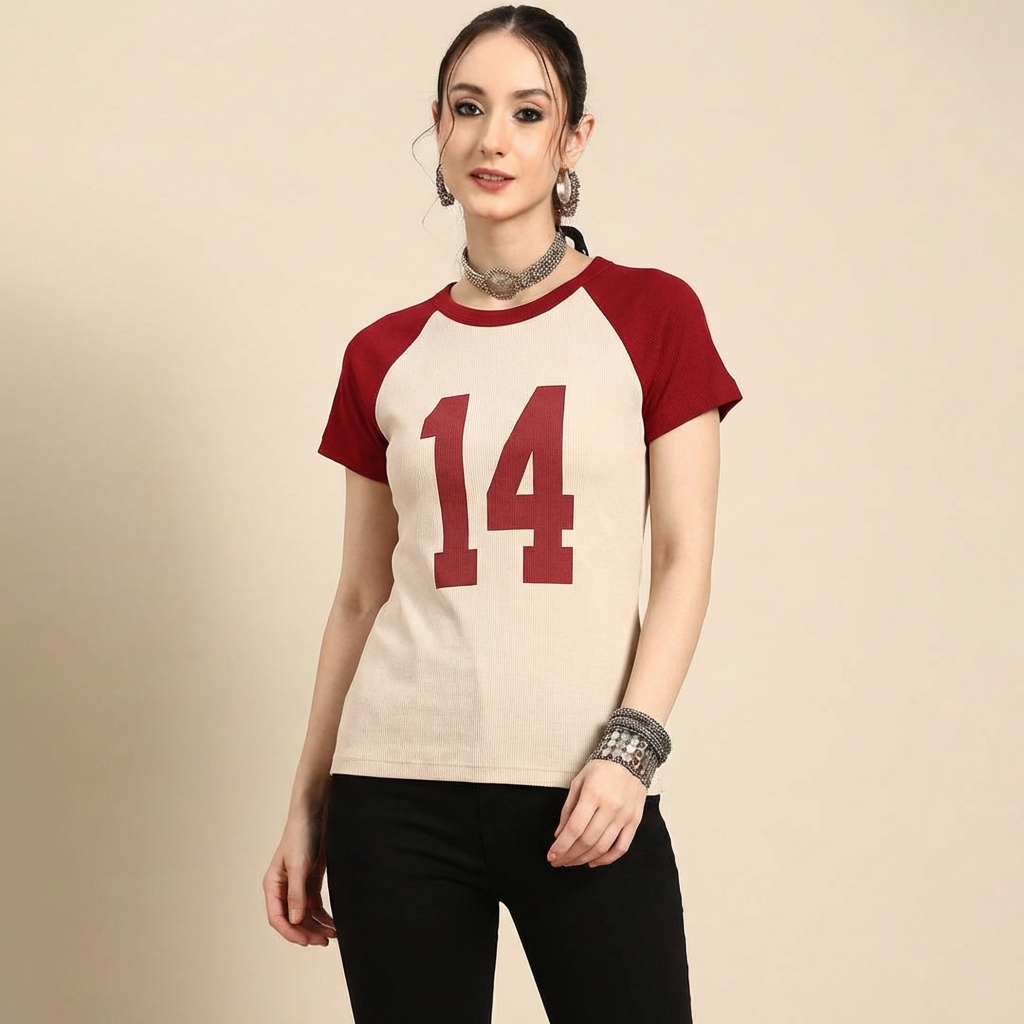
- **Sleeve Transition:** The source is short-sleeved, while the target wears 3/4 sleeves. The simulation requires generative inpainting of the user's forearms and elbows to match her existing skin tone.
- **Torso Drape:** The user has a slight hip sway to her right. The cotton jersey should drape vertically from the chest apex, exhibiting minor tension wrinkles across the bust, but falling somewhat loosely at the waist compared to the currently fitted kurta.
- **Shoulder Fit:** The raglan cut will sit softer on the shoulder slope compared to the current set-in sleeve seam.
- **Occlusion Handling:**
- **Necklace:** The silver choker fits high on the neck. The new crew collar will likely sit just below it. The necklace must remain the top layer.
- **Left Hand & Jewelry:** The user's left hand and the heavy silver cuff bracelets rest against the hip. Since the new sleeves are short, the bracelets will now rest on bare skin/inpainted arm rather than fabric. The hand and bracelets must successfully occlude the torso/hip area behind them.
- **Hair:** Loose strands of hair near the jawline and neck must be segmented and layered over the new red collar.
PHASE 3: ENVIRONMENT & LIGHTING
- **Light Match:** The user image utilizes soft, broad studio lighting (diffuse) originating from the front-left, creating a drop shadow on the wall to the user's right. The new garment must render with highlights on the left pectoral/shoulder area and cast soft self-shadows toward the right torso.
- **Color Calibration:** The source image has a slightly warm/vintage cast. The beige body of the shirt must be white-balanced to match the neutral cool/beige background of the user image to prevent the fabric from looking "yellowed" or dirty against the user's skin tone.
PHASE 4: IDENTITY PROTECTION
- **Facial Lock:** Absolute freeze on the facial region from the chin up, including the specific hairstyle, hairline, and ear jewelry.
- **Body Integrity:** The user's shoulder width, waist circumference, and hip position must remain unaltered. The garment needs to be warped to fit the user's volumetric data; the user's mesh must not be liquified to fit the clothing.