Thinking Process
PHASE 1: VISUAL DECONSTRUCTION
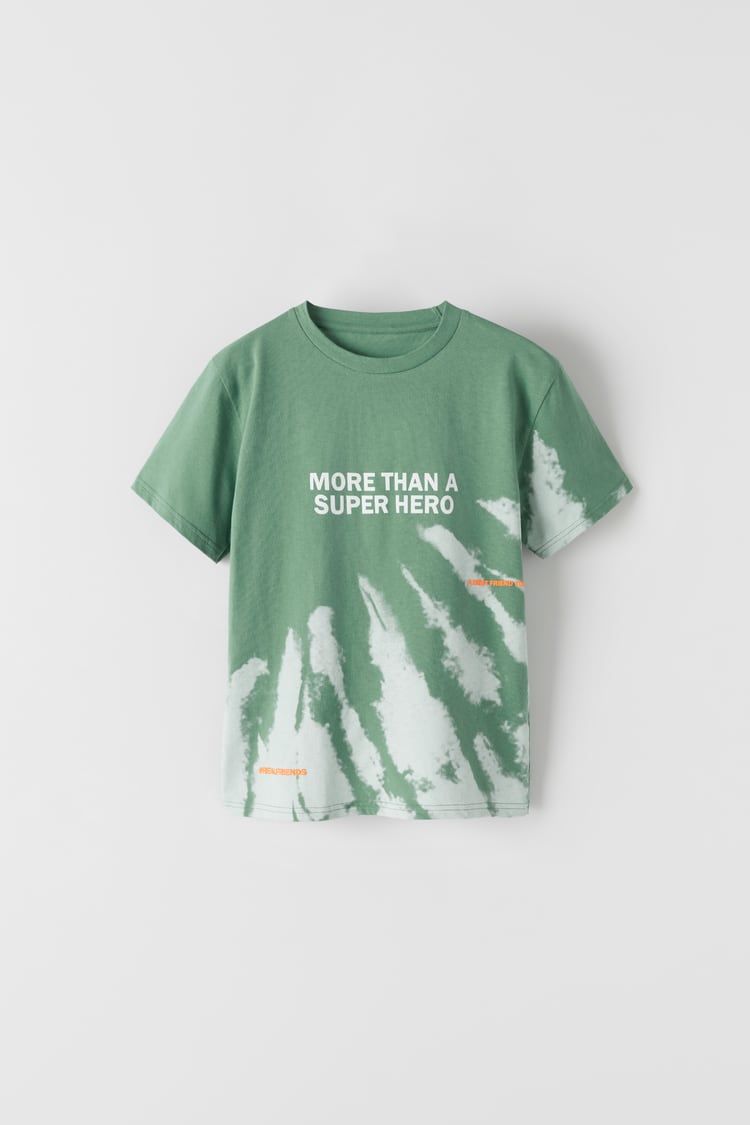
- **Fabric Physics:** The source garment is a standard cotton jersey knit. It possesses a low-gloss, matte finish with soft, pliable friction properties. It absorbs light rather than reflecting it. The simulation must avoid "plastic" sheen; folds should be soft and rounded, not jagged or stiff like starch.
- **Key Features:**
- **Typography:** The central text block "MORE THAN A SUPER HERO" (white) and smaller orange accent text must remain legible but warp naturally with chest curvature.
- **Pattern:** The tie-dye/acid-wash green and white pattern must be mapped continuously across the seams.
- **Structure:** Ribbed crew neckline and double-stitched hem on sleeves and waist.
PHASE 2: FIT & DRAPE SIMULATION
- **Body Mapping:**
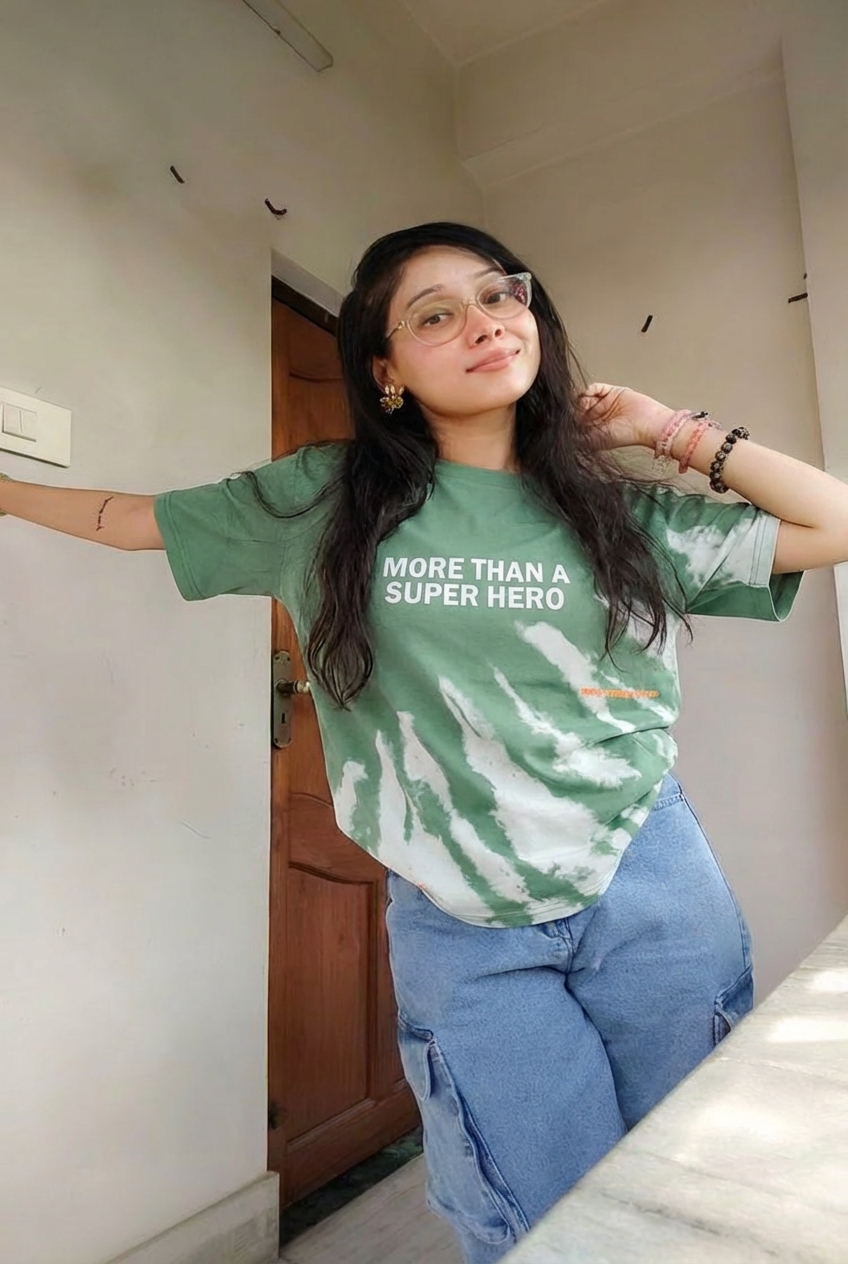
- **Right Arm (Extended):** Fabric must stretch horizontally from the right armpit across the chest, creating tension wrinkles pointing toward the sternum. The sleeve opening should hang loosely, showing negative space between skin and fabric.
- **Left Arm (Raised):** Gravity dictates the fabric will slide down toward the shoulder blade. Significant bunching/accordion folds are required at the top of the left shoulder and armpit area.
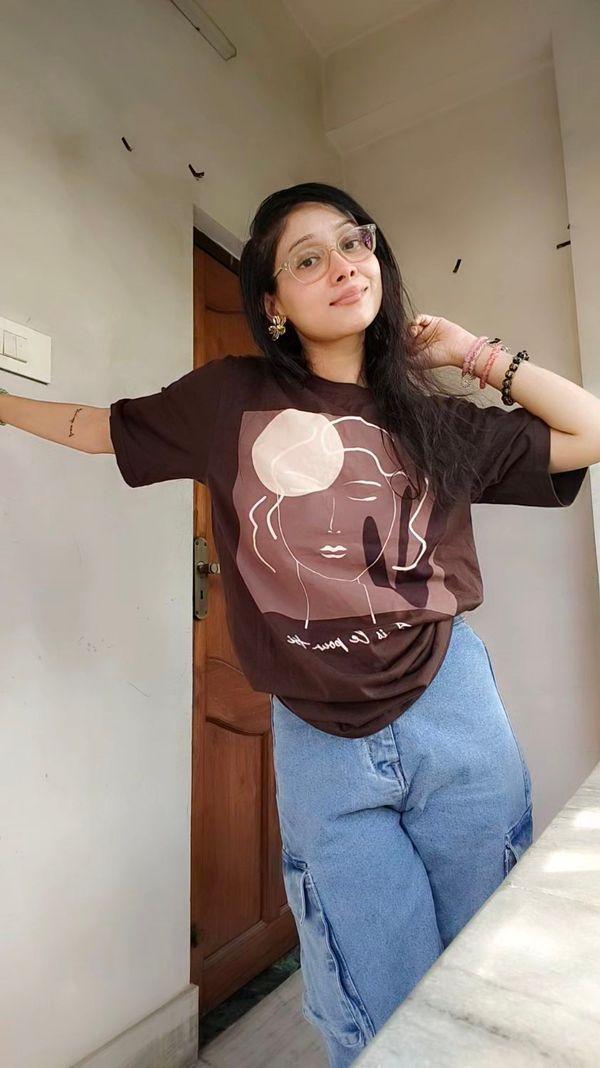
- **Torso:** The source shirt is a standard fit. Unlike the user's current oversized brown tee, the target mesh should sit closer to the body but still drape loosely over the stomach, interacting with the waistband of the jeans without clipping through them.
- **Occlusion Handling:**
- **Hair (Critical):** The user has long, dark hair cascading over *both* shoulders and covering a significant portion of the upper chest. A high-fidelity hair segmentation mask is required to layer these strands *over* the new green shirt. The neckline of the new shirt must pass *under* the hair.
- **Accessories:** The bracelets on the left wrist are clear of the garment zone, but the left hand near the head must not be obstructed by any sleeve artifacts.
PHASE 3: ENVIRONMENT & LIGHTING
- **Light Match:** The user is illuminated by a natural light source coming from the right (viewer's left), casting distinct shadows against the wall behind her. The new garment must render with highlights on the wearer's right side and cast self-shadows into the folds on the wearer's left side and under the bust.
- **Color Calibration:** The source image is under bright, neutral studio lighting. The user image has a slightly warmer, indoor tungsten/daylight mix. The green of the shirt needs to be slightly desaturated and warmed (lowered Kelvin temperature) to match the room's ambient occlusion so it doesn't appear "pasted on."
PHASE 4: IDENTITY PROTECTION
- **Facial Lock:** Absolute freeze on the facial region (eyes, nose, lips), specifically preserving the glasses and the jawline. The skin tone on the neck and visible arms must remain unaltered.
- **Body Integrity:** The user's waist width and arm circumference must be preserved. Do not slim the torso to fit the shirt; warp the shirt to fit the torso. The high-waisted denim jeans must remain unchanged; the new shirt should visually drape *over* the top of the jeans waistband or be simulated with a "French tuck" only if physics allows, otherwise standard drape over hips is preferred to keep the text visible.