Thinking Process
PHASE 1: VISUAL DECONSTRUCTION
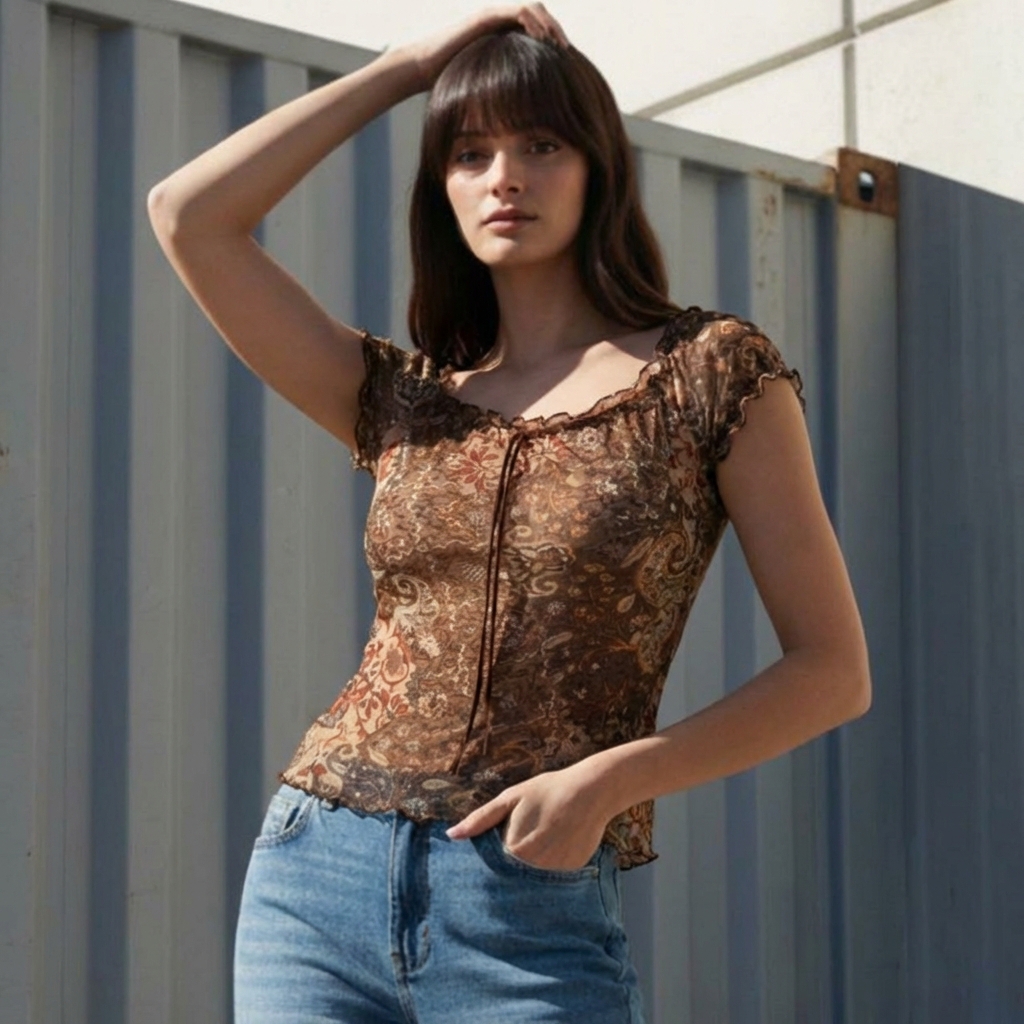
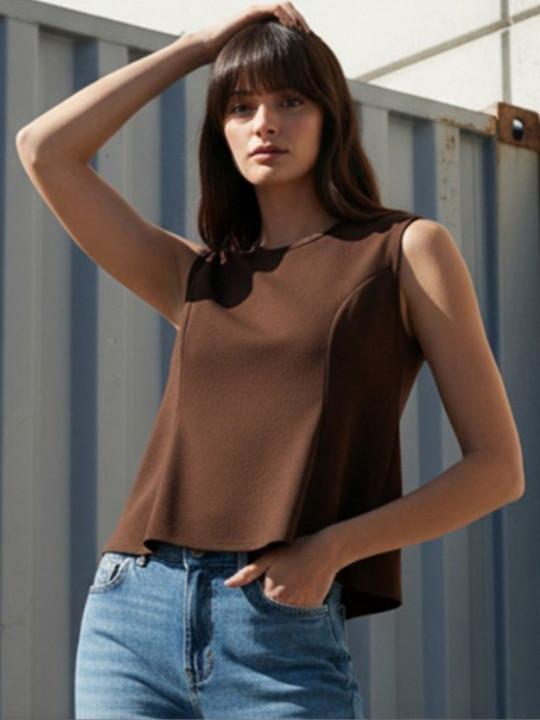
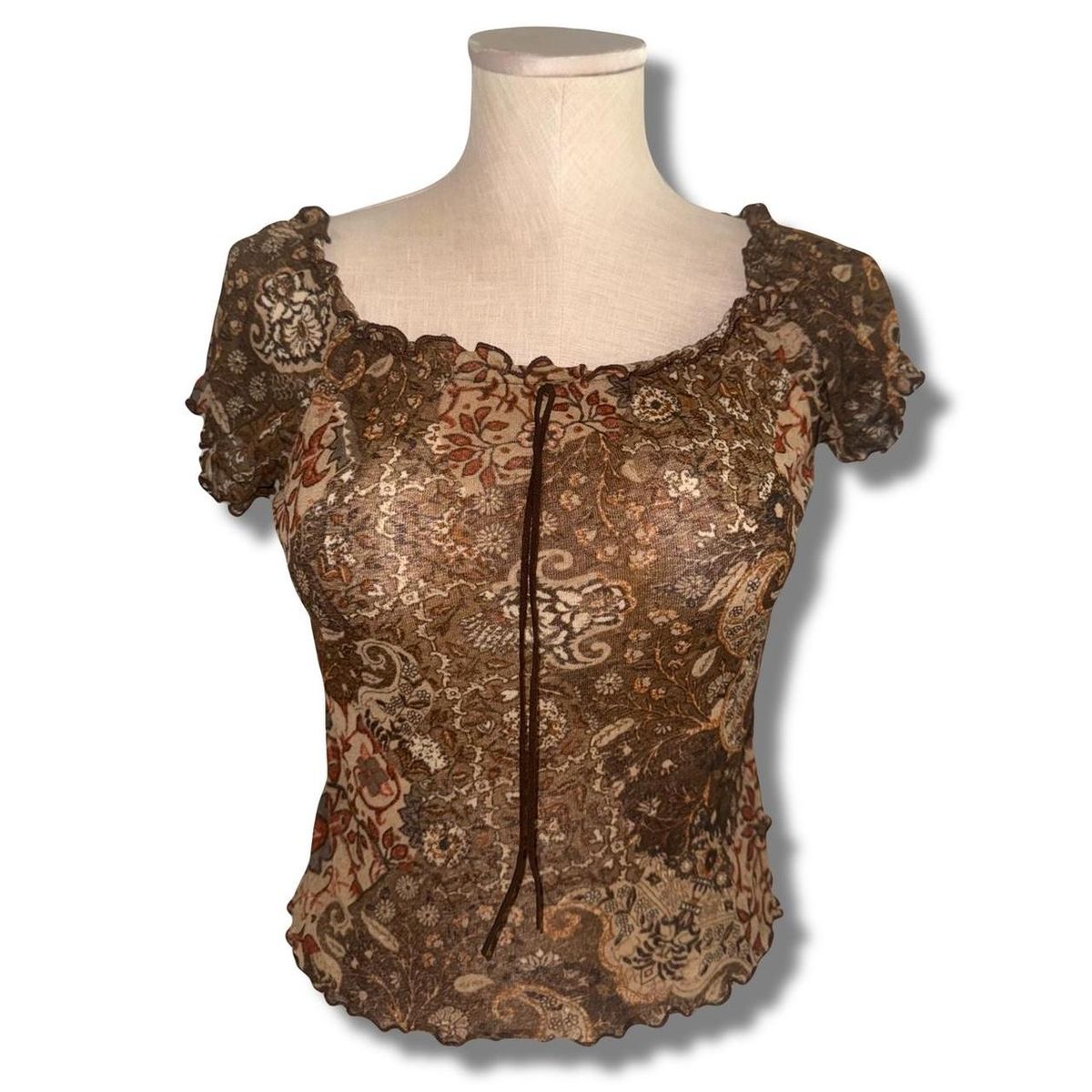
- **Fabric Physics:** The source garment is a semi-sheer, stretch-mesh material (likely nylon or polyester blend). It possesses a high elasticity coefficient. Unlike the user's current rigid woven top, this material is lightweight and porous. Simulation must account for subsurface scattering; the user's skin tone should influence the final color appearance due to the fabric's transparency.
- **Key Features:**
- **Lettuce-Edge Hemming:** The curly, ruffled edges on the sleeves, neckline, and bottom hem are critical geometry that must remain distinct, not flattened.
- **Center Drawstring:** The long, brown vertical tie string must hang loosely, subject to gravity, swaying slightly to the user's left due to the hip tilt.
- **Pattern Continuity:** The intricate brown/floral paisley print must wrap around the torso without texture stretching, particularly across the chest area.
PHASE 2: FIT & DRAPE SIMULATION
- **Body Mapping:**
- **Right Shoulder (Raised Arm):** The cap sleeve on the user's right side must retract and bunch slightly toward the shoulder joint due to the raised arm. The fabric across the right ribcage needs to exhibit tension lines (stretching) upwards.
- **Left Shoulder (Relaxed):** The left cap sleeve should sit naturally on the deltoid with the lettuce edge hanging freely.
- **Torso Fit:** This is a form-fitting garment. It should follow the curvature of the user's waist closely, ending exactly at the waistband of the jeans.
- **Occlusion Handling:**
- **Hair Masking:** The user has long dark hair draping over both shoulders. A precise alpha mask is required here; the new garment must be rendered *behind* the hair strands on the shoulders and upper chest.
- **Waistband Interaction:** The bottom hem of the mesh top should interact naturally with the denim waistband, potentially tucking slightly or sitting just above, creating a small cast shadow onto the jeans.
PHASE 3: ENVIRONMENT & LIGHTING
- **Light Match:** The target environment features hard, directional daylight coming from the Image-Left (user's right side), creating high-contrast shadows. The new garment must reflect this with bright highlights on the right side of the torso and deep shadows on the left side and under the bust.
- **Color Calibration:** The source image has flat, neutral studio lighting. To integrate, the contrast of the floral pattern must be increased. The highlights on the mesh need a cool-neutral shift to match the daylight temperature of the user's environment.
- **Sheer Effect:** The dark areas of the floral pattern should remain opaque, while the lighter mesh areas must be blended with the user's skin tone to simulate the fabric's semi-transparency.
PHASE 4: IDENTITY PROTECTION
- **Facial Lock:** Absolute freeze on the facial region (eyes, nose, lips), particularly the bangs and the jawline structure. The hand resting on the head must remain unaltered.
- **Body Integrity:** The user's arm volume, waist definition, and skin texture must not be warped or liquified. The simulation is strictly a surface wrap of the new texture onto the existing voxel body shape.