
Thinking Process
PHASE 1: VISUAL DECONSTRUCTION
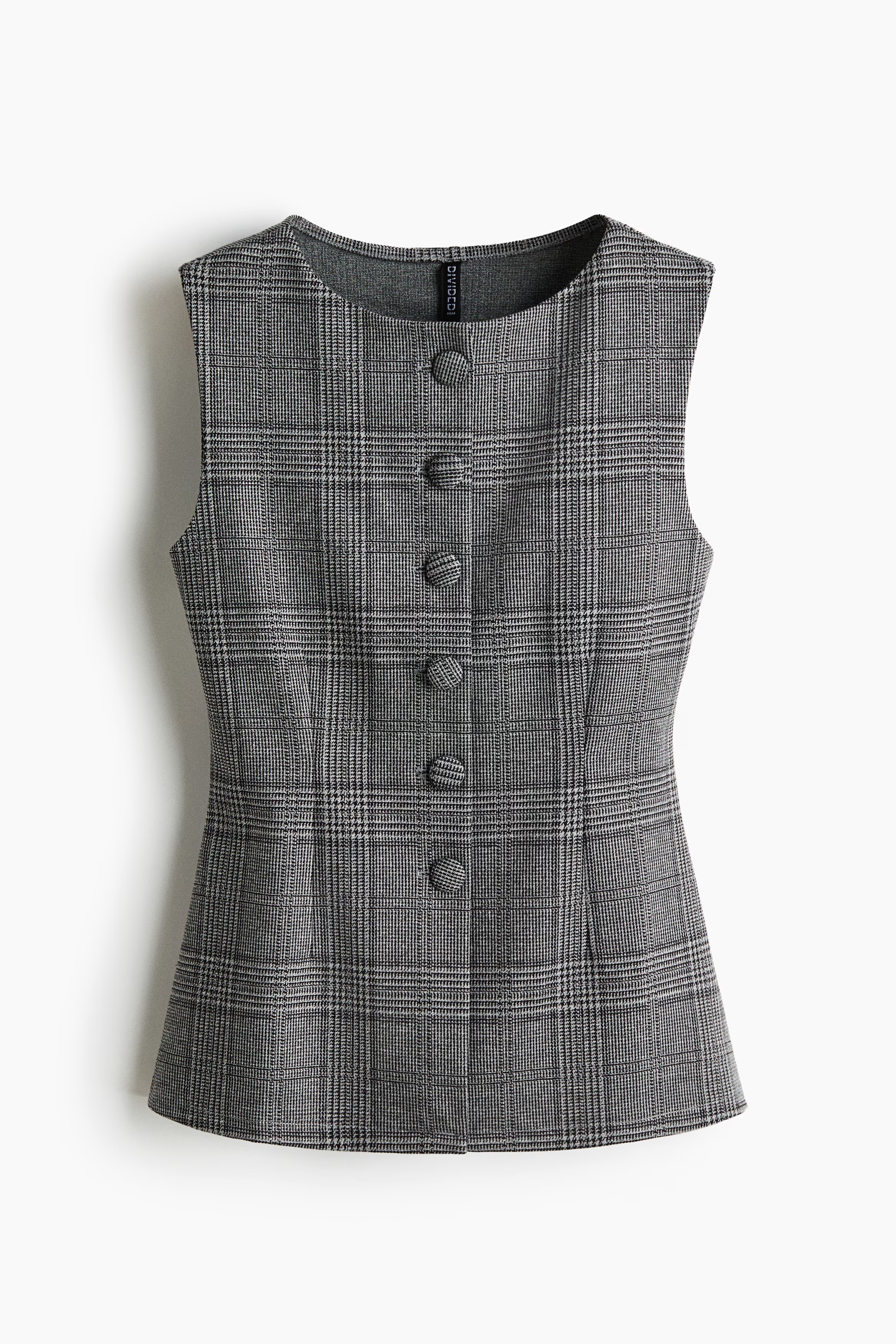
- **Fabric Physics:** The source garment is a structured, sleeveless waistcoat/top made of a woven textile (likely a tweed or heavy cotton blend with a Prince of Wales or Glen check pattern). It has high structural integrity and stiffness, meaning it will not cling like jersey knit; it will maintain a boxy silhouette and resist micro-wrinkling. Light reflection should be matte with slight textural highlights on the weave.
- **Key Features:** The central vertical button placket with five prominent dark buttons is the defining anchor. The round, high neckline and the distinct armhole shape must be preserved. The check pattern alignment is critical; warping must be minimized to maintain the "tailored" look.
PHASE 2: FIT & DRAPE SIMULATION
- **Body Mapping:** Due to the user's crossed-arm pose, the garment needs to react dynamically to compression. The stiff fabric will buckle slightly just above the forearms and pull tighter across the upper back and shoulders. The bottom hem of the waistcoat will interact with the top of the jeans, likely sitting straight rather than tucking in, given the garment's stiffness.
- **Occlusion Handling:** CRITICAL: The user's arms are crossed *over* the chest. The simulation must render the waistcoat *underneath* the forearms and hands. Additionally, the handbag strap on the user's right shoulder must be segmented and layered *over* the new garment. The source garment is sleeveless, requiring skin inpainting or masking where the user's current yellow sleeves extend beyond the waistcoat's armholes.
PHASE 3: ENVIRONMENT & LIGHTING
- **Light Match:** The user is in diffuse outdoor daylight (shadows are soft but distinct). The lighting source appears to be overhead and slightly frontal. The new garment must accept shadows cast by the user's crossed arms and the purse strap. The black and grey tones of the vest must be illuminated by natural white daylight, avoiding studio-strobe contrast.
- **Color Calibration:** The source image is studio-lit (neutral white background). The target environment is warmer (outdoor tones). The grey scale of the vest must be slightly warmed to match the ambient temperature of the outdoor scene to prevent it from looking "pasted on."
PHASE 4: IDENTITY PROTECTION
- **Facial Lock:** Absolute freeze on the user's face (eyes, nose, mouth, smile lines) and the hairstyle. The neck area where skin meets the new collar must be blended, but the jawline must remain untouched.
- **Body Integrity:** Strict prohibition on slimming or altering the user's torso width or arm thickness. The garment must warp to fit the user's existing volume and posture, not the other way around. The geometry of the crossed arms must remain exactly in its current coordinate space.