Thinking Process
PHASE 1: VISUAL DECONSTRUCTION
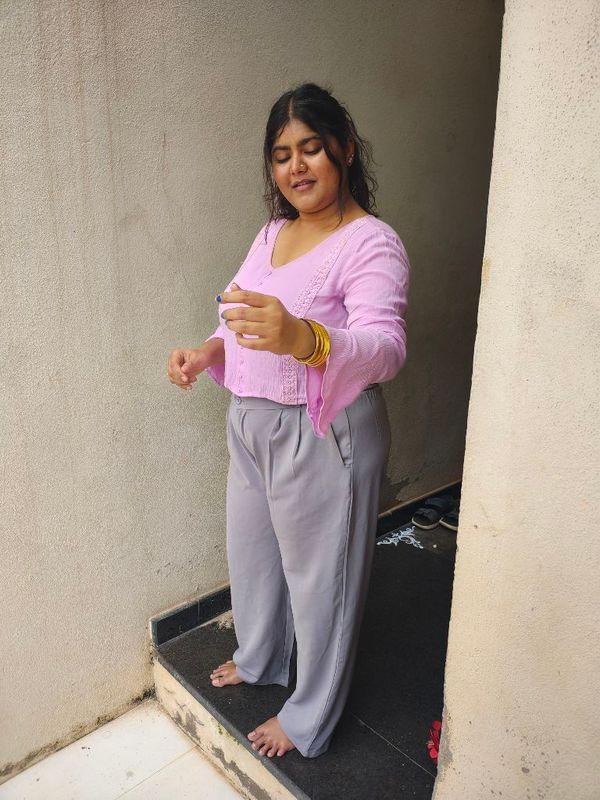
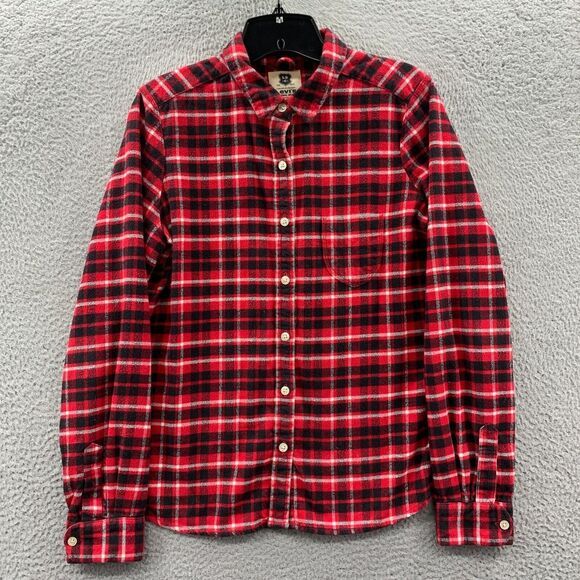
- **Fabric Physics:** The source garment is a cotton flannel. The simulation must render this as a medium-weight, matte fabric with high friction and low specular highlights (no shine). Unlike the user's current flowy, textured blouse, the flannel requires a stiffer structural integrity; it should hold its shape at the collar and cuffs rather than draping loosely like chiffon or rayon.
- **Key Features:** The specific buffalo plaid pattern (red and black grid) requires precise alignment across the central placket; the pattern must not look warped or "melted" over curves. Essential hardware includes the white 4-hole buttons, the structured collar (which must replace the current V-neckline), the single chest pocket on the left, and the curved bottom hemline.
PHASE 2: FIT & DRAPE SIMULATION
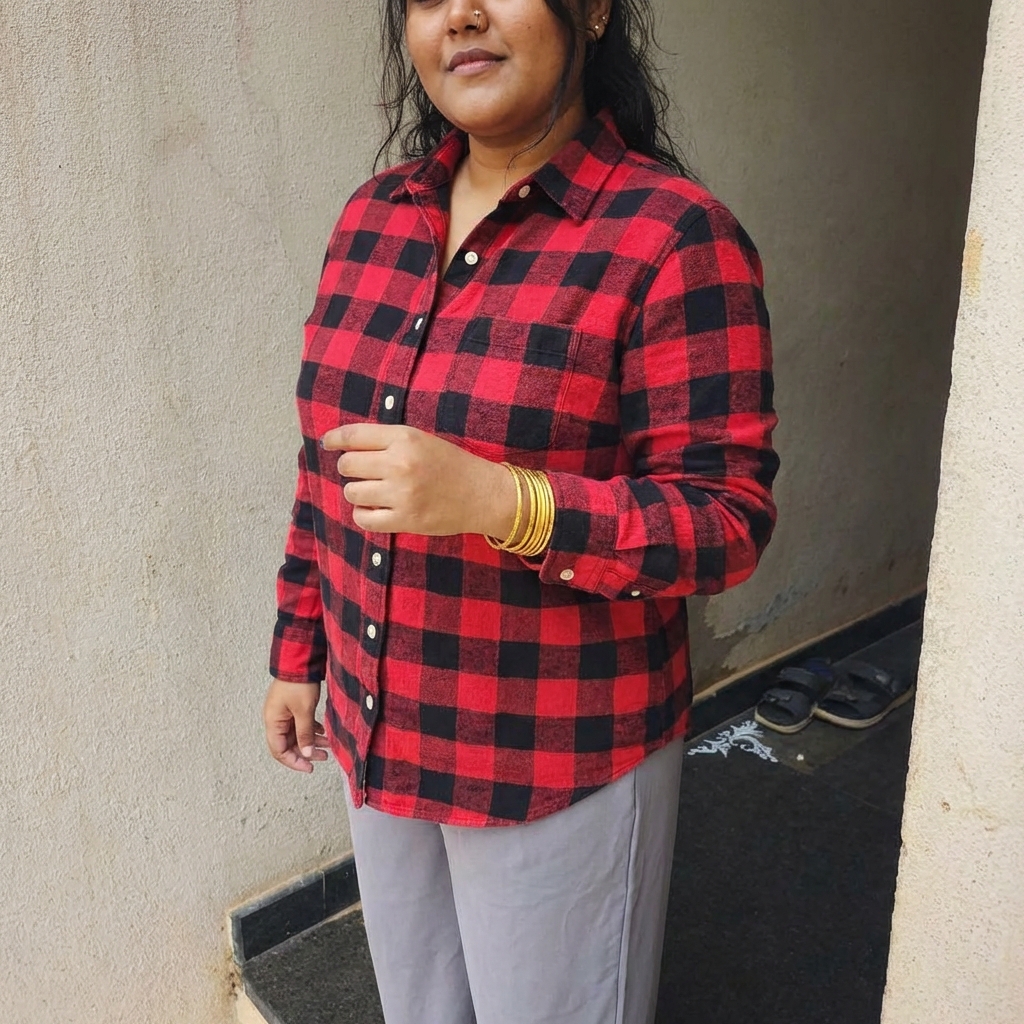
- **Body Mapping:** Due to the user's pose with the right arm raised and bent at an acute angle, the flannel fabric must exhibit significant compression folds (bunching) at the inner right elbow and tension stretching across the outer right shoulder/scapula. The garment fits a curvy/plus-size torso; the button placket must follow the curvature of the bust and abdomen without distorting the straight lines of the plaid pattern linearly. The sleeves are standard cut, replacing the current bell sleeves, meaning the silhouette at the wrists will be narrower.
- **Occlusion Handling:**
1. **Right Hand & Wrist:** The user's right hand and fingers are positioned in front of the torso; the new shirt must pass *behind* the hand.
2. **Accessories:** The stack of gold bangles on the right wrist is a critical hard-surface occlusion. The new sleeve cuff must either sit naturally behind these bangles or appear bunched slightly above them to avoid a clipping error where fabric merges with metal.
3. **Hair:** Loose strands of hair on the neck and shoulders must be segmented and layered *over* the new flannel collar.
PHASE 3: ENVIRONMENT & LIGHTING
- **Light Match:** The target environment features soft, diffuse natural daylight coming from the left/front, casting soft shadows to the right. The flannel, currently photographed in flat, sterile studio light, must receive a lighting gradient that darkens the right side of the torso (viewer's right) and creates ambient occlusion shadows under the collar, pocket flap, and inside the elbow folds.
- **Color Calibration:** The red in the source image is highly saturated. To match the slightly muted, realistic palette of the user's photo, the red channel of the flannel needs slight desaturation and a minor cool-tone shift to integrate with the grey concrete and pavement surroundings.
PHASE 4: IDENTITY PROTECTION
- **Facial Lock:** The user's entire head, facial expression, neck skin (above the new collar line), and loose hairstyle must remain pixel-perfectly frozen.
- **Body Integrity:** STRICT PROHIBITION on warping the user's torso volume. The simulation must generate a garment size that fits the user's actual proportions. Do not slim the waist or arms; the flannel shirt must adapt to the body, not the body to the shirt. The hip width relative to the staircase must remain unchanged.