Thinking Process
PHASE 1: VISUAL DECONSTRUCTION
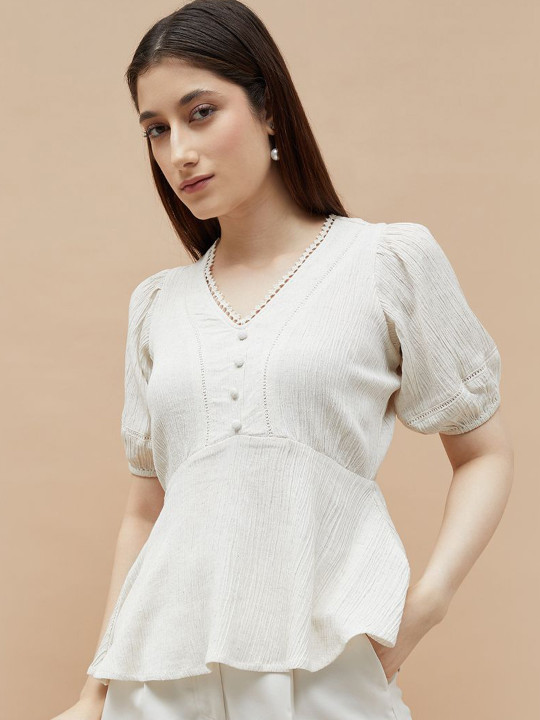
- **Fabric Physics:** The source garment is a textured, crinkle-cotton or linen blend with a matte finish. It possesses low specularity (does not reflect light sharply) and exhibits a "dry" friction coefficient. The simulation must capture the structural stiffness of the puff sleeves versus the softer, gravity-driven drape of the peplum waist. The vertical striations (crinkle texture) must react to stretching; flattening slightly across the bust and deepening in the folds.
- **Key Features:**
1. **V-Neck Trim:** The delicate crochet/ladder-lace trim along the neckline.
2. **Button Placket:** Four fabric-covered spherical buttons running down the center bust.
3. **Sleeve Architecture:** The puff sleeve construction with gathers at the shoulder cap and the bicep hem.
4. **Seaming:** The empire waist seam (curved under-bust seam) which dictates the transition from fitted bodice to flared hem.
PHASE 2: FIT & DRAPE SIMULATION
- **Body Mapping:**
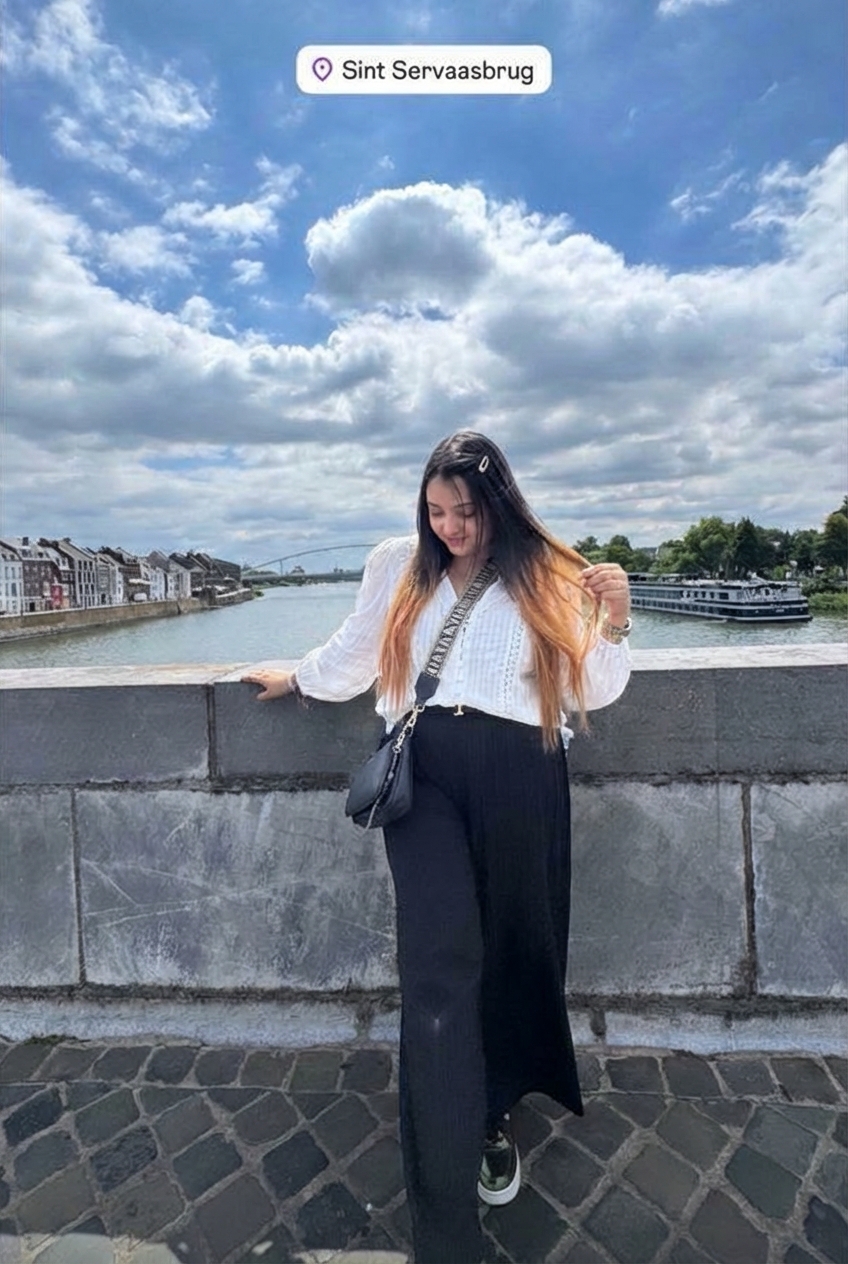
* **Right Side Compression:** As the user leans her right side against the stone wall, the right puff sleeve must flatten and deform against the surface, rather than retaining its full volume.
* **Torso Torque:** The user is slightly hunched/leaning forward. The empire waistline of the garment should follow the tilt of her torso, not the horizon line.
* **Hemline Interaction:** Since the source top has a peplum/flared bottom, it should drape *over* the waistband of the black trousers, hanging vertically due to gravity, creating a natural gap between the fabric and the lower abdomen.
- **Occlusion Handling:**
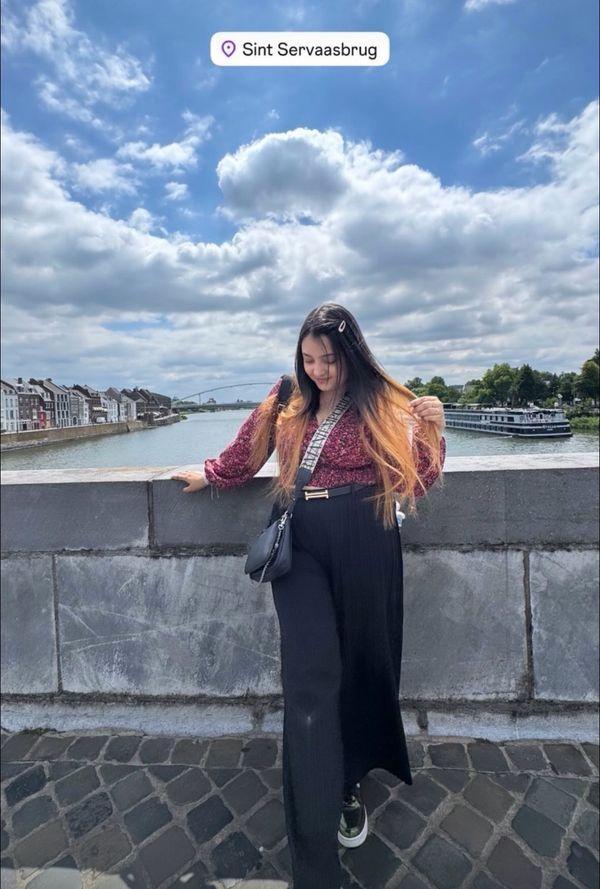
* **Cross-Body Strap:** This is the primary occlusion challenge. The wide, branded bag strap must be segmented and layered **strictly over** the new white blouse. The blouse fabric must show compression/indentation underneath the strap's weight.
* **Hair:** The user's long, ombre hair cascades over both shoulders and the chest. High-fidelity segmentation is required to ensure hair strands sit on top of the white fabric.
* **Left Hand:** The fingers interacting with the hair/strap must remain in the foreground.
PHASE 3: ENVIRONMENT & LIGHTING
- **Light Match:** The user environment is outdoor, diffuse daylight under a cloudy sky (soft blue/cool ambient light). The source garment was shot in warm, beige studio lighting.
* **Shadow Casting:** Shadows on the blouse must be soft and diffuse, generated from the top-down (sky source), casting slight shadows under the bust and inside the sleeve folds.
- **Color Calibration:** A white-balance shift is mandatory. The warm cream/yellow undertones of the source garment must be cooled to match the neutral/cool white point of the clouds in the user's background. The brightness should be lowered slightly to match the exposure of the user's current environment, ensuring the white fabric doesn't "glow" unnaturally.
PHASE 4: IDENTITY PROTECTION
- **Facial Lock:** The user's face (downcast gaze), jawline definition, and ear/hair clips must be masked and frozen to prevent any AI hallucination or blending.
- **Body Integrity:** Strict volumetric preservation is required. The simulation must not slim the user's waist or alter the breadth of her shoulders. The garment must conform to her existing silhouette, including the volume created by the leaning posture. The skin tone on the exposed neck and lower arms must remain exact.