
Thinking Process
PHASE 1: VISUAL DECONSTRUCTION
- **Fabric Physics:** The source garment is a woven cotton or linen blend tunic. It has a matte finish with zero specular highlights (unlike synthetic or silk materials). The physics should simulate a "medium weight" structure—it is stiff enough to hold the straight silhouette but soft enough to fold gently rather than crumple.
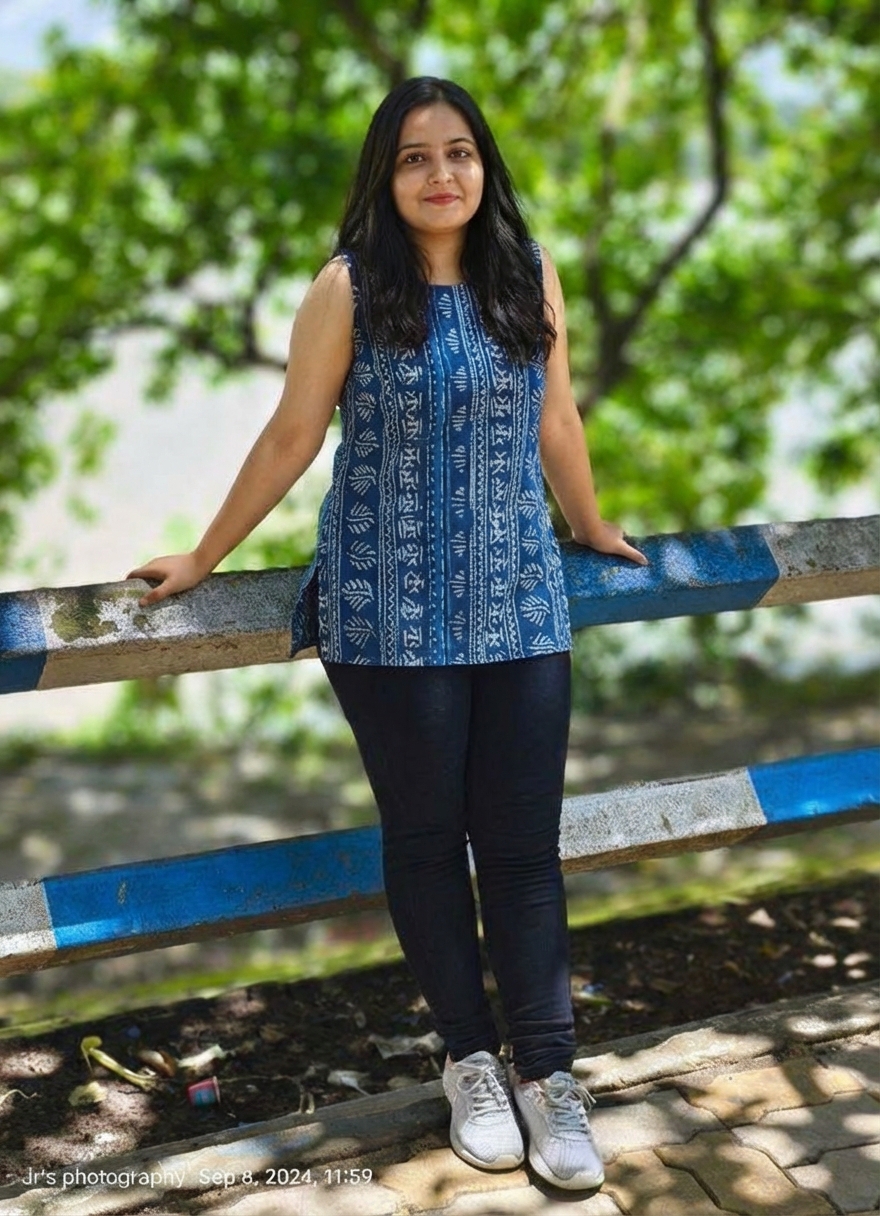
- **Key Features:** The vertical white geometric/tribal block print patterns are the defining visual hierarchy and must remain aligned vertically despite the user's leaning pose. The round neckline and the specific sleeveless armhole cut (binding width) must be preserved. The tunic length extends below the hips, which differs from the user's current tucked/shorter top.
PHASE 2: FIT & DRAPE SIMULATION
- **Body Mapping:** The user is leaning slightly backward against a railing. Consequently, the tunic must not hang perpendicular to the ground but must drape to follow the subtle backward tilt of the torso. The fabric should drape flatter against the abdomen and perhaps gap slightly at the lower back hem. Since the source is sleeveless and the target is long-sleeved, the simulation must infer/generate natural skin texture for the user's arms to replace the red sleeves.
- **Occlusion Handling:** This is a High-Complexity occlusion scenario. The user has long, dark hair cascading over both shoulders and covering a significant portion of the upper chest. A rigid mask must be applied to the hair to ensure it is layered *over* the new blue tunic. The hands are resting on the railing (lower interaction point), but the tunic length suggests the hemline will fall near the wrists/hips; the garment must flow *behind* the hands/wrists if the length reaches that point.
PHASE 3: ENVIRONMENT & LIGHTING
- **Light Match:** The target environment is outdoors with natural, top-down dappled sunlight filtering through trees. The flat studio lighting of the source garment must be replaced. We need to generate soft, irregular shadow maps across the blue fabric to mimic the dappled light effect seen on the current red top. Shadows should be cast downward from the hair onto the tunic.
- **Color Calibration:** The stark white pattern on the source cloth must be warmed slightly to match the ambient temperature of the outdoor sun. The deep blue must absorb the green bounce light from the surrounding foliage to integrate realistically into the scene.
PHASE 4: IDENTITY PROTECTION
- **Facial Lock:** Absolute freeze required on the user's face, neck, and the specific fall of her hair. The jawline and neck transition must remain untouched.
- **Body Integrity:** Strict prohibition on body warping. The user's torso width and posture must remain exact. Although the source garment is a loose fit, it must drape around the user's existing volume without slimming the waist or altering the size of the arms when replacing the sleeves with bare skin.