Thinking Process
PHASE 1: VISUAL DECONSTRUCTION
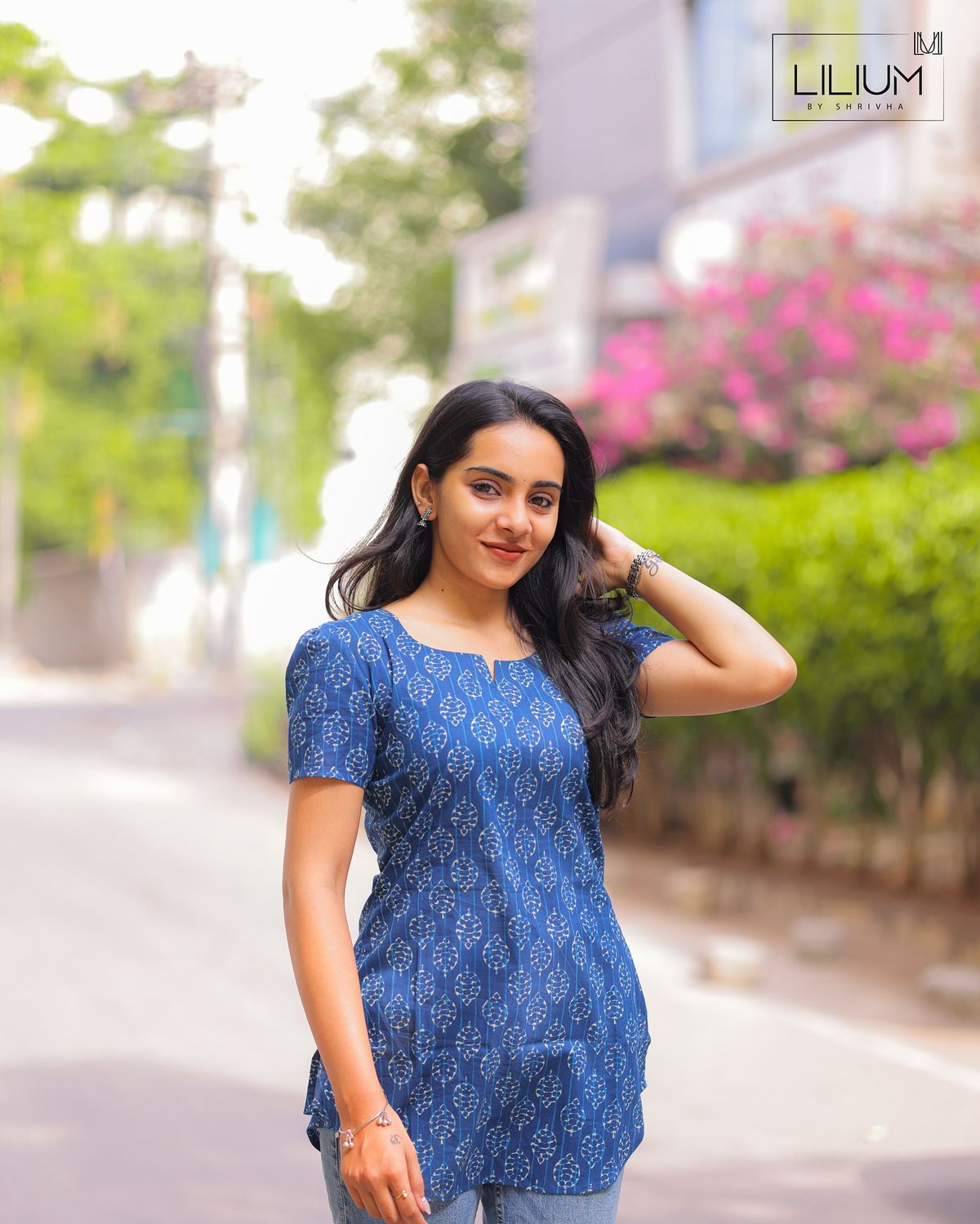
- **Fabric Physics:** The source garment appears to be a medium-weight cotton or cotton-linen blend with a matte finish. It lacks specularity (shine) and should exhibit diffuse light scattering. The structural integrity suggests a "crisp" drape that holds its shape away from the body slightly, rather than clinging like jersey knit or draping heavily like silk.
- **Key Features:** The distinctive white leaf/paisley block-print pattern on the indigo blue base must be preserved without distortion. The specific neckline (squared-off round neck with a small central V-notch) is a critical design element. Short sleeves (mid-bicep length) and the straight-cut hemline must be maintained.
PHASE 2: FIT & DRAPE SIMULATION
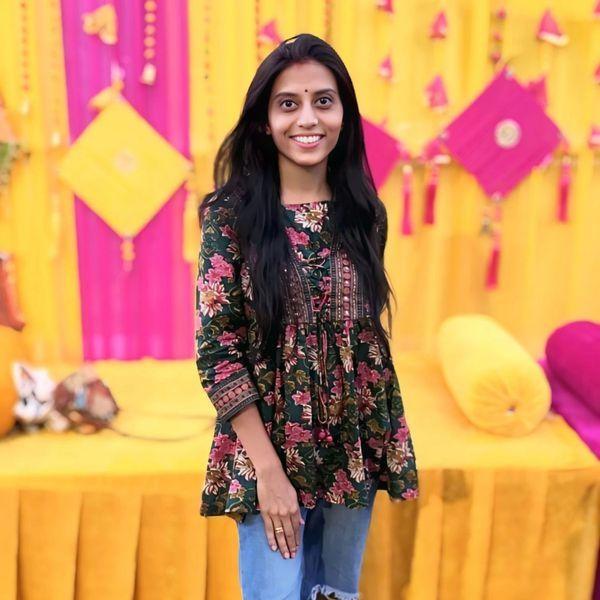
- **Body Mapping:** The target user has a relaxed standing posture with slight hip curvature. The new garment, being a tunic/kurti cut, should hang vertically from the bust line, skimming the waist rather than cinching it. Gravity will pull the fabric straight down; tension folds should only appear lightly around the armpits due to the user's relaxed shoulders. Since the source is short-sleeved and the target is currently wearing long sleeves, the simulation must infer and generate natural skin texture for the user's forearms where the old sleeves are removed.
- **Occlusion Handling:** CRITICAL: The user has long, dense black hair flowing over both shoulders and the upper chest. A segmentation mask must separate the hair layer completely; the blue fabric must be rendered strictly *underneath* the hair strands. The user's hands are clasped at the lower abdomen/hip level; the garment's hemline must interact naturally here, likely falling behind the hands or draping slightly around the wrists if the tunic is long, ensuring the hands remain the top-most layer.
PHASE 3: ENVIRONMENT & LIGHTING
- **Light Match:** The target environment is dominated by warm, high-key ambient lighting (yellow and pink decor) with soft, diffuse shadowing. The source image has cool, outdoor daylight. The transferred garment's albedo must be color-graded to accept warm yellow bounce light from the background. Shadows should be soft and relatively uniform, consistent with the indoor "event" lighting of the target image.
- **Color Calibration:** The indigo blue of the source cloth must be desaturated slightly and warmed to prevent it from looking "superimposed" against the vibrant yellow background. The white pattern on the shirt should reflect a slight yellowish tint to match the scene's ambient temperature.
PHASE 4: IDENTITY PROTECTION
- **Facial Lock:** The user's entire head region, including the bindi, facial expression, and the specific hairline, must be frozen and untouched.
- **Body Integrity:** The volumetric shape of the user's torso must remain constant. Do not apply the source model's slimmer waist or different shoulder width to the target user. The garment must warp to fit the user's existing biometric measurements, not slim or distort her physique. Skin tone generated for the exposed arms must perfectly match the user's face and neck.