Thinking Process
PHASE 1: VISUAL DECONSTRUCTION
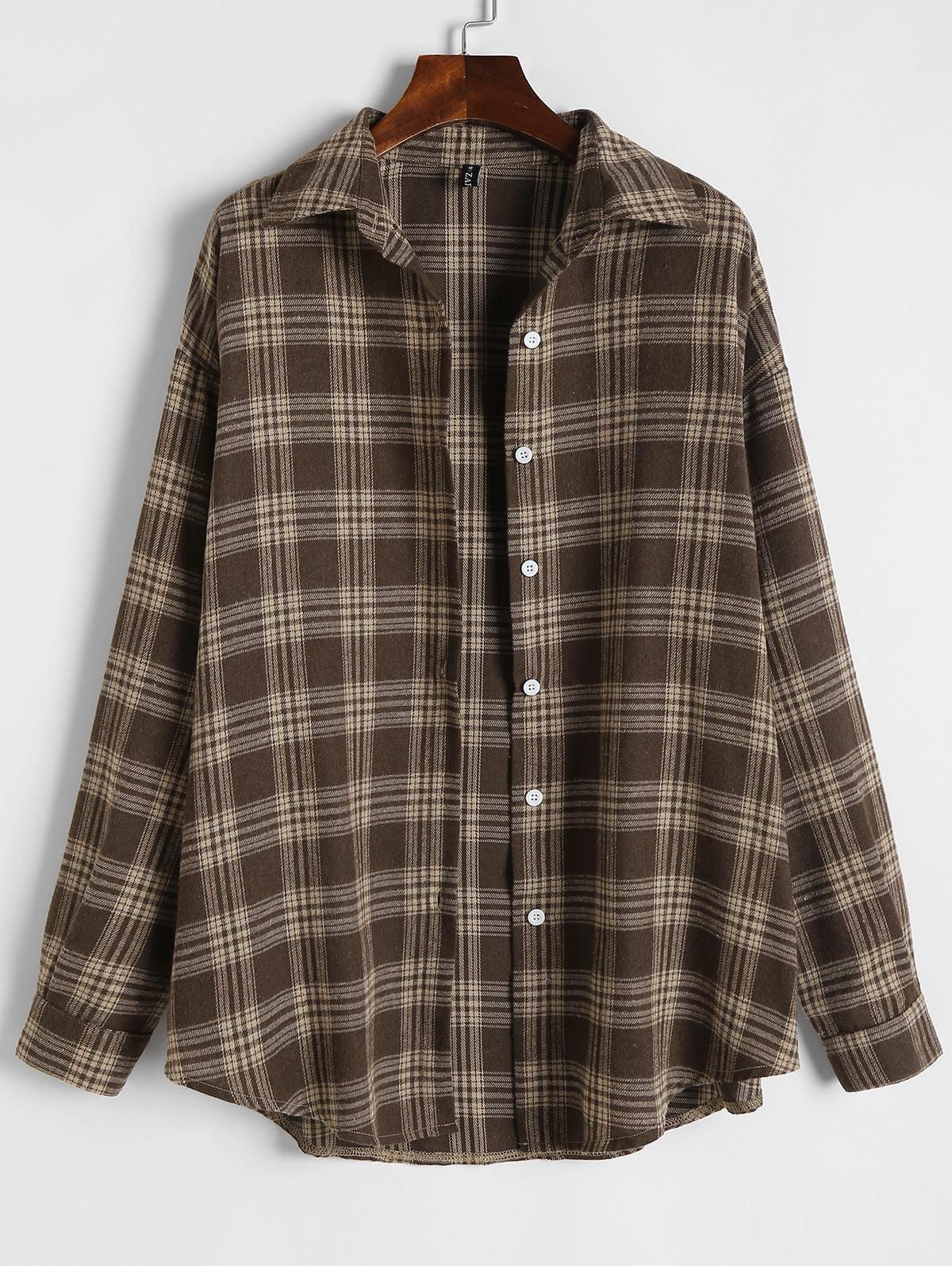
- **Fabric Physics:** The source garment appears to be a flannel or heavy cotton blend. It has a matte finish with low specular reflection (no shine). Unlike the user's current lightweight, flowy kurta, this material has higher structural rigidity. It should deform with semi-stiff folds rather than fine, fluid ripples.
- **Key Features:** The tartan/plaid pattern alignment is critical; the horizontal and vertical lines must follow the cylindrical volume of the body. The structural integrity of the collar, the row of white buttons (which provide high-frequency contrast), and the buttoned cuffs must be preserved. The "oversized" nature of the source fit must translate to the target.
PHASE 2: FIT & DRAPE SIMULATION
- **Body Mapping:**
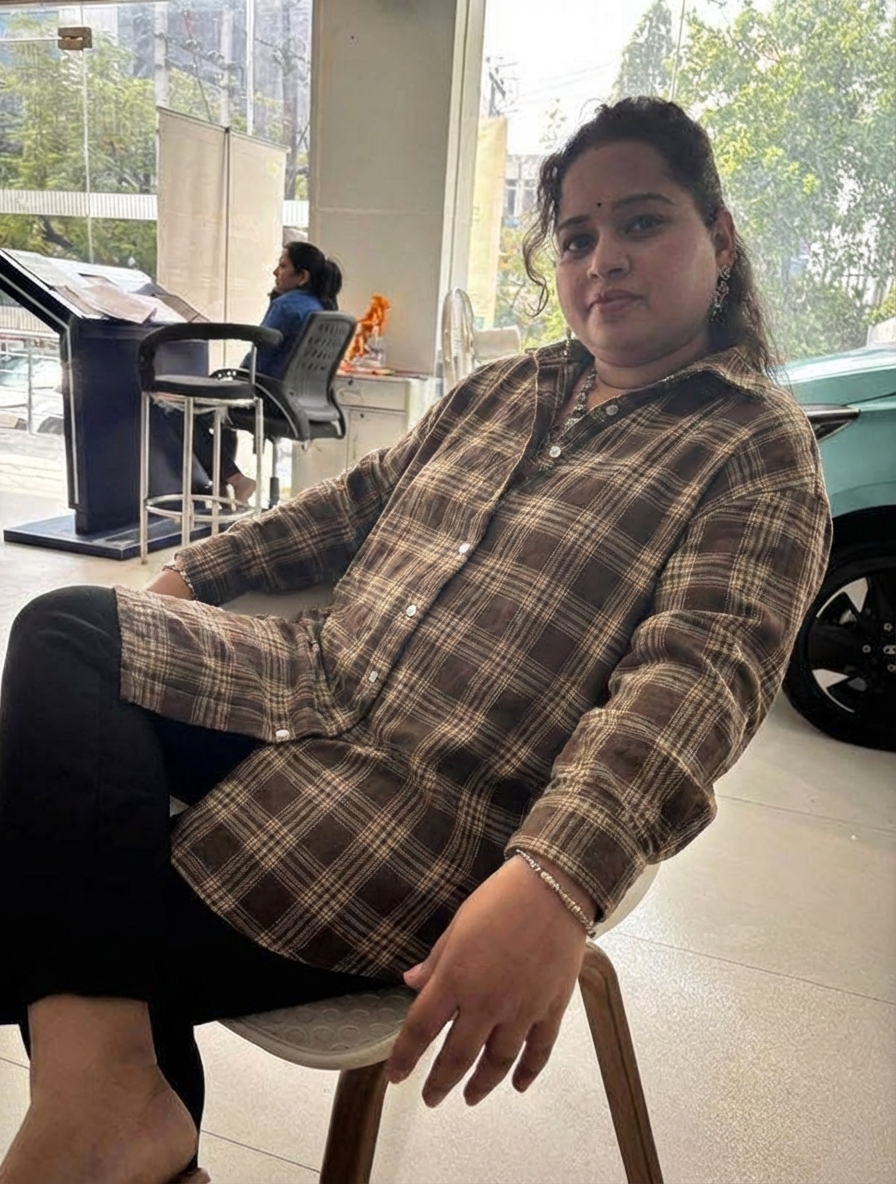
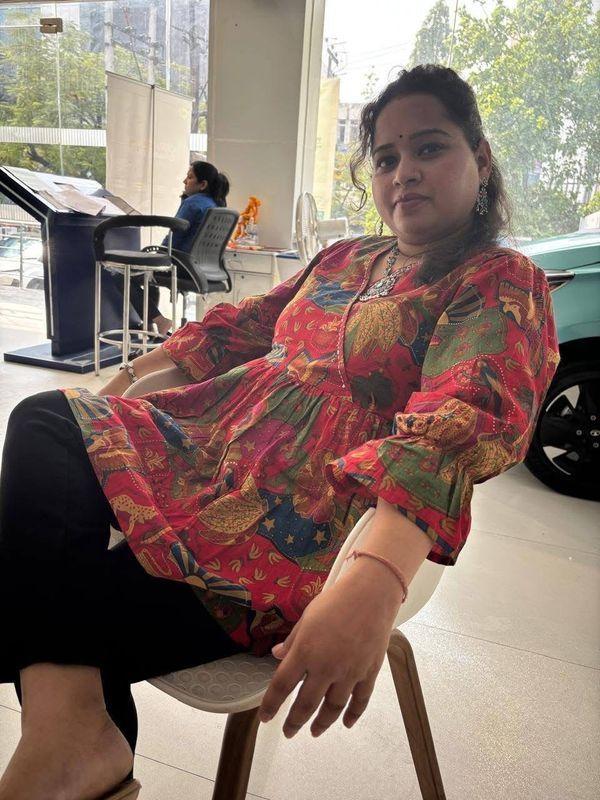
- **Torso/Waist:** The user is in a seated position with a slight backward recline. Unlike her current empire-waist top, the flannel shirt is a straight cut. It must not cinch under the bust but rather fall straight, accumulating in transverse folds (bunching) where the abdomen meets the lap/thighs.
- **Shoulders/Arms:** The collar must sit naturally around the neck, higher than the current V-neck. On the right arm, the sleeve should drape downward with gravity, creating tension wrinkles at the armpit and bunching slightly above the wrist/bracelet area.
- **Occlusion Handling:**
- **Hair:** The loose strands of hair on the right side of the neck and the bulk of hair behind the neck must be segmented and layered *over* the new shirt collar.
- **Accessories:** The necklace currently sits low; it should likely be occluded (hidden) by the button-up placket unless the generation renders the shirt unbuttoned at the top. The right-hand bracelet must be layered *over* the sleeve cuff, or the cuff must push up slightly to reveal it.
- **Interaction:** The back of the shirt must appear compressed and flattened where the user leans against the chair back.
PHASE 3: ENVIRONMENT & LIGHTING
- **Light Match:** The scene is heavily backlit by the large window behind the subject, creating a rim-light effect on the shoulders and hair. The front of the user is lit by softer, ambient bounce light. The new garment must replicate this: brighter, slightly overexposed edges (rim light) and a darker, soft-shadowed center torso.
- **Color Calibration:** The source image has neutral studio lighting. The target scene has a mix of cool daylight (from the window) and warm interior hues. The brown/beige of the flannel must be color-graded to accept a slight cool tint on the highlight edges and warm ambient occlusion in the folds to integrate with the room's atmosphere.
PHASE 4: IDENTITY PROTECTION
- **Facial Lock:** Absolute freeze on the facial region (eyes, nose, mouth), the jawline, and the ears. The visible ear with the earring must remain untouched.
- **Body Integrity:** Strictly forbidden to alter the user's somatic volume. Do not slim the waist or arms. The simulation must fit the garment *to* the user's existing geometry, preserving the width of the shoulders and the volume of the seated torso. The black trousers and exposed feet must remain completely unaltered.