Thinking Process
PHASE 1: VISUAL DECONSTRUCTION
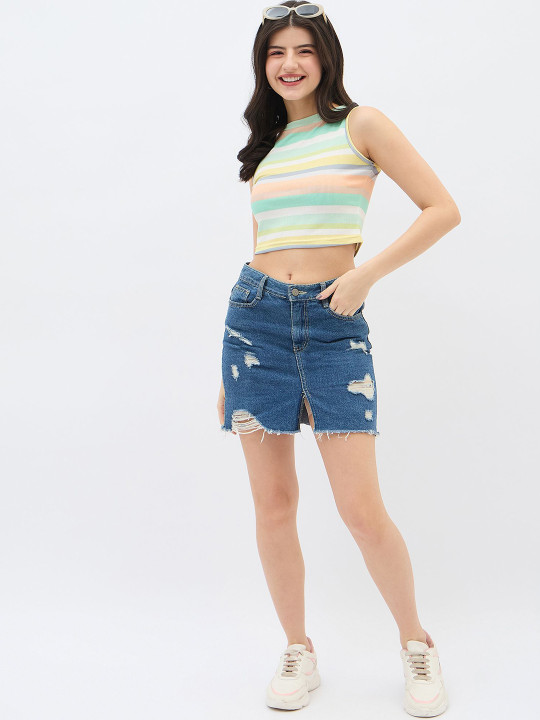
- **Fabric Physics:** The source garment is a rib-knit jersey blend (cotton/elastane). It has high elasticity and matte reflectance. Unlike the current loose tunic, this fabric behaves with tension, hugging the torso contours rather than draping freely. It absorbs light rather than shining, with subtle highlights only on the ribbing ridges.
- **Key Features:** The horizontal pastel stripe pattern (mint, yellow, peach, grey), the high crew neckline, and the sleeveless construction are critical. The ribbed texture map must be preserved. The hem is cropped and straight, ending significantly higher than the user's current garment.
PHASE 2: FIT & DRAPE SIMULATION
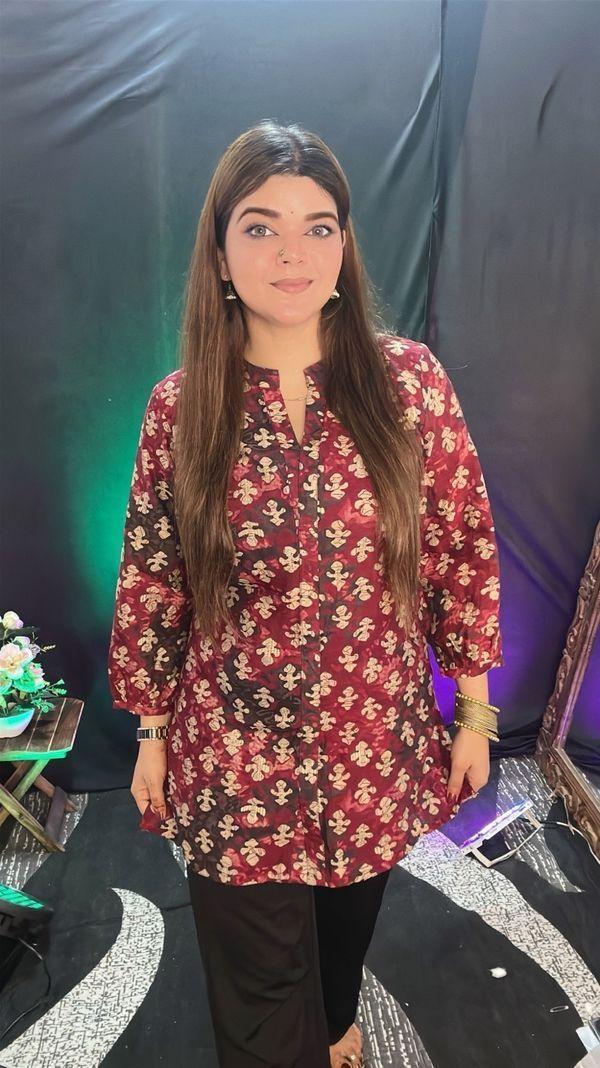
- **Body Mapping:** This requires a silhouette transformation from a loose, long-sleeved tunic to a fitted, sleeveless crop top. The simulation must infer the user's torso shape beneath the loose tunic to apply the tight knit correctly. The new garment will adhere closely to the chest and waist. *Crucial:* Skin generation is required for the user's arms and shoulders, as the current garment covers these areas while the new garment exposes them.
- **Occlusion Handling:** The user's long hair flows over both shoulders and down the chest. This is the primary occlusion layer; the crop top must be rendered *behind* the hair strands. The user's bracelets and hands are positioned low and generally clear of the torso, but any overlap near the hips must place the hands in the foreground.
PHASE 3: ENVIRONMENT & LIGHTING
- **Light Match:** The user is in a studio setting with a key light source coming from the viewer's right (user's left), casting soft shadows to the left. The pastel top must accept this directional shading. A slight greenish/cool rim light is present on the user's hair (from the background backlight); this rim light should subtly interact with the shoulders of the new garment.
- **Color Calibration:** The source image is high-key (white background), making the colors very vibrant. To match the user's darker, moodier studio environment, the exposure of the pastel stripes must be lowered slightly, and the contrast increased to match the dynamic range of the target photo.
PHASE 4: IDENTITY PROTECTION
- **Facial Lock:** The user's facial features, makeup, bindi, and hairstyle must be frozen and untouched. The hairline boundary is critical due to the high neck of the new top.
- **Body Integrity:** The generation of the exposed arms and midriff must match the user's facial skin tone exactly (melanin match). The torso width must reflect the user's actual proportions, not the source model's; strictly no slimming or warping of the user's natural bone structure.
