Thinking Process
PHASE 1: VISUAL DECONSTRUCTION
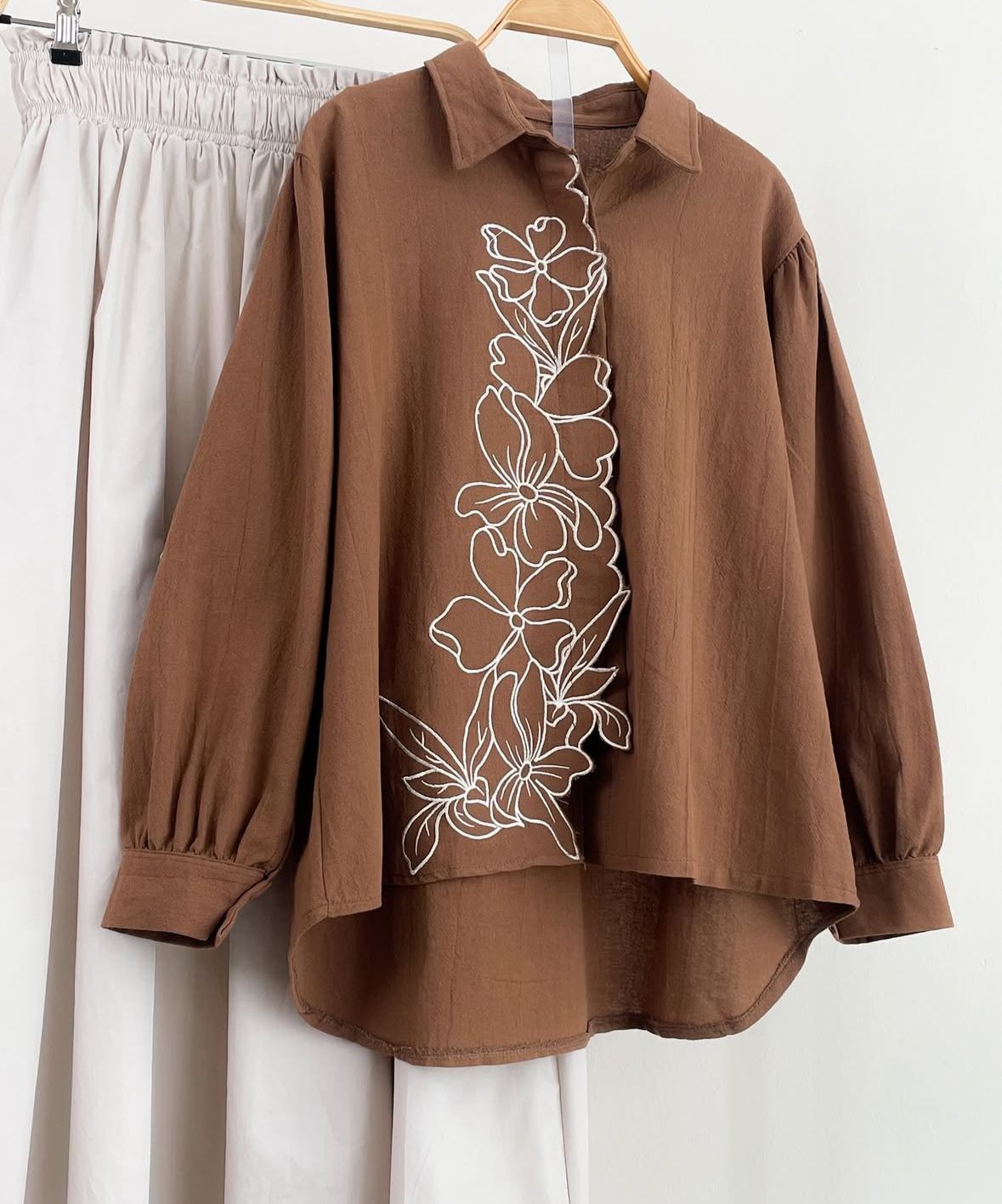
- **Fabric Physics:** The source garment appears to be a medium-weight linen or cotton blend. It has a matte finish with low specular reflection but high structural integrity (stiffness). It does not cling like jersey; it creates angular folds and holds volume, particularly in the balloon sleeves. The fabric simulation must account for a "crisp" drape rather than a liquid flow.
- **Key Features:**
- **Floral Placket/Embroidery:** The white floral cutwork/embroidery running down the center front is the defining element and has complex non-linear edges. This texture map must remain sharp.
- **Collar:** Standard pointed collar structure must be generated where the user's current neckline is bare (off-shoulder).
- **Sleeves:** Bishop/Balloon sleeves with gathered cuffs. These add significant volume to the arm silhouette compared to the user's current fitted sleeves.
- **Hemline:** The source has a high-low hem (longer in back). The front hem is curved and should fall below the user's natural waistline.
PHASE 2: FIT & DRAPE SIMULATION
- **Body Mapping:**
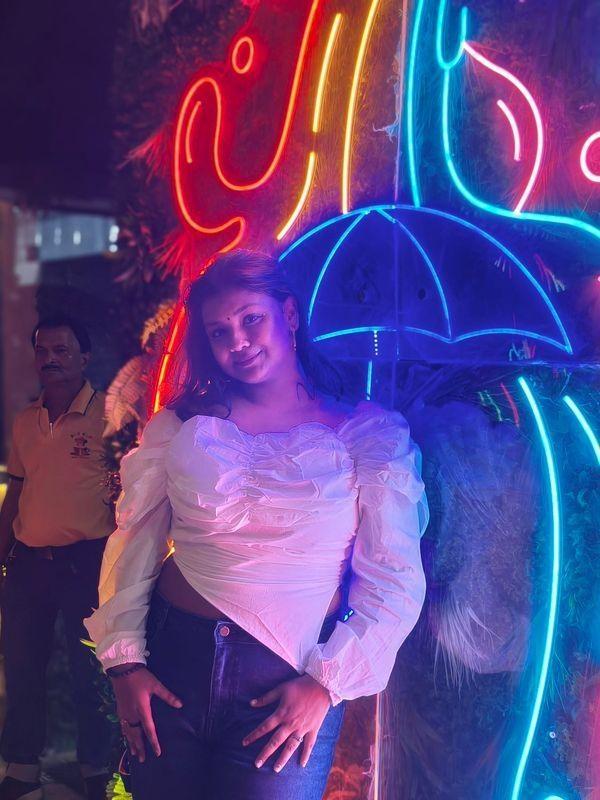
- **Shoulder Reconstruction:** The user is currently wearing an off-shoulder top. The simulation must infer the trapezius and shoulder slope to place the new collar correctly without it floating.
- **Torso Drape:** The garment is oversized/relaxed. It should drape vertically from the bust apex, skimming over the midsection rather than tucking in.
- **Sleeve Interaction:** The user's arms are relaxed at her sides. The balloon sleeves will compress slightly between the torso and inner arm, creating drag lines/folds radiating from the armpit.
- **Occlusion Handling:**
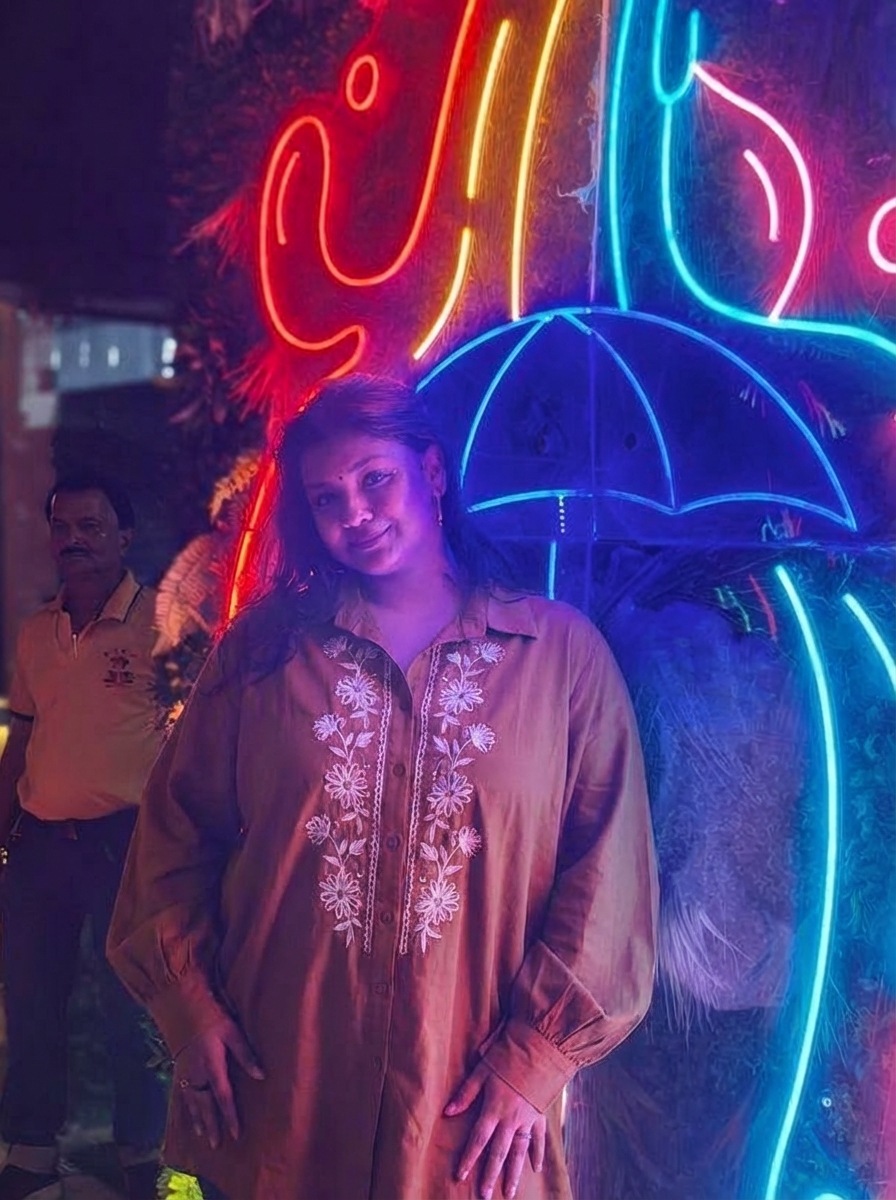
- **Hair:** The user has long, wavy hair falling over both shoulders. The new garment's collar and shoulder area must be rendered *behind* the hair strands.
- **Hands:** The user's hands are resting on her upper thighs. Given the length of the shirt, the front hem will likely reach the wrist/hand area. The hem must either drape *behind* the hands or fold slightly *over* the wrists depending on final scaled length. The hands must not be obscured by the fabric texture.
PHASE 3: ENVIRONMENT & LIGHTING
- **Light Match:** The user image features complex mixed lighting—strong, saturated red neon light from the viewer's left (user's right) and cool blue/cyan ambient light from the viewer's right.
- **Highlighting:** The brown fabric must accept a reddish rim light on the user's right side and a blueish fill on the left.
- **Shadows:** Shadows should be deep and soft, consistent with a low-light night environment.
- **Color Calibration:**
- The source garment is a warm brown/mocha. In the target scene, this brown will appear darker and significantly tinted by the neon. It should not look like the bright, flat studio brown.
- The white floral embroidery must reflect the ambient neon glow (appearing slightly pink or cyan depending on angle) rather than remaining pure #FFFFFF white, which would look like a sticker.
PHASE 4: IDENTITY PROTECTION
- **Facial Lock:** Absolute freeze on the facial region, specifically preserving the unique lighting interplay on the skin and the shadows cast by the hair. The jawline definition must remain intact.
- **Body Integrity:** The user has a curvy build. The loose fit of the shirt must not be interpreted as a cue to slim the underlying body mesh. The hip width and arm volume must remain consistent with the user's original anatomy to ensure the garment looks like it is being worn by *her*, not a generic avatar.