Thinking Process
PHASE 1: VISUAL DECONSTRUCTION
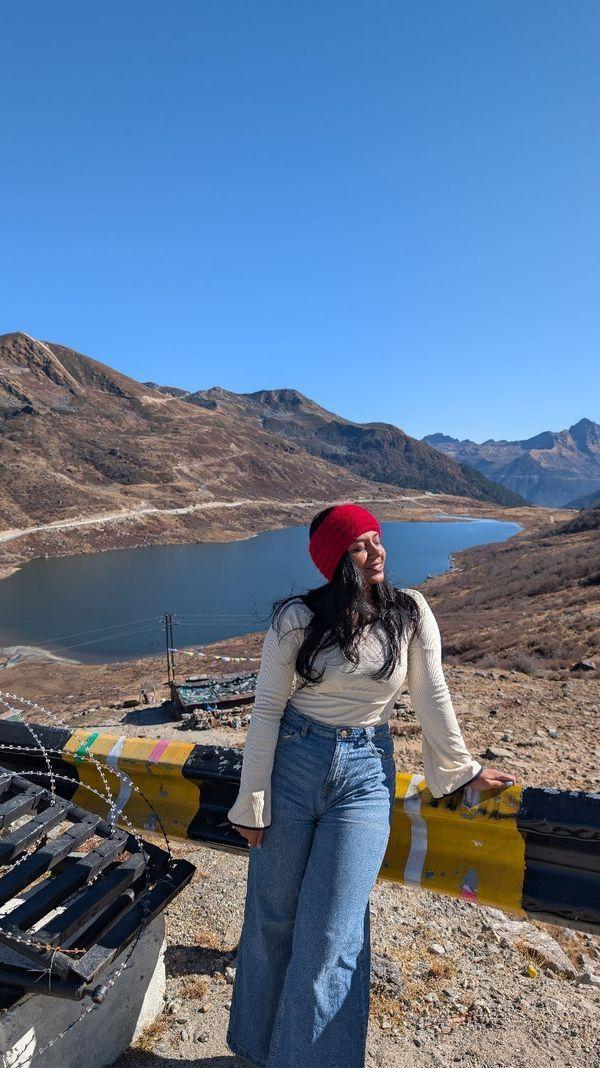
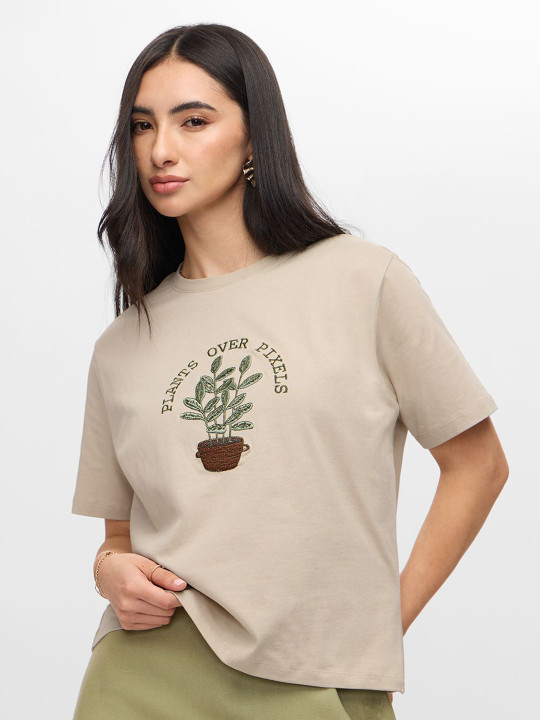
- **Fabric Physics:** The source garment is a cotton jersey blend with a matte finish. It has medium weight with low elasticity compared to the user's current ribbed top. It possesses a diffuse albedo, meaning it should not reflect sharp specular highlights but rather absorb the intense sunlight of the target environment.
- **Key Features:** The central embroidered graphic ("PLANTS OVER PIXELS" text arc and potted plant) is the critical anchor point and must remain centered on the sternum, deforming naturally with the chest angle. The crew neck ribbing and the double-stitched hem on the short sleeves must be preserved. The boxy, relaxed cut of the source tee must replace the tight silhouette of the current garment.
PHASE 2: FIT & DRAPE SIMULATION
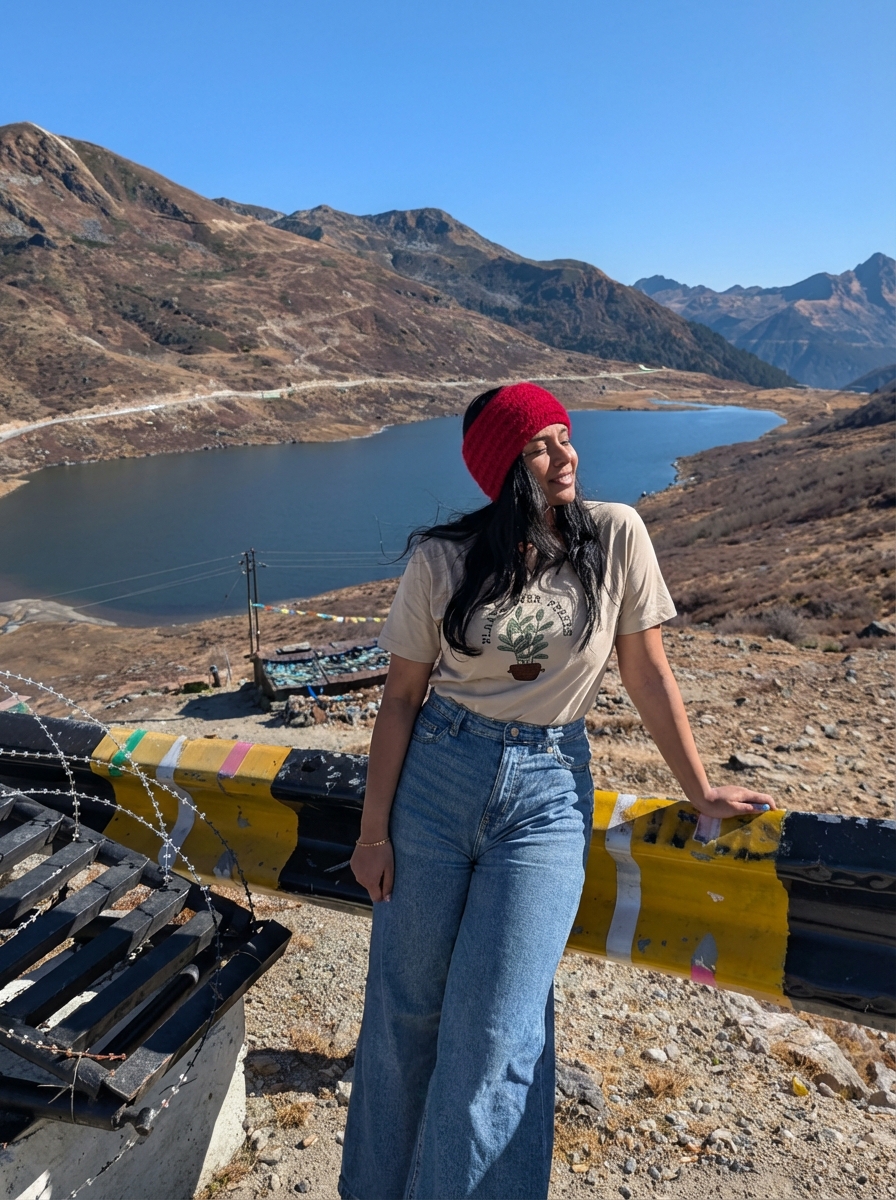
- **Body Mapping:** Due to the user's leaning pose against the guardrail, the fabric logic must simulate gravity pulling vertically downwards, not perpendicular to the body angle. This causes the shirt to drape away from the torso on the user's left side (viewer's right). Tension wrinkles should appear at the right shoulder where the arm supports the weight, while the fabric on the stomach area should relax. Since the source is a short-sleeve tee and the target is wearing long sleeves, realistic skin texture must be generated for the forearms and elbows.
- **Occlusion Handling:** The user's long black hair is a primary occlusion layer; it must be segmented with high precision to lay *over* the new t-shirt graphic. The user's right arm (resting on the rail) frames the garment, requiring precise masking to ensure the new sleeve does not clip into the bicep or the guardrail behind it.
PHASE 3: ENVIRONMENT & LIGHTING
- **Light Match:** The target environment features harsh, high-altitude directional sunlight coming from the upper left (viewer's perspective), creating deep, hard-edged shadows. The rendered t-shirt must exhibit high contrast: bright, warm highlights on the left shoulder/chest and distinct self-shadowing on the right side and under the bust.
- **Color Calibration:** The neutral beige of the source shirt must be color-graded to match the outdoor white balance. The shadows on the shirt should pick up a slight cool blue tint from the ambient skylight fill, while the highlights should be warm. The overall exposure of the garment must be lowered slightly to match the dynamic range of the outdoor photography.
PHASE 4: IDENTITY PROTECTION
- **Facial Lock:** The user's face, jawline, red headband, and hair strands are strictly frozen. No alteration to facial structure or expression is permitted.
- **Body Integrity:** The user's waistline and hip width must remain consistent with the original image. While the silhouette will change from form-fitting to relaxed due to the shirt change, the underlying body mesh must not be slimmed or warped. The skin tone generated for the now-exposed arms must perfectly match the user's face and neck complexion.