Thinking Process
PHASE 1: VISUAL DECONSTRUCTION
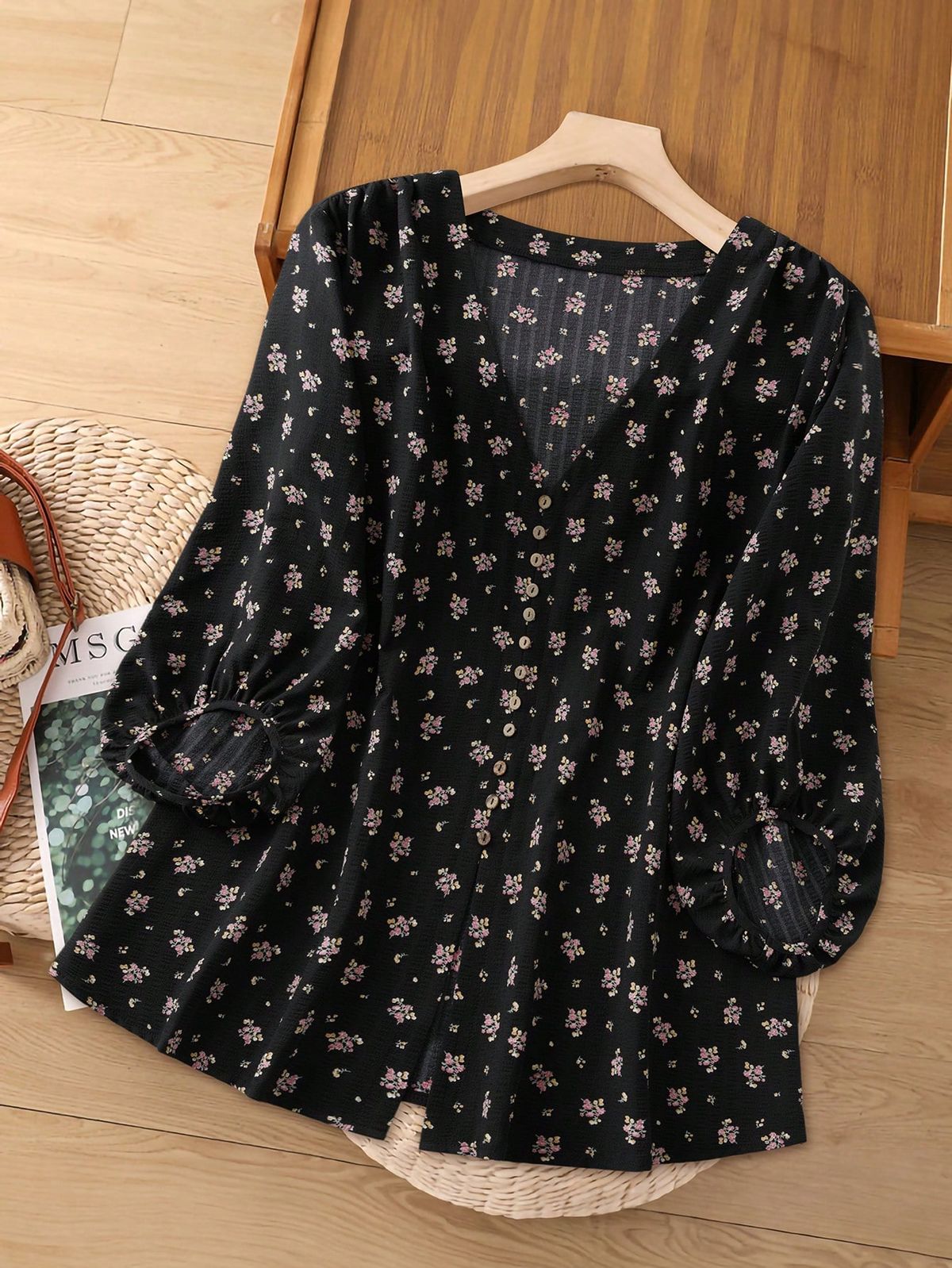
- **Fabric Physics:** The source garment appears to be a lightweight rayon or crepe material with a matte finish. It possesses medium-to-high draping qualities (low stiffness), meaning it will succumb easily to gravity and fold softly rather than holding rigid angular shapes. It should reflect light diffusely with no specular highlights (unlike silk or leather).
- **Key Features:**
- **V-Neck & Buttons:** The central button placket and V-neckline shape must be preserved.
- **Floral Pattern:** The small pink/lilac floral distribution must remain consistent and not distort excessively across curved areas.
- **Sleeve Structure:** The sleeves are billowy/puff-style with elasticized or gathered cuffs. This volume is critical to the silhouette.
- **Hemline:** The slight flare/peplum nature of the lower hem needs to be maintained.
PHASE 2: FIT & DRAPE SIMULATION
- **Body Mapping:**
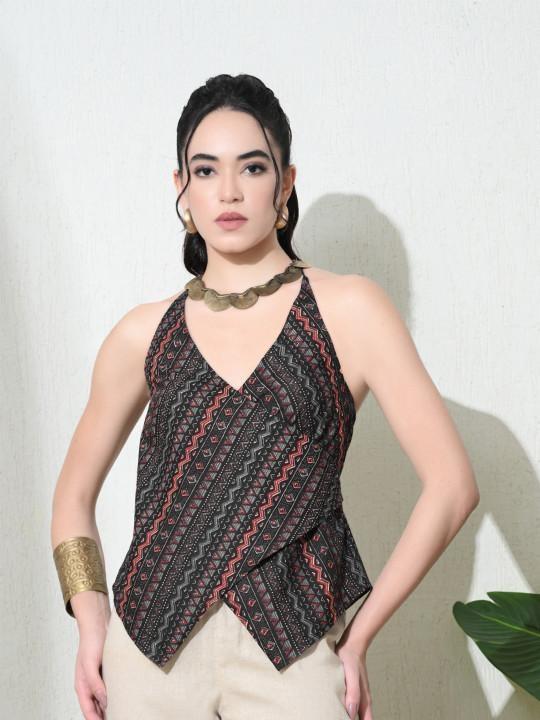
- **Shoulder Reconstruction:** Since the target user is wearing a halter top (bare shoulders) and the source is long-sleeved, the simulation must generate fabric coverage over the deltoids and upper arms where skin is currently visible.
- **Sleeve Physics:** The sleeves should drape loosely down the user's arms. Given the user's arms are straight down, gravity will pull the fabric vertically, causing the volume to pool slightly above the elastic cuffs at the wrist/forearm area.
- **Torso Fit:** The garment should sit looser than the user's current fitted halter top. It should skim the waist and flair slightly over the hips/top of the trousers.
- **Occlusion Handling:**
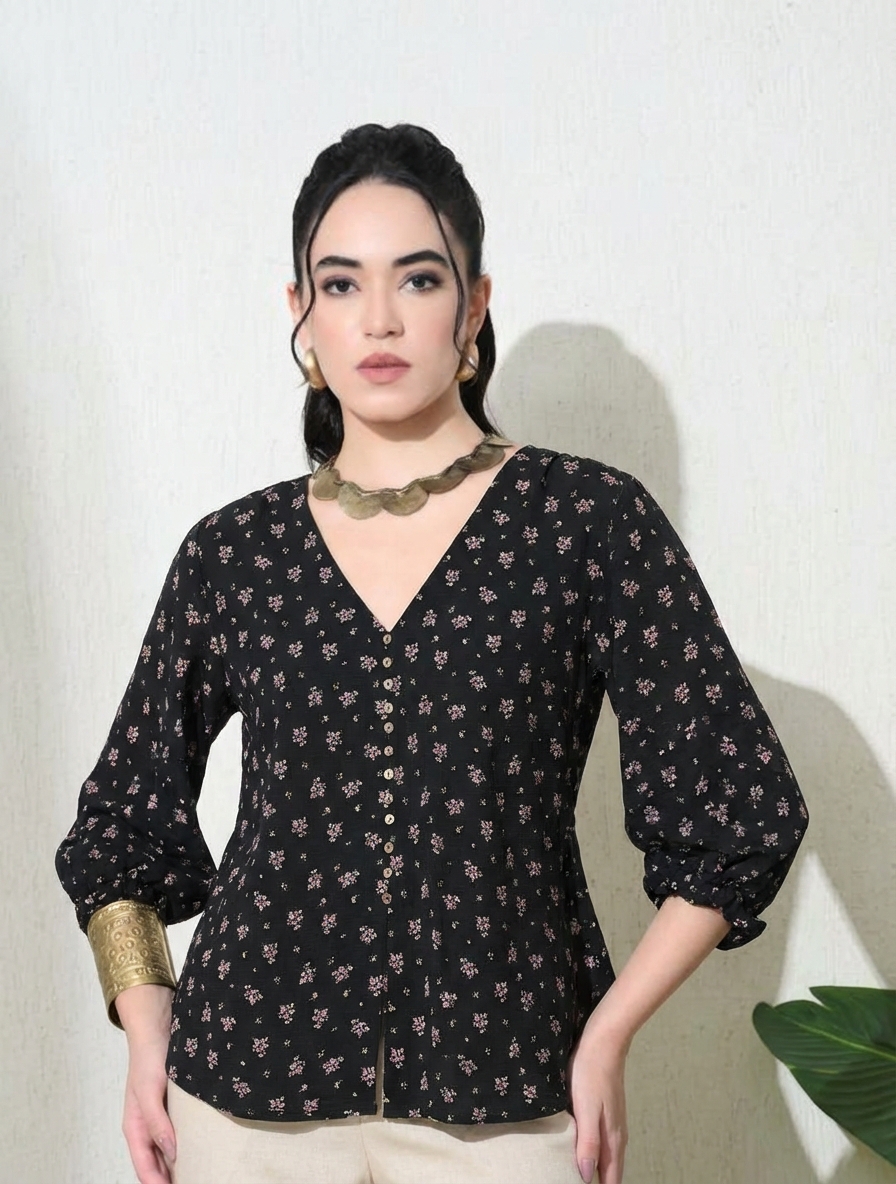
- **Gold Necklace:** The large coin necklace is a rigid body. The V-neck of the new garment appears deep enough that the necklace will likely rest on the skin *inside* the V. If the fabric overlaps, the necklace must be layered *over* the fabric.
- **Gold Wrist Cuff:** The user has a large cuff on her right wrist (viewer's left). The new garment's sleeve must either bunch above this rigid object or drape over it. For visual clarity, the physics engine should treat the cuff as a collision object, causing the sleeve fabric to gather just above it.
- **Pants Waistband:** The shirt hem should naturally fall over the waistband of the beige pants.
PHASE 3: ENVIRONMENT & LIGHTING
- **Light Match:** The user image uses high-key, neutral-cool studio lighting with soft shadows casting slightly to the right. The source garment image has warm, yellow-toned indoor lighting. The new garment render must desaturate the yellow warmth to match the neutral white balance of the user's scene. Shadows generated by the collar and sleeves must be soft and diffuse.
- **Color Calibration:** The source black value needs to be deepened and neutralized (removing the brownish tint from the wood floor reflection) to a true charcoal/black to match the contrast levels of the user's hair and current top.
PHASE 4: IDENTITY PROTECTION
- **Facial Lock:** The user's face, makeup, ears, earrings, and hairline must be masked and completely frozen.
- **Body Integrity:** The user's shoulder width and arm thickness must dictate the garment's size. Do not warp the user's torso to fit the cloth image. The visible skin tone in the V-neck area must match the user's existing facial skin tone perfectly.