Thinking Process
PHASE 1: VISUAL DECONSTRUCTION
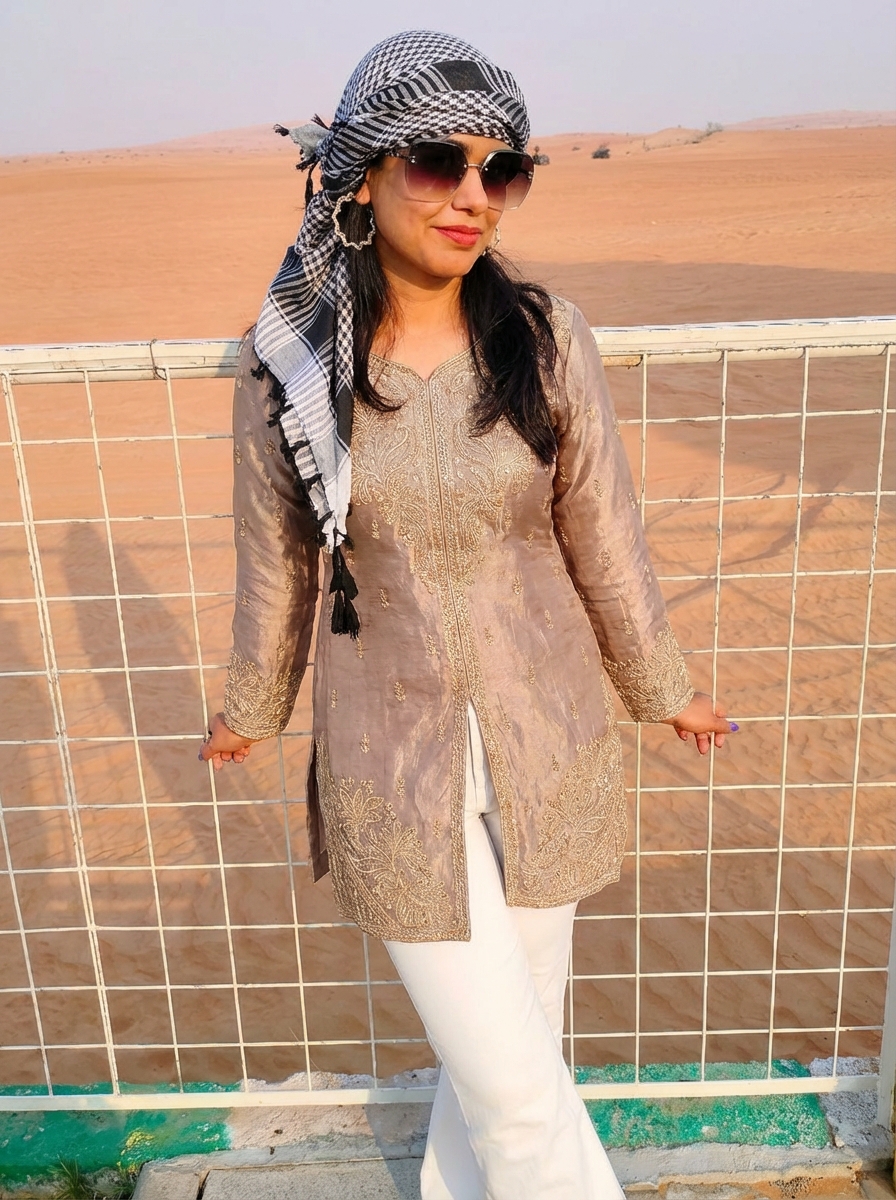
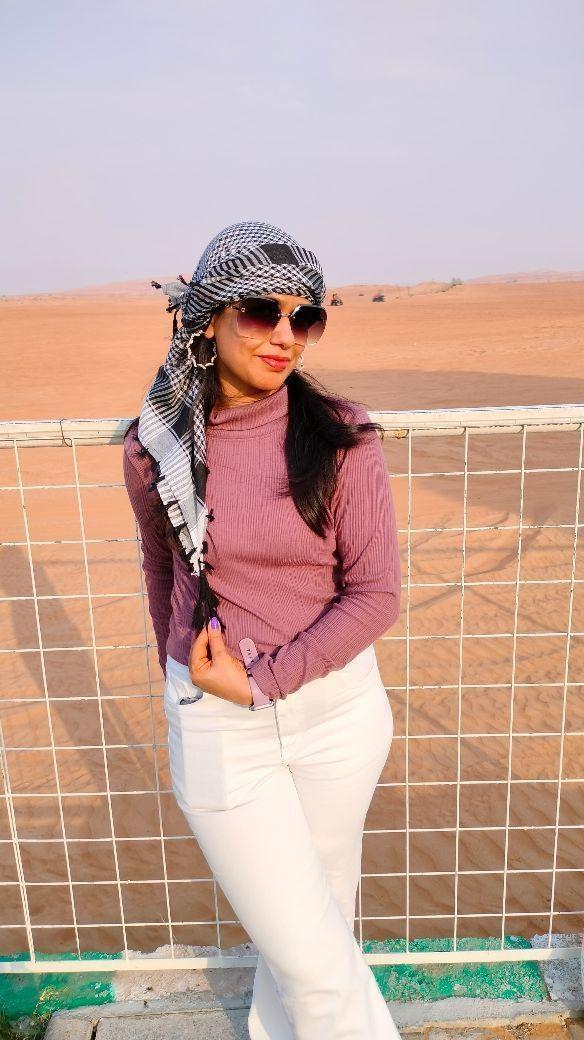
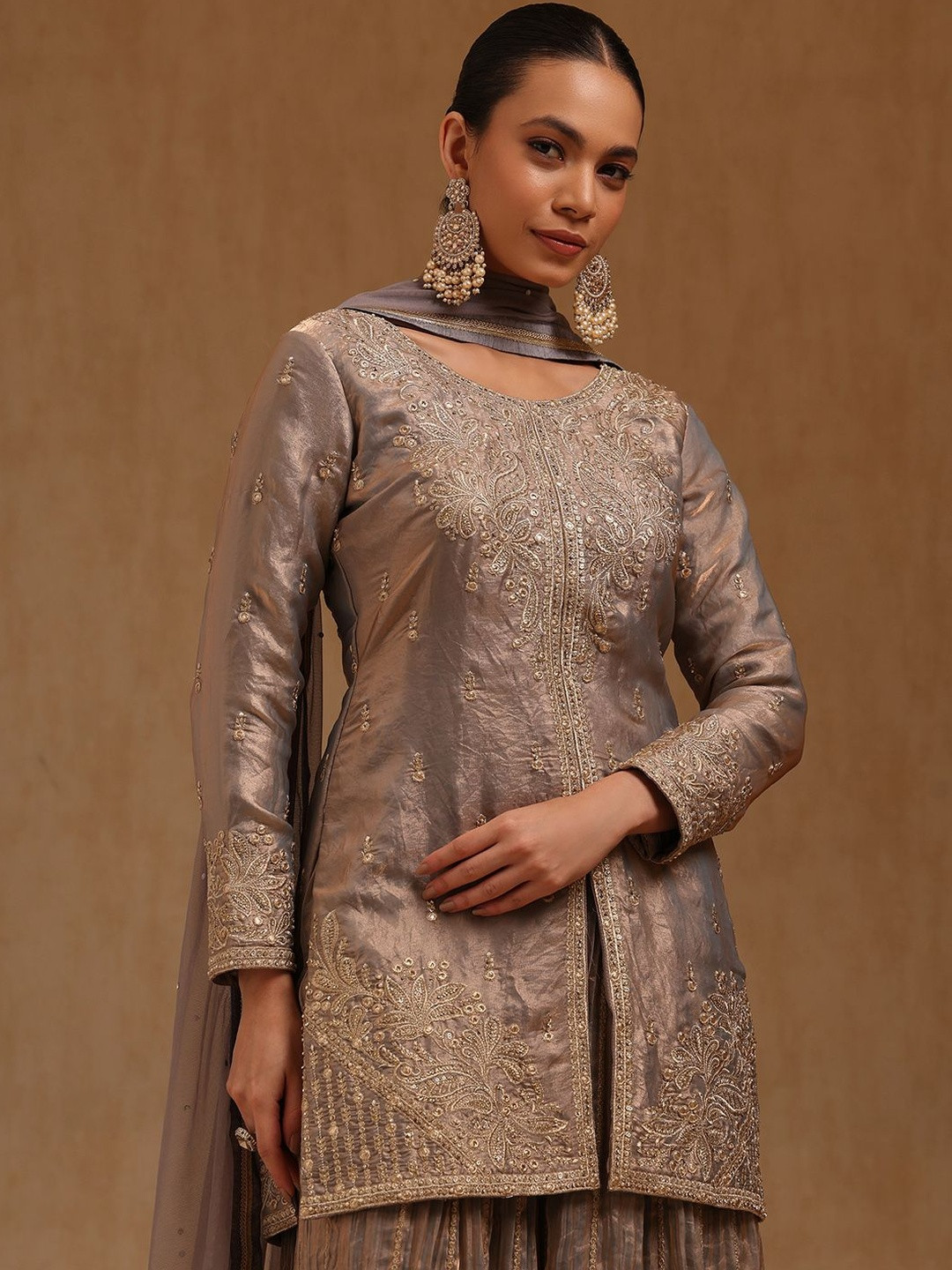
- **Fabric Physics:** The source garment is a structured, metallic silk or brocade (likely Banarasi or Chanderi silk). It possesses high specularity and anisotropic reflectivity. Unlike the user's current ribbed knit which stretches, this material is rigid and heavy. It should not cling to the skin but rather hold a structured shape, breaking straight down from the bust and shoulders.
- **Key Features:** The elaborate gold/silver zari embroidery (zardozi work) on the chest, neckline, and cuffs must be rendered with high frequency to maintain texture. The center-front slit and the heavy, embellished hemline are critical structural elements. The sheer sleeves of the source must maintain transparency if they differ from the bodice lining.
PHASE 2: FIT & DRAPE SIMULATION
- **Body Mapping:** The garment is a long tunic (Kurta). It must extend past the user's hips, covering the upper portion of the white jeans. Due to the user leaning back against the fence, the rigid fabric of the Kurta should break near the waist and push slightly forward, rather than conforming to the abdominal curve. The sleeves are looser than the user's current top and should bunch slightly at the elbows due to the bent arm poses.
- **Occlusion Handling:**
1. **Headscarf (Critical):** The user's black and white checkered headscarf (keffiyeh) draped over the left shoulder and chest MUST be segmented as a foreground layer. The new Kurta must be rendered *underneath* the hanging tails of this scarf.
2. **Right Hand:** The user's right hand is gripping the fence at waist level. The Kurta fabric must flow behind the hand or bunch around the wrist, ensuring the hand remains visible and occludes the garment.
3. **Hair:** The dark hair resting on the right shoulder must layer over the new garment.
PHASE 3: ENVIRONMENT & LIGHTING
- **Light Match:** The target environment is a high-exposure desert setting with strong, hard sunlight coming from the upper right. The new garment must drop the soft, diffuse studio lighting of the source image and adopt hard, high-contrast cast shadows. The metallic threads in the embroidery must catch the "sunlight" to create specular highlights consistent with the bright outdoor lux levels.
- **Color Calibration:** The warm, brownish tones of the source studio background must be neutralized. The metallic beige/grey of the Kurta should reflect the warm orange bounce light from the desert sand and the cool ambient light from the sky to integrate naturally.
PHASE 4: IDENTITY PROTECTION
- **Facial Lock:** The user's face, large sunglasses, and the wrapping of the headscarf around the cranial area must be completely frozen.
- **Body Integrity:** The user's waist width and arm volume must be preserved. The simulation must not slim the user to match the source model's dimensions. The white flare jeans below the hem of the new Kurta must remain untouched and consistent with the original image.