Thinking Process
PHASE 1: VISUAL DECONSTRUCTION
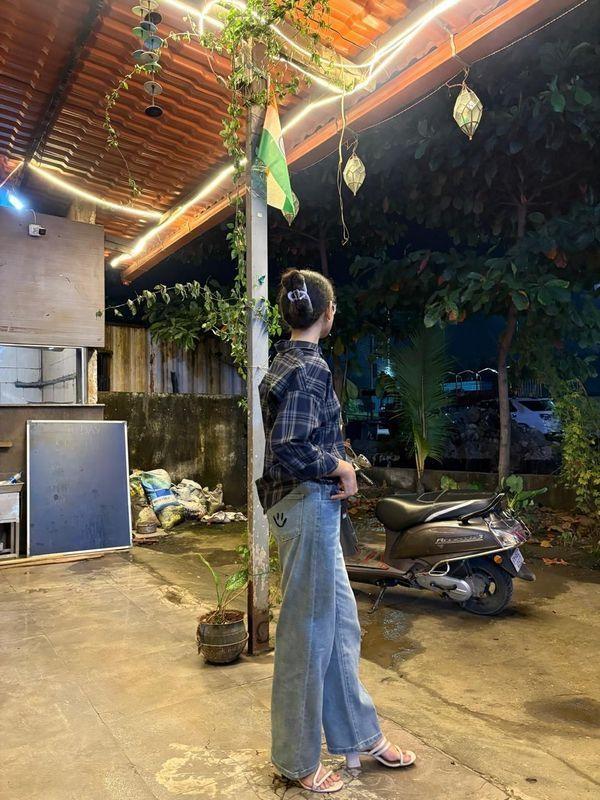
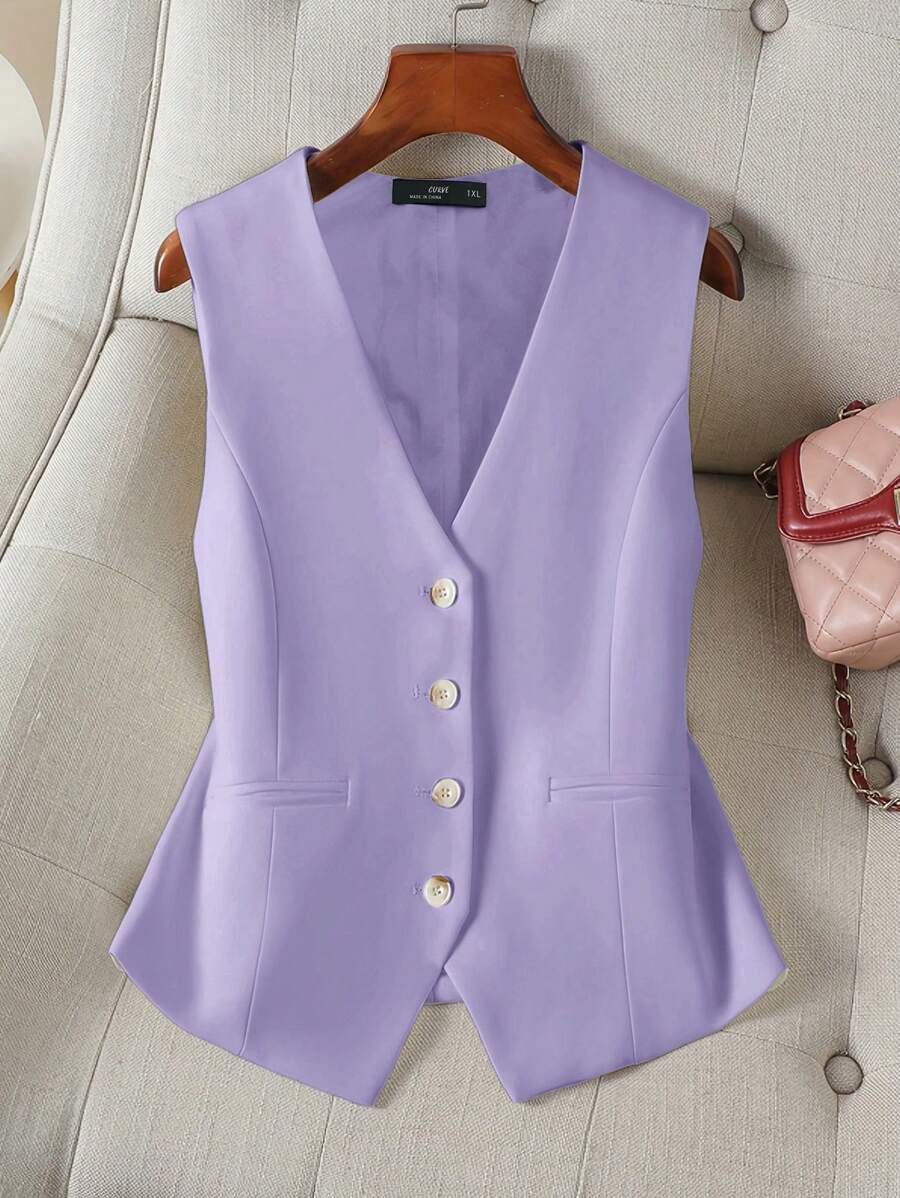
- **Fabric Physics:** The source garment is a structured, medium-weight tailoring fabric (likely a polyester/viscose suiting blend). It has a matte to semi-matte finish. Unlike the current loose flannel shirt, this fabric is rigid and holds its shape. It should not ripple excessively but rather maintain smooth, clean planar geometry, breaking only at stress points (waist indent).
- **Key Features:** The "Princess Seams" (vertical stitching for shaping) visible on the front imply a fitted silhouette that must be replicated on the generated back panel. The sharp V-neck and hem points are crucial structural identifiers, though in this rear-facing pose, only the collar stand, armholes, and side hem geometry will be visible. The specific lavender hue (#A090C0 approx) must be preserved.
PHASE 2: FIT & DRAPE SIMULATION
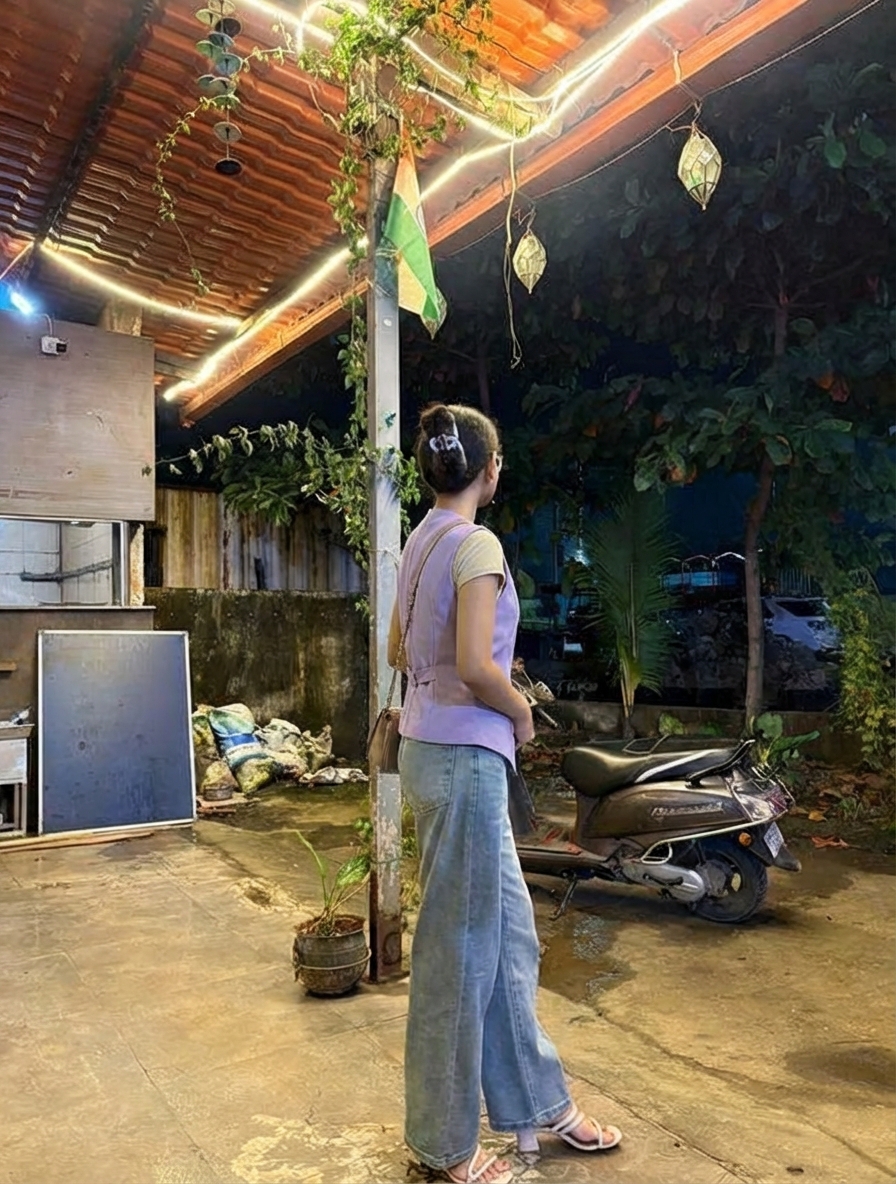
- **Body Mapping:** **CRITICAL ORIENTATION MATCH:** The user is facing away (rear 3/4 view), while the source garment is a front view. The simulation must generate the *back* panel of the waistcoat, wrapping the fabric texture around the torso. The vest is sleeveless; the simulation must effectively remove the bulky plaid sleeves and in-paint the user's bare arms/skin texture or an undershirt, as the vest occupies less surface area than the original shirt. The fit should be closer to the body (tailored) than the current baggy shirt.
- **Occlusion Handling:** The user's hair bun and the loose strands at the nape of the neck must layer *over* the collar of the new vest. The bag strap (visible crossing the body) creates a pressure point; the vest fabric must indent slightly where the strap presses against the shoulder/torso to maintain physical realism.
PHASE 3: ENVIRONMENT & LIGHTING
- **Light Match:** The scene is illuminated by warm overhead string lights (tungsten/yellow dominant) creating a high-contrast nighttime environment. The lavender vest must accept this warm cast, shifting the color temperature towards a warmer, muted mauve rather than the cool, bright purple of the studio shot. Shadows should be cast downwards and slightly to the left, matching the ground shadows.
- **Color Calibration:** The source image is flat-lit. The target render requires high dynamic range—the top of the shoulders should catch the string light highlights, while the lower back of the vest should fall into the deep ambient shadow of the environment.
PHASE 4: IDENTITY PROTECTION
- **Facial Lock:** The user's profile (ear, cheek, jawline) and the specific hairstyle (hair clip, bun structure) must be completely frozen and masked out of the generation area.
- **Body Integrity:** Do not alter the width of the hips or the fit of the jeans. The simulation must respect the user's natural shoulder width and posture. While the vest is "fitted," it must wrap around the user's existing volumetric shape, not slim the user to match the empty hanger shape.