Thinking Process
PHASE 1: VISUAL DECONSTRUCTION
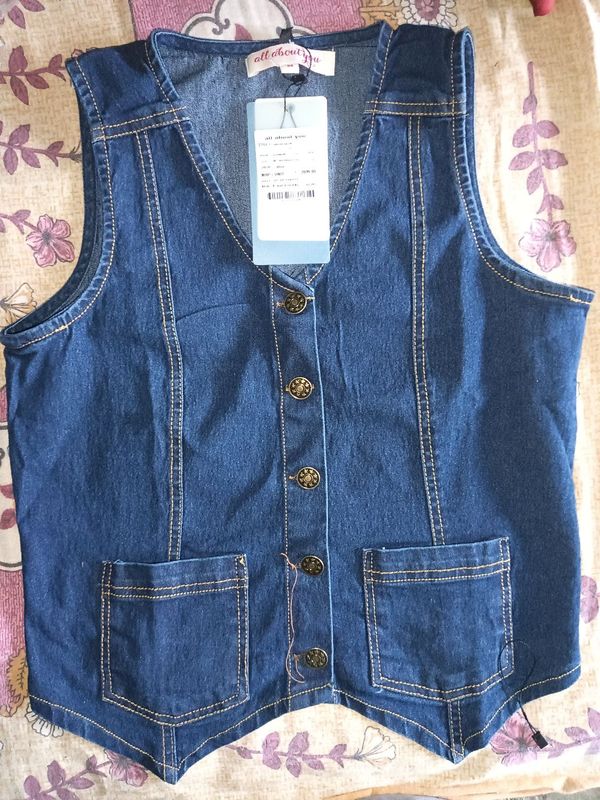
- **Fabric Physics:** The source is a structured, heavyweight denim. Unlike the user's current flowy patterned fabric, this material has high bending resistance and low shear. It should appear matte with subtle, broad specular highlights on the tension points (chest, shoulders). It must not cling to the body like a jersey knit; it must hold its own shape.
- **Key Features:** The 5 antiqued brass buttons, the prominent orange contrast stitching (especially the princess seams and pocket outlines), and the two front patch pockets must be preserved with high fidelity. The V-neck cut and the pointed "W" shape of the bottom hem are critical geometry. The paper tags hanging from the label must be digitally removed.
PHASE 2: FIT & DRAPE SIMULATION
- **Body Mapping:**
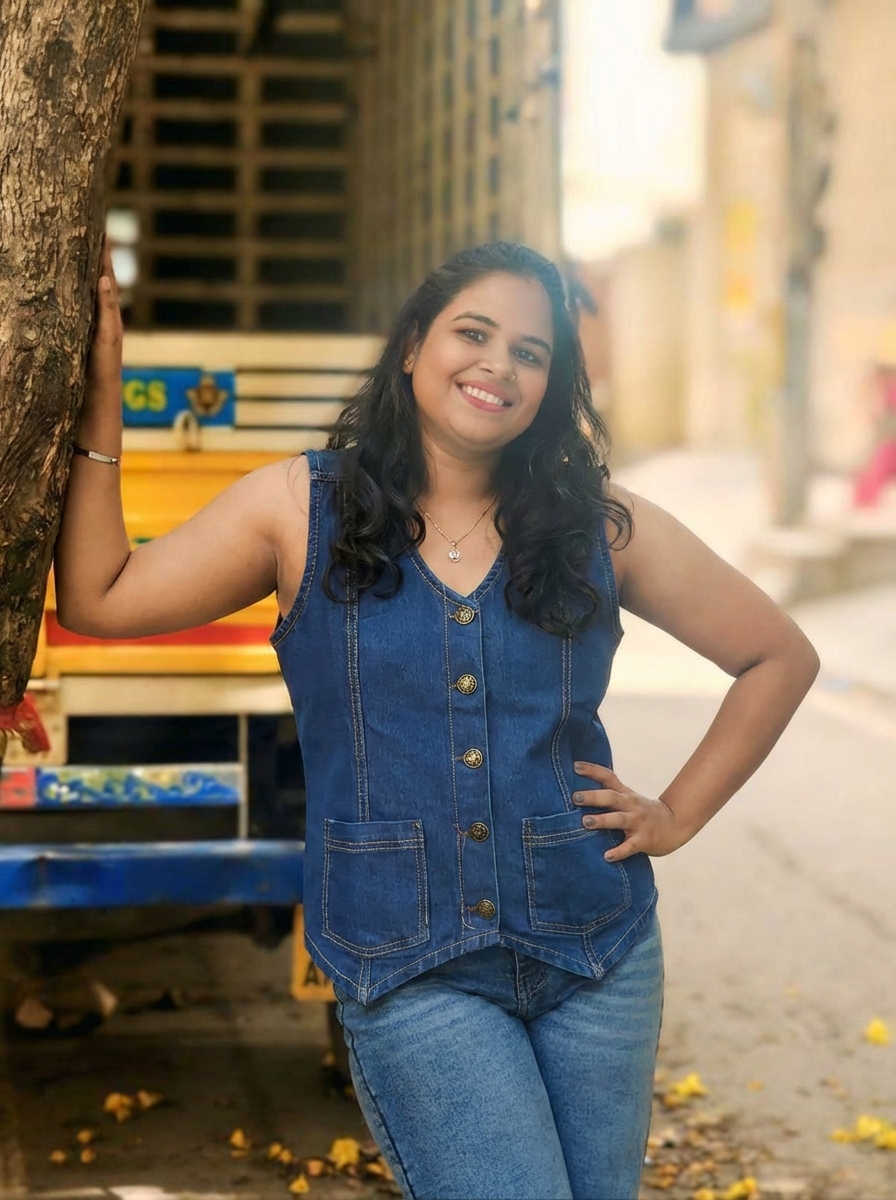
- **Shoulders/Armholes:** Due to the user's raised right arm (leaning on the tree), the right armhole of the vest must lift and gape slightly, pulling the hemline upward on that side. The left shoulder is neutral; the vest should sit flush.
- **Torso/Waist:** The vest is rigid. It should bridge over the waist curve rather than tucking in. It should terminate at the high-hip level, likely overlapping the waistband of the user's existing jeans.
- **Sleeves:** Since the source is a vest and the target has long sleeves, the simulation implies in-painting bare arms or layering. Assuming replacement: The armholes must cut in cleanly, exposing generated skin tone that matches the user's face and neck.
- **Occlusion Handling:**
- **Hair:** The user has dark, wavy hair cascading over both shoulders. A rigid alpha mask must be applied to the hair to ensure the denim vest is rendered *behind* these strands.
- **Jewelry:** The necklace sitting on the sternum must be layered *over* the V-neck opening (or masked if the vest rises high enough).
- **Environment:** The right arm/shoulder leans against a tree bark texture. The vest texture must interact with this boundary without "melting" into the wood patterns.
PHASE 3: ENVIRONMENT & LIGHTING
- **Light Match:** The user is in soft, diffused outdoor daylight (overcast or open shade) with light coming mostly from the upper front. The flat-lay lighting of the denim vest (likely flash/indoor) needs to be neutralized. Deep, harsh shadows in the denim folds must be softened to match the ambient occlusion of the outdoor scene.
- **Color Calibration:** The source denim is a cool blue. It requires a slight warm/yellow color grading to match the ambient temperature of the outdoor setting so it feels integrated rather than pasted on. The black levels of the denim shadows must match the black levels of the user's hair and current jeans.
PHASE 4: IDENTITY PROTECTION
- **Facial Lock:** The user's entire head, including the specific jawline contour, smile, and skin tone, is a frozen zone. The neck area up to the collarbone must remain unaltered.
- **Body Integrity:** Strict volumetric preservation is required. The simulation must fit the vest to the user's current bust and waist dimensions. Do not perform any mesh warping that slims the torso or alters the width of the arms. The user's existing blue jeans (lower body) must remain exactly as they are.