Thinking Process
PHASE 1: VISUAL DECONSTRUCTION
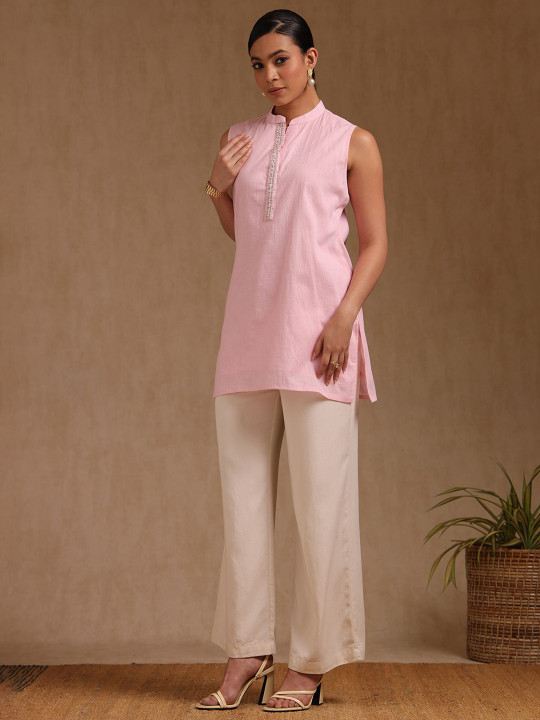
- **Fabric Physics:** The source garment is a lightweight, structured cotton or linen blend with a matte finish. It possesses medium stiffness—it will not drape like liquid silk but rather hold a structural shape with crisp folds. It interacts with light diffusely (no specular highlights) and shows a visible woven texture that must be upscaled during transfer.
- **Key Features:** The central vertical placket with beaded/embroidered detailing is the primary focal point and must remain centered on the sternum. The mandarin/band collar must stand upright around the neck. The sleeveless cut (armholes) and the side vents (slits at the hip) are structural essentials. The pastel pink hue requires texture preservation to avoid looking like a flat color block.
PHASE 2: FIT & DRAPE SIMULATION
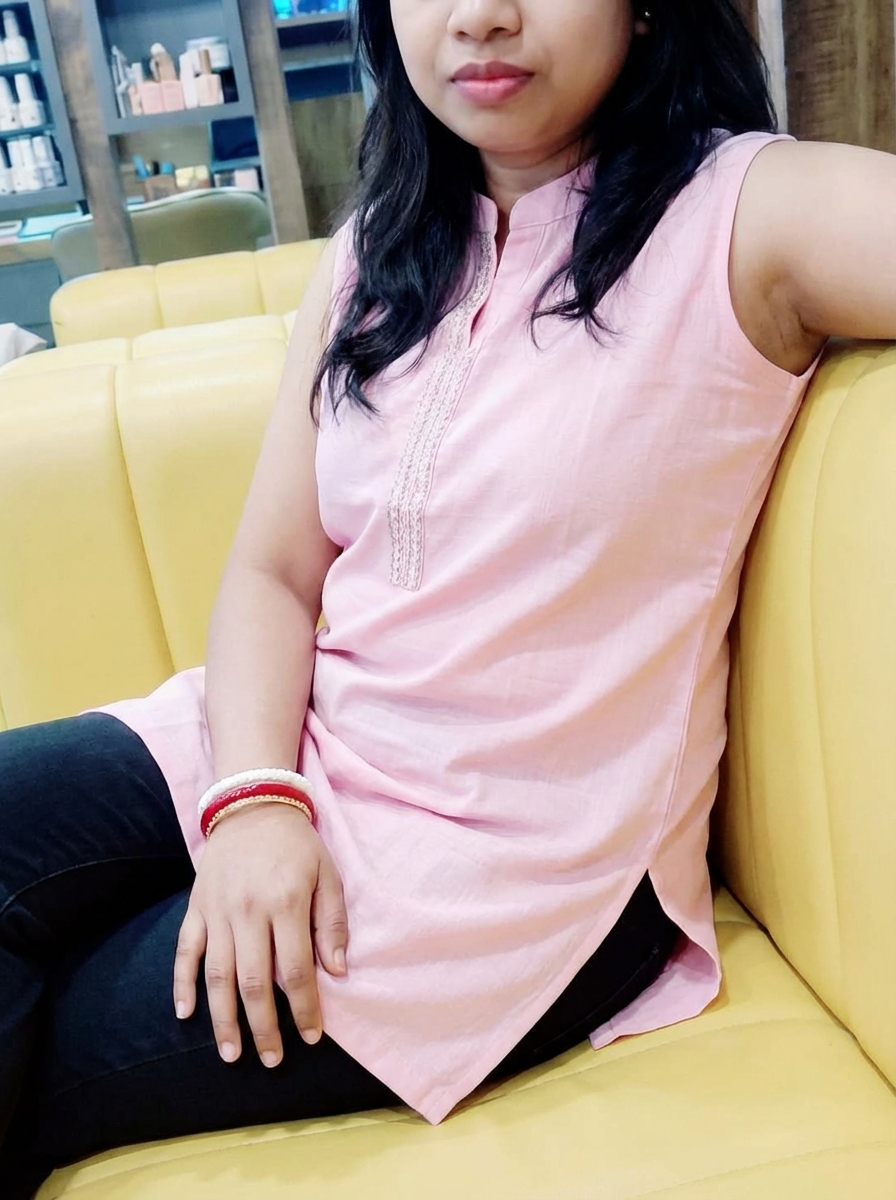
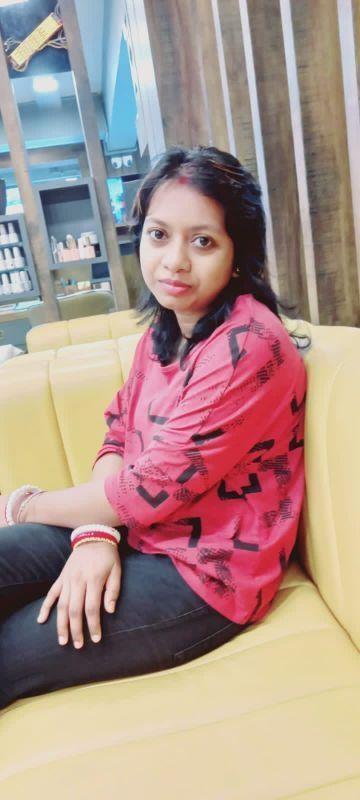
- **Body Mapping:** Due to the user's seated posture, the "straight hang" of the source image must be disregarded. The tunic will compress and fold horizontally across the lower abdomen and hip area where the torso meets the legs. The hemline will not hang straight; it will splay out slightly on the yellow sofa cushion. The shoulder seam must align with the user’s natural shoulder line, replacing the current drop-shoulder red tee.
- **Occlusion Handling:** The user's dark hair falls over both shoulders; the new garment must pass *under* these hair strands. Crucially, the user's left hand and wrist (including the white/red wristbands) are resting on the lap. The lower portion of the long tunic must be rendered *underneath* the hand and wrist, or draped around it naturally, ensuring the hand is not textured over with pink fabric.
PHASE 3: ENVIRONMENT & LIGHTING
- **Light Match:** The user's environment has cool, diffuse overhead lighting (likely fluorescent or LED), contrasting with the warm studio light of the source. The pink garment must be color-graded to a cooler tone to match the room's white balance. Shadows on the garment must be soft and fall downward, consistent with the shadows under the user's chin and nose.
- **Color Calibration:** The source image is high-contrast and warm; the target environment is lower contrast with a slight cyan/blue cast. The pink radiance of the tunic must be desaturated slightly and cooled to blend with the ambient light bouncing off the yellow sofa and grey walls.
PHASE 4: IDENTITY PROTECTION
- **Facial Lock:** Absolute pixel-lock required for the user’s face (eyebrows to chin), neck skin tone, and the specific volume/style of her dark hair.
- **Body Integrity:** The simulation must respect the user's seated width and shoulder breadth. Do not apply the standing model's elongated torso proportions to the seated user. The simulation must replace the red sleeves with the user's natural skin tone (arm generation) or maintain the user's arm volume if skin inpainting is performed, without slimming the arms or waist.