Thinking Process
PHASE 1: VISUAL DECONSTRUCTION
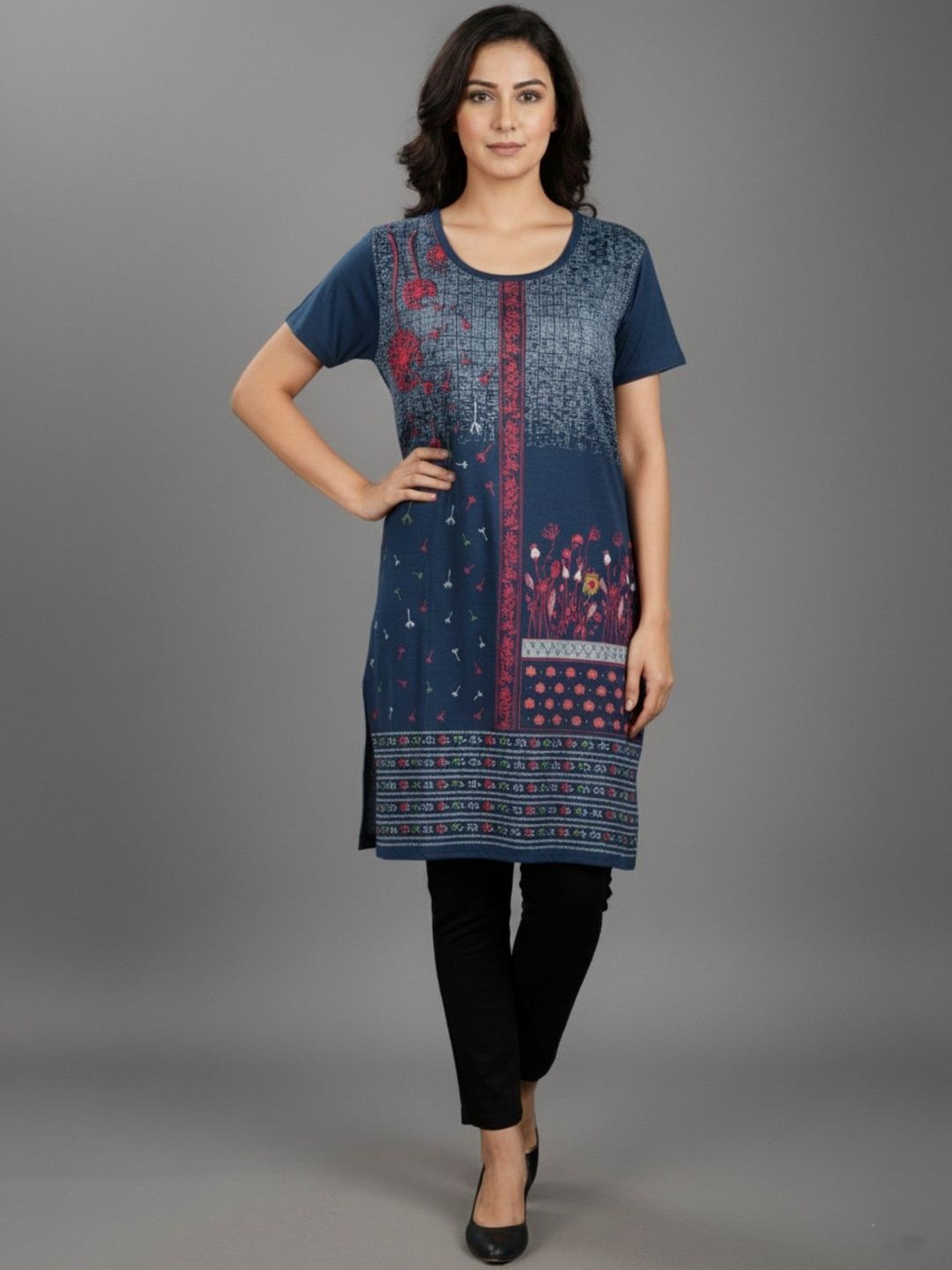
- **Fabric Physics:** The source garment is a matte cotton or cotton-blend jersey. It possesses low reflectivity (non-shiny) and medium weight. Unlike the stiff folds of denim or the sheen of silk, this fabric absorbs light and should exhibit soft, rolling folds rather than sharp creases. It has a fluid structure that hangs vertically due to gravity but conforms softly to the bust and shoulders.
- **Key Features:**
- **Asymmetric Patterning:** The vertical red floral stripe on the wearer's left and the grey checkered pattern on the right must maintain their alignment relative to the centerline.
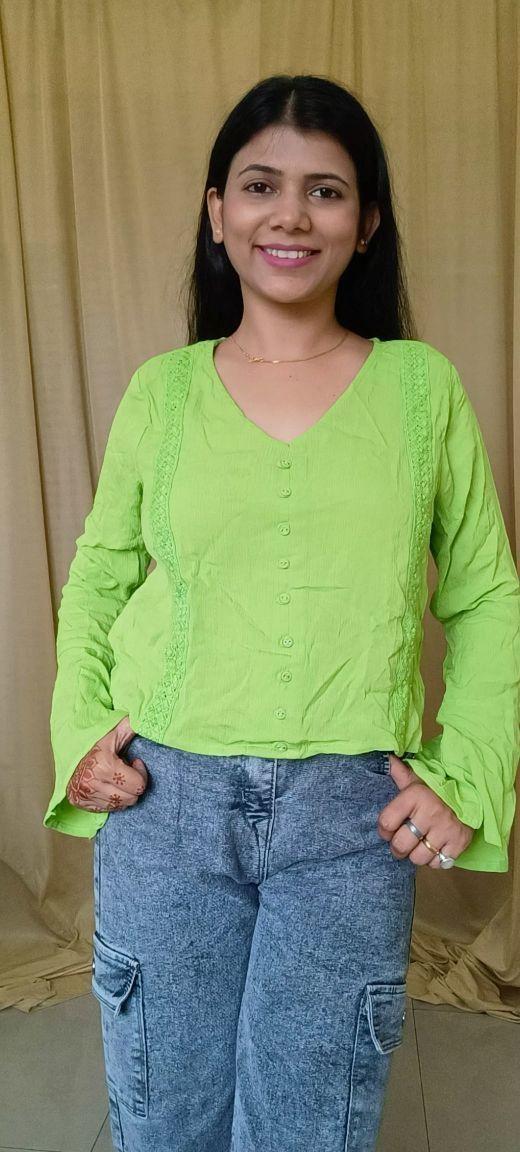
- **Neckline:** The round (crew) neckline must replace the user's current V-neck structure.
- **Hemline:** The detailed horizontal borders at the bottom edge are critical; as this is a tunic/kurti length, these borders should land mid-thigh, significantly lower than the user's current waist-length top.
- **Sleeve Length:** The short sleeves (mid-bicep) must replace the user's current long sleeves.
PHASE 2: FIT & DRAPE SIMULATION
- **Body Mapping:**
- **Sleeve Transition:** A critical generation task is required here. The system must mask out the user's existing green long sleeves and generate realistic skin texture for the forearms and elbows to accommodate the source's short sleeves.
- **Length Extension:** The source garment is a long kurti. The physics simulation must drape the fabric *over* the user's hips and upper thighs, covering the top portion of the jeans and the pockets. The fabric should hang straight down from the bust, skimming the waist rather than tucking in.
- **Pose Interaction:** The fabric should pull slightly tight across the chest due to the user's posture, with vertical tension folds originating from the armpits.
- **Occlusion Handling:**
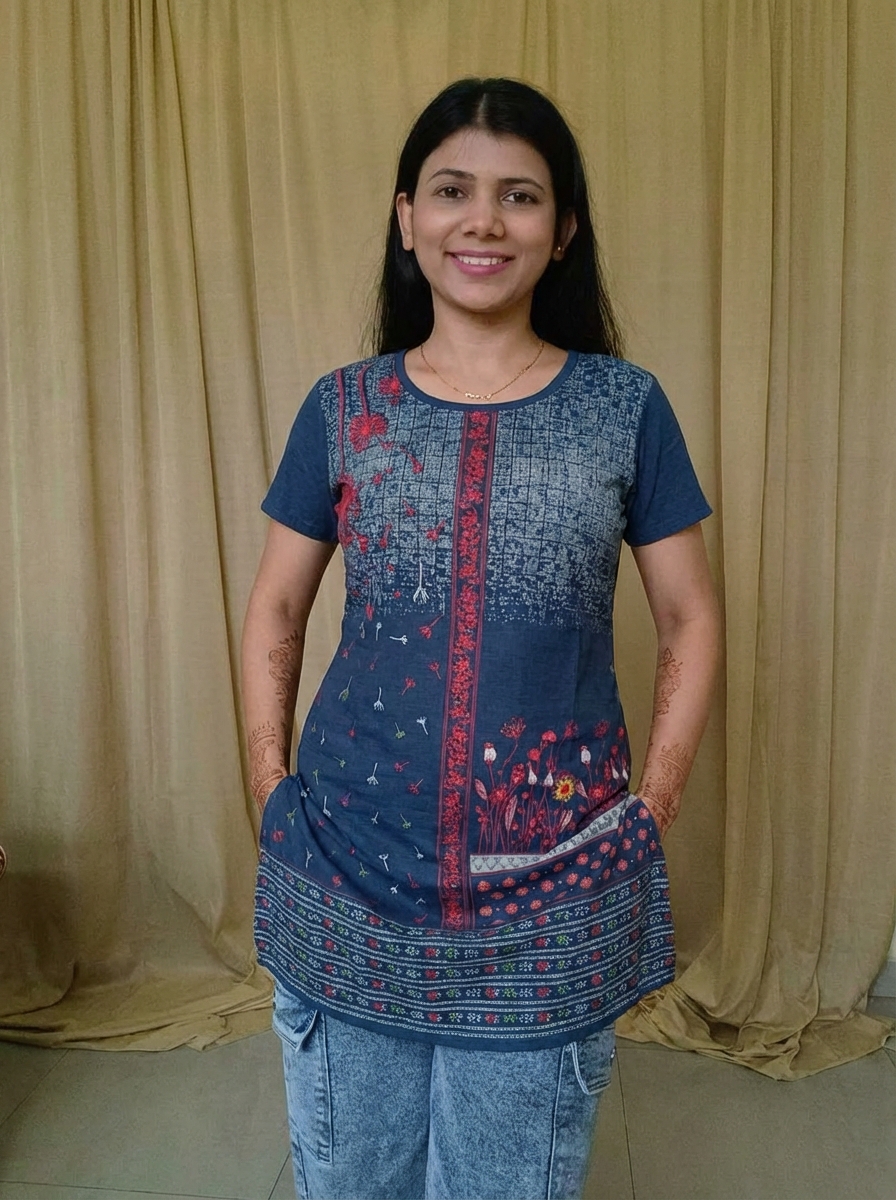
- **Hands/Wrists:** The user's thumbs are hooked into pockets or resting near the hips. The new, longer tunic must drape *behind* these hands/wrists, or appear bunched up slightly where the hands press against the body. The hands act as a hard collision object.
- **Hair:** The user's hair falls mostly behind the shoulders, but any loose strands near the clavicle or shoulders must be segmented and layered *over* the new blue textile to maintain depth.
- **Necklace:** The gold necklace sits close to the clavicle. Given the higher neckline of the source kurti, the necklace may be partially or fully covered. If visible, it must lay on top of the fabric.
PHASE 3: ENVIRONMENT & LIGHTING
- **Light Match:** The user image has warm, soft, frontal indoor lighting with a beige curtain background casting diffuse reflections. The source garment (studio cool lighting) must be warmed up. The blue tones need to shift slightly towards the warm spectrum to integrate with the beige environment. Shadows must be soft and diffuse, generated under the bust and inside the short sleeves against the arms.
- **Color Calibration:** Reduce the contrast of the source print slightly to match the lower-contrast, amateur photography style of the user image. The deep blues must not look like a "stuck-on" sticker; they need to pick up the subtle ambient beige tint of the room.
PHASE 4: IDENTITY PROTECTION
- **Facial Lock:** Absolute pixel freeze required for the face, from the chin upwards, including the ears and the hairline. The user's smile and facial lighting must remain untouched.
- **Body Integrity:** Strictly forbidden to alter the user's hip width or bust size. The simulation acts as a cloth overlay only. The generated skin on the arms (due to sleeve shortening) must match the user's existing facial skin tone and grain exactly.