Thinking Process
PHASE 1: VISUAL DECONSTRUCTION
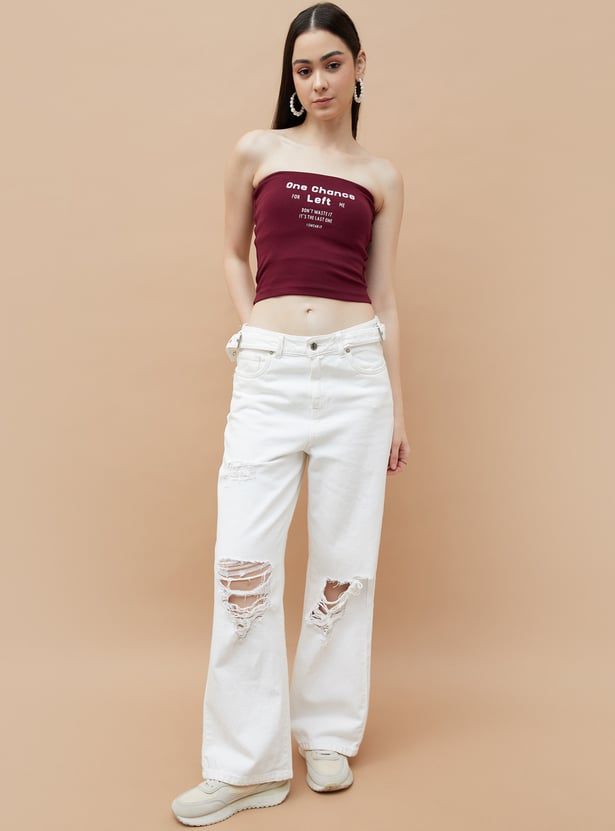
- **Fabric Physics:** The source garment is a ribbed knit jersey (cotton-elastane blend). It exhibits high elasticity and tension rather than loose draping. The surface is matte with low specular reflection, diffusing light softly across the ribbing texture.
- **Key Features:** The deep maroon/burgundy color code must be exact. The horizontal "ribbed" texture is the primary visual anchor and must scale correctly to the user's torso. The white text graphic ("One Chance...") is located on the front chest; given the user's rear/side angle, the text should be largely occluded or only partially visible wrapping around the right side profile, prioritizing the plain ribbed texture for the back view. The cropped, straight hemline is a mandatory geometric constraint.
PHASE 2: FIT & DRAPE SIMULATION
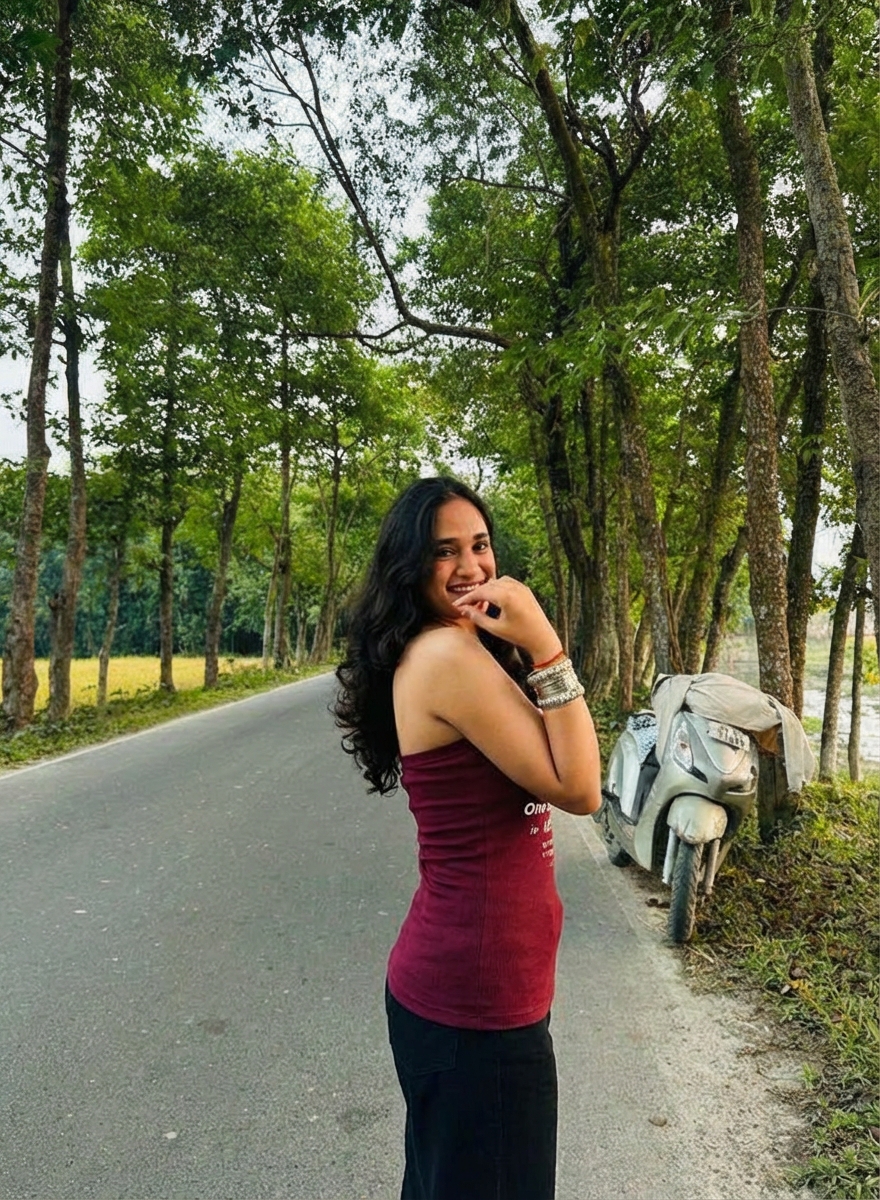
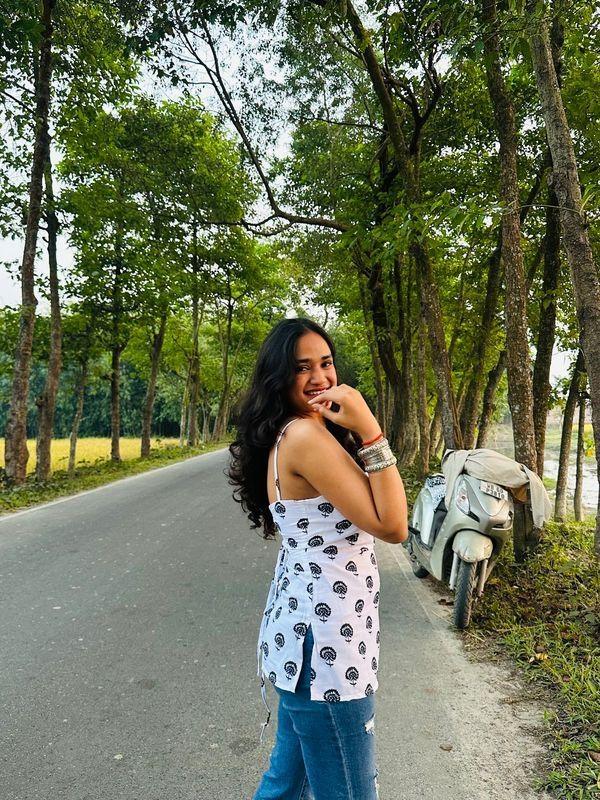
- **Body Mapping:** This is a compression-fit simulation. Unlike the user's current flowy top, the tube top must cling tightly to the torso. The simulation must generate the *back* view of the garment based on the source material, hugging the latissimus dorsi and ribs. Crucially, the system must perform "negative draping": removing the existing spaghetti straps and in-painting realistic skin texture on the user's shoulders and upper back where the current garment covers them.
- **Occlusion Handling:** The user's long, dark curly hair covers a significant portion of the upper back. The new garment must be layered strictly *behind* the hair volume. The complex shadow interaction between the hair and the new fabric (ribbed knit) must be rendered to avoid a "cut-out" look. The right arm's position creates a crease zone near the armpit; the tube top must deform/compress slightly in this axillary region.
PHASE 3: ENVIRONMENT & LIGHTING
- **Light Match:** The user is in an outdoor environment with diffuse, natural daylight filtering through trees (dappled lighting). The flat, bright studio lighting of the source image must be neutralized. The new garment must accept the environmental lighting: soft, ambient skylight from the top/left and subtle green bounce light from the surrounding foliage affecting the maroon hue.
- **Color Calibration:** The source maroon is high-contrast. It must be desaturated slightly and exposure-corrected to match the softer, slightly grainy dynamic range of the user's outdoor photo. The white text (if visible on the side wrap) should not be pure #FFFFFF but an off-white to match the lighting temperature.
PHASE 4: IDENTITY PROTECTION
- **Facial Lock:** The user's face, neck rotation, smiling expression, and the hand near the face must remain pixel-perfectly frozen.
- **Body Integrity:** The user's torso width and posture must remain unaltered. While the garment is tighter, the underlying body mesh (scapula position, waist curvature) must not be warped. The skin tone generated for the shoulders (replacing the old straps) must match the existing skin tone on the arms and face seamlessly.