Thinking Process
PHASE 1: VISUAL DECONSTRUCTION
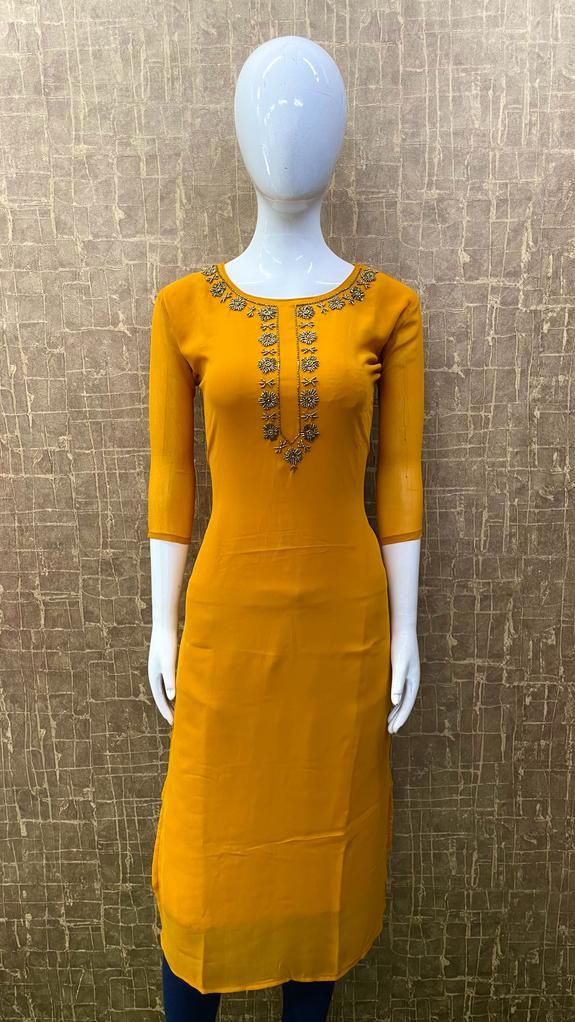
- **Fabric Physics:** The source garment is a mustard yellow Kurti (tunic), appearing to be made of rayon or soft cotton blend. It possesses medium-weight physics—draping closer to the body than stiff linen but holding more structure than silk. It has a matte finish with low specularity, meaning it will absorb light rather than shine, except for the embroidery which will catch highlights. The sleeves appear semi-sheer compared to the lined bodice.
- **Key Features:** The central vertical embroidery/beadwork at the neckline is the primary focal point and must remain rigid against deformation. The round neckline shape, the specific 3/4 sleeve length, and the straight-cut hemline (which extends significantly lower than the user's current top) must be preserved.
PHASE 2: FIT & DRAPE SIMULATION
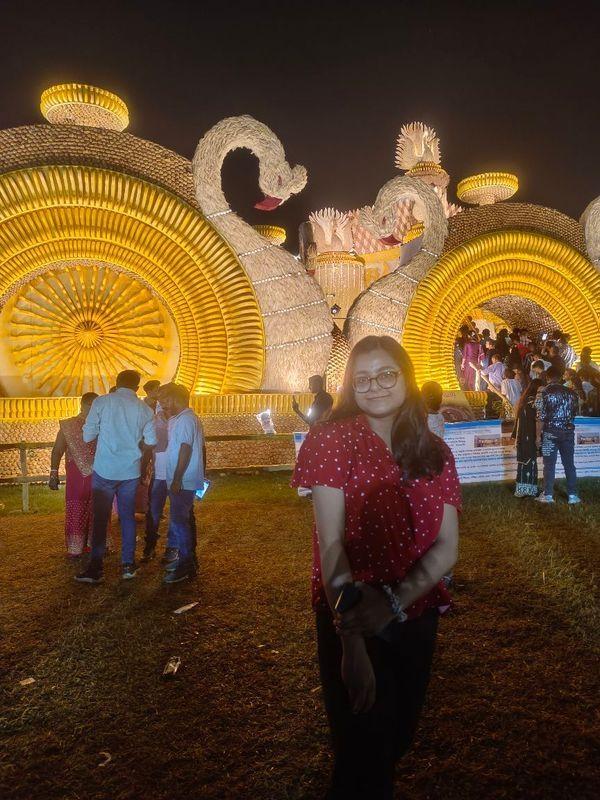
- **Body Mapping:** The target garment is a long tunic, unlike the user's current waist-length top. The simulation must extend the fabric mesh below the hips to the mid-thigh region. The fabric should fall relatively straight from the bust line, following gravity, rather than clinging tightly to the waist. Tension wrinkles should appear at the armpits due to the user's slightly relaxed arm position. The 3/4 sleeves must generate new geometry over the user's currently exposed forearms.
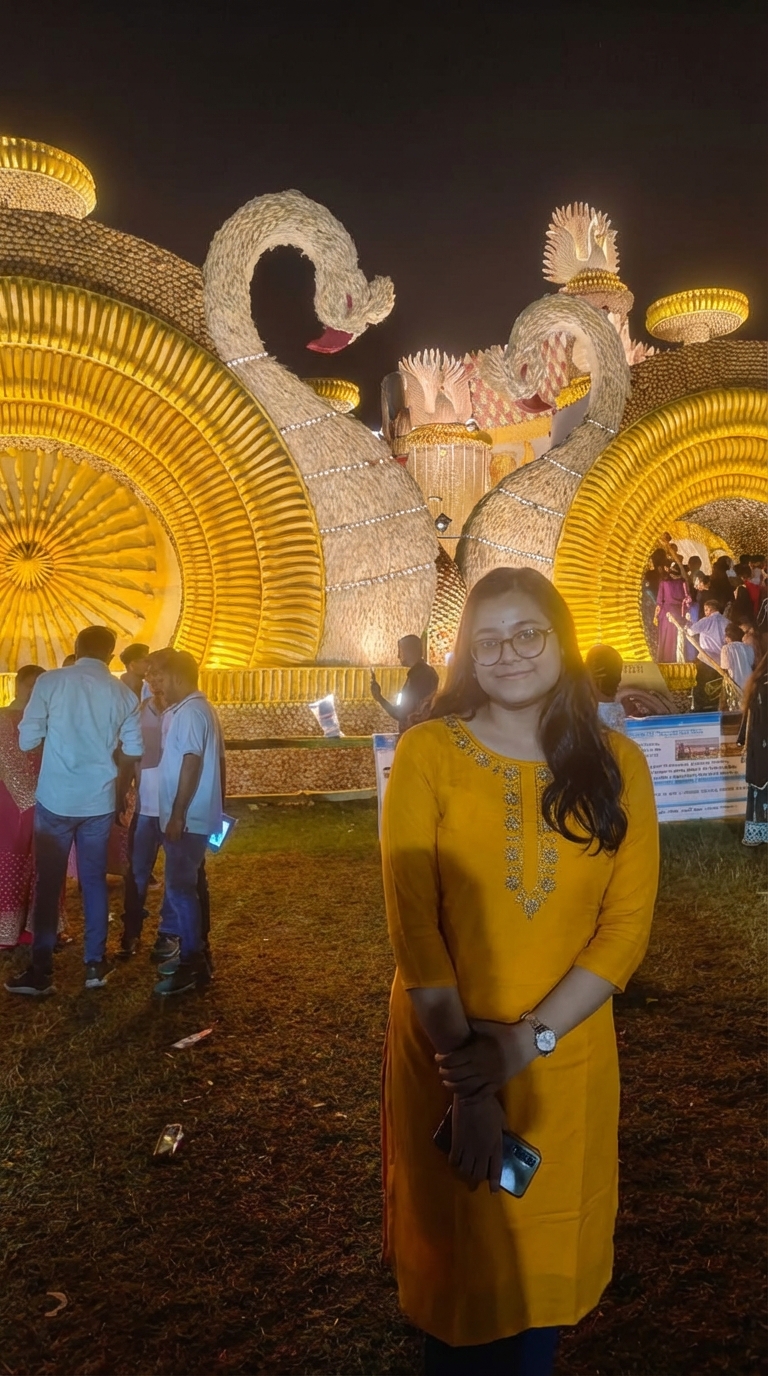
- **Occlusion Handling:** CRITICAL: The user has long dark hair draped over her left shoulder (viewer's right); a high-fidelity alpha mask must be created for the hair to composite it *over* the new yellow garment. The hands, wrist watch (left wrist), and the phone held at the waist level must be segmented out and layered on top of the Kurti, as the garment's length would naturally fall behind these elements.
PHASE 3: ENVIRONMENT & LIGHTING
- **Light Match:** The scene is a nighttime outdoor environment with intense, warm yellow backlighting from the swan structures and a softer, cooler frontal ambient light source illuminating the subject. The new garment must exhibit "rim lighting" (halo effect) on the outer edges to match the bright background. Self-shadowing on the garment needs to be soft and diffuse, consistent with the ambient night lighting.
- **Color Calibration:** The source garment is already yellow. To prevent it from blending into the yellow background, the "mustard" tone must be preserved by slightly deepening the shadows. A subtle warm noise grain should be applied to the garment texture to match the high-ISO visual noise present in the low-light user photo.
PHASE 4: IDENTITY PROTECTION
- **Facial Lock:** The user's face, glasses, neck, and hair geometry are strictly frozen. The skin tone on the neck and hands must remain untouched.
- **Body Integrity:** Strict prohibition on warping or slimming the user's waist or hips. The garment is a looser fit than the original top, so the silhouette will naturally expand slightly to accommodate the drape of the Kurti; however, the underlying body mesh must remain true to the user's actual proportions.