Thinking Process
PHASE 1: VISUAL DECONSTRUCTION
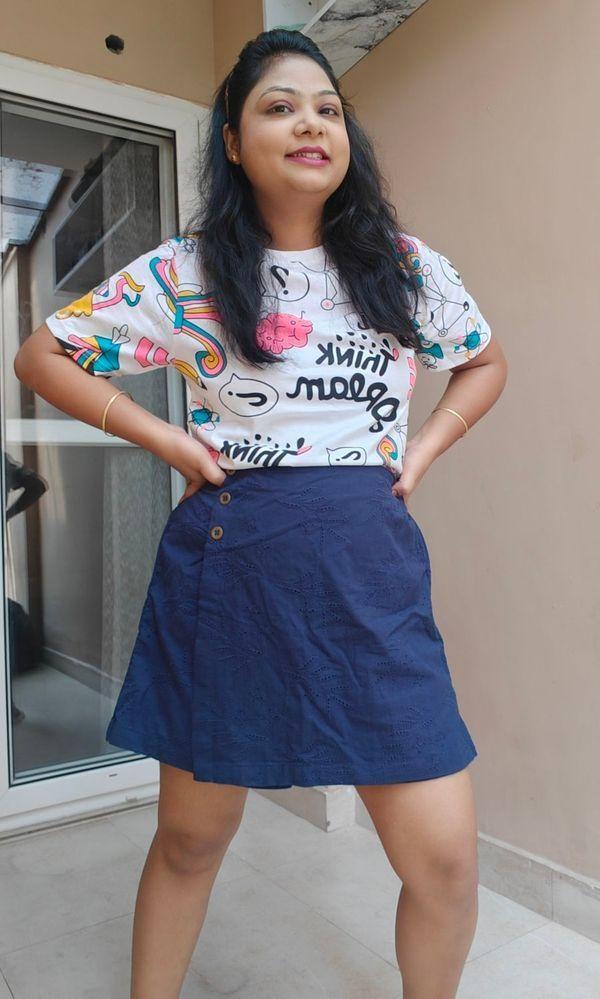
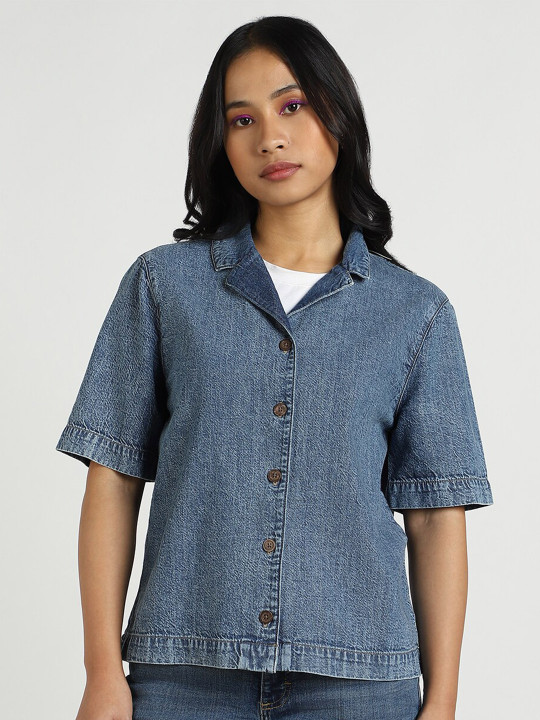
- **Fabric Physics:** The source material is a medium-weight denim with a twill weave structure. Unlike the user's current cotton t-shirt, this denim has high structural rigidity and bending resistance. It will not cling to the skin; instead, it requires structural volume, maintaining a boxy silhouette. Light reflection should be matte with subtle, localized specular highlights on the weave ridges and hem edges.
- **Key Features:**
- **Hardware:** Five visible brown tortoise-shell buttons and corresponding buttonholes.
- **Construction:** Notched lapel collar structure (must maintain stiffness), distinct top-stitching on the sleeve cuffs and bottom hem.
- **Texture:** The denim wash variegation (lighter areas on seams) and vertical weave grain must be preserved.
PHASE 2: FIT & DRAPE SIMULATION
- **Body Mapping:**
- **Shoulders & Chest:** The garment must sit squarely on the shoulders. The collar must rise slightly off the neck, replacing the current crew neck.
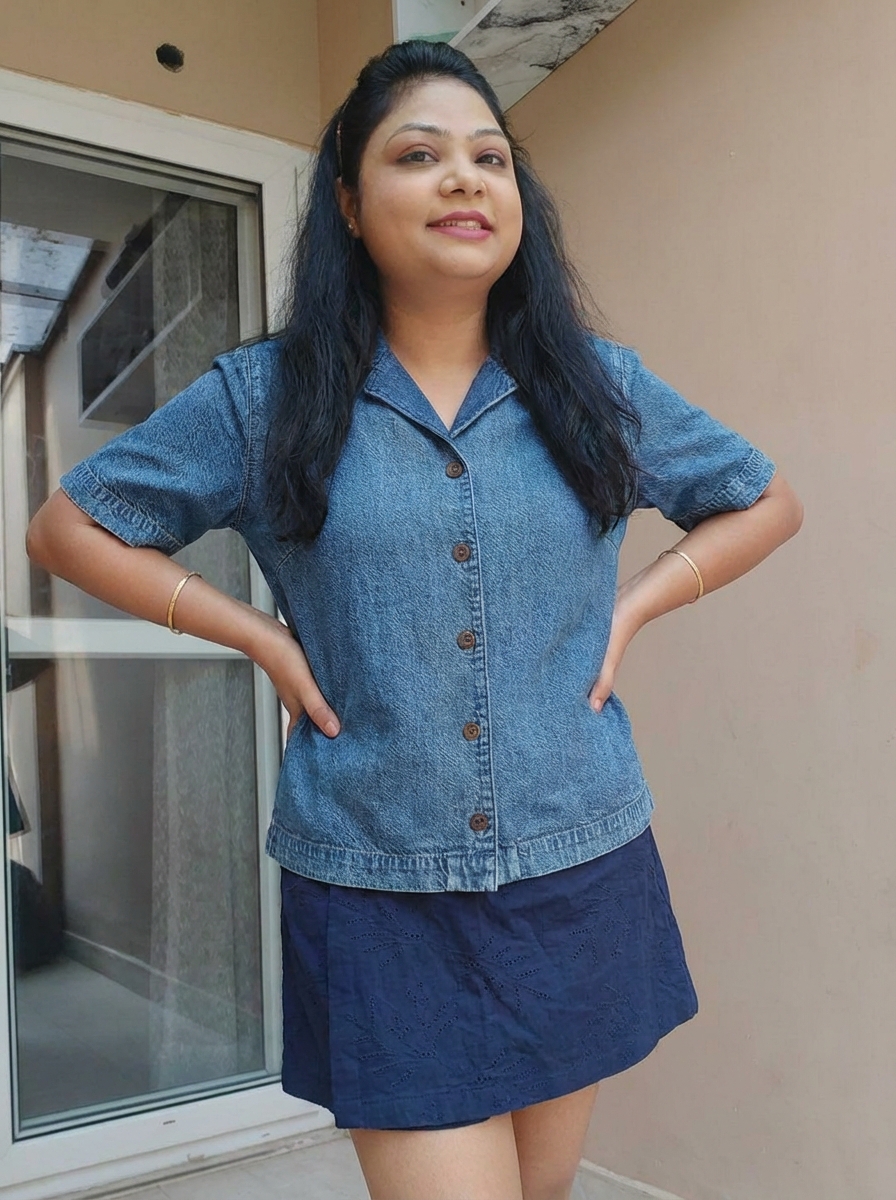
- **Pose Interaction:** Due to the user's "hands-on-hips" pose, the denim fabric must simulate tension and bunching at the armpits. The stiff sleeves will not collapse completely but will angle outward, creating a triangular void between the sleeve hem and the upper arm. The bottom hem of the shirt will be pushed upward and backward by the hands at the waist, likely causing the front placket to buckle slightly outward.
- **Waistline:** The shirt should ideally drape *over* the waistband of the skirt, unlike the current tucked-in t-shirt, unless a "tucked" simulation is forced. Assuming natural drape, the hem will fall around the high hip.
- **Occlusion Handling:**
- **Hair:** The user has long, dark, wavy hair cascading over both shoulders and the chest. This is a critical occlusion layer; the hair mask must be extracted and composited *over* the new denim collar and chest panels.
- **Hands/Wrists:** The user's hands and the gold bracelets on both wrists must occlude the garment. The denim shirt sleeves end above the elbow, so the forearms remain fully exposed, but the side seams of the torso block must pass *behind* the hands placed on the hips.
PHASE 3: ENVIRONMENT & LIGHTING
- **Light Match:** The user is standing in strong, diffused natural daylight entering from the left (viewer's perspective), likely a glass door.
- **Shadow Cast:** The left side of the denim shirt (viewer's left) must be the highlight zone. The right side (viewer's right) and the area under the lapels/collar must feature deep, soft ambient occlusion shadows.
- **Texture Depth:** Enhance the normal map of the denim on the left side to catch the grazing light from the window.
- **Color Calibration:** The user image has a warm, natural daylight temperature. The source image is cool studio lighting. The blue denim must be color-graded (warmed up) slightly to match the ambient warmth of the room to avoid looking "pasted on."
PHASE 4: IDENTITY PROTECTION
- **Facial Lock:** The region from the neck up, including the jawline, chin, and facial features, must remain pixel-perfectly frozen. The hair geometry must remain unaltered.
- **Body Integrity:** The user's torso volume and arm thickness must be respected. The simulation must not slim the waist or arms to fit the source model's proportions. The lower body (blue skirt and legs) acts as a fixed anchor and must remain completely untouched.