Thinking Process
PHASE 1: VISUAL DECONSTRUCTION
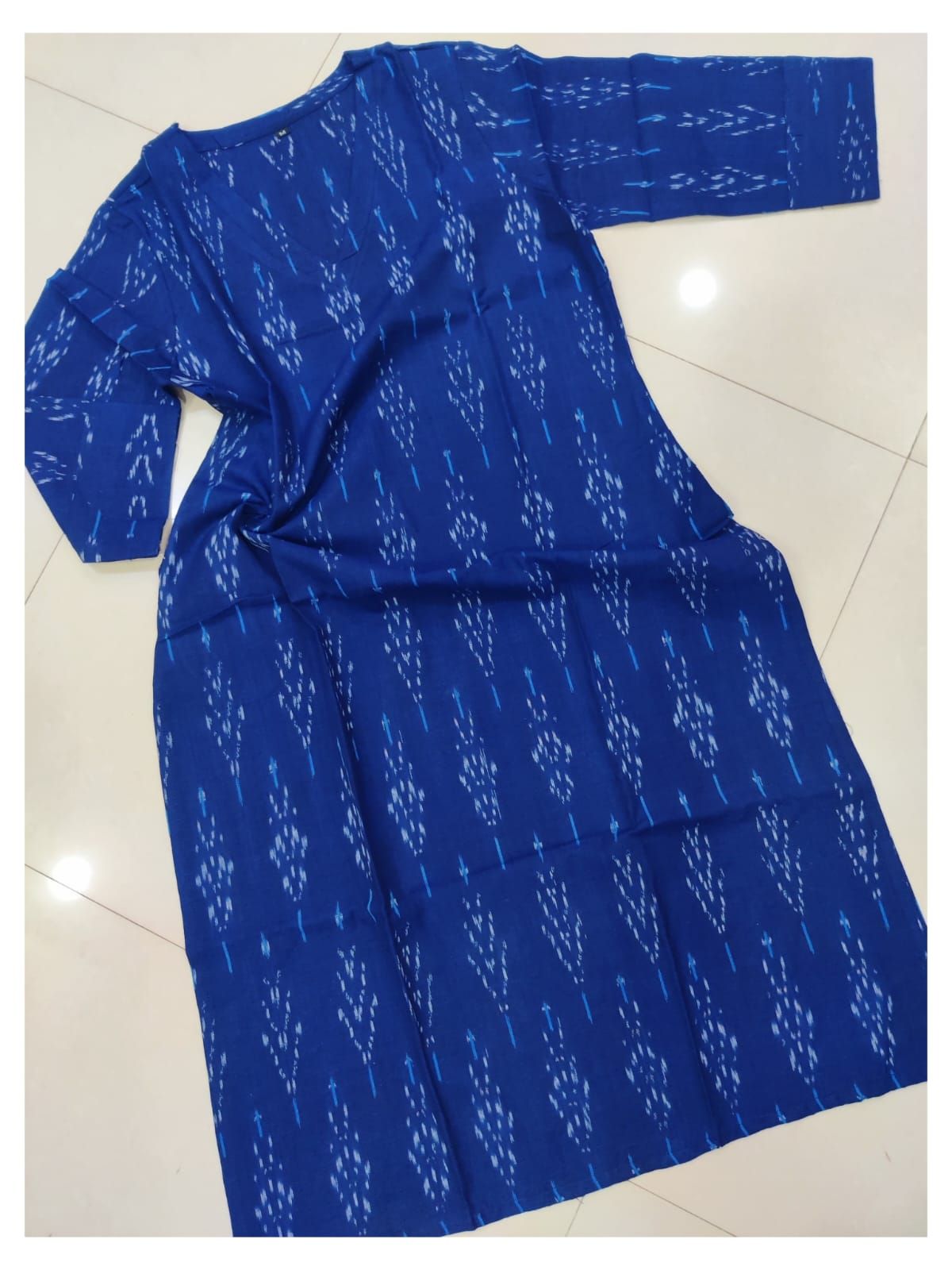
- **Fabric Physics:** The source garment appears to be a woven cotton or cotton-blend Ikat fabric. It possesses a matte finish with low specularity (diffuse reflection only). The simulation must account for a medium-weight drape—heavier than silk but lighter than denim—allowing for crisp folding rather than fluid pooling.
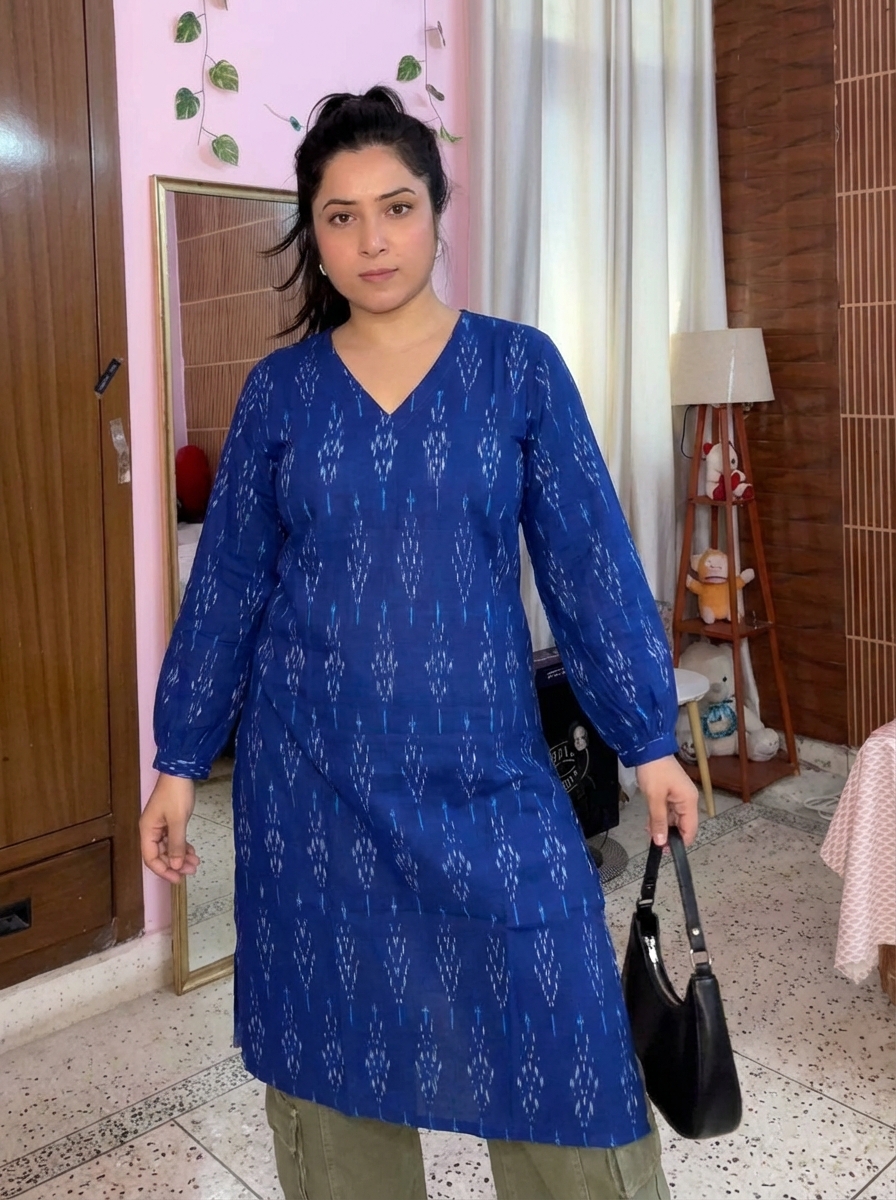
- **Key Features:** The intricate white/light-blue geometric Ikat arrow pattern on the deep blue base must be preserved without distortion. The V-neckline geometry needs to replace the user's current scoop neck. The long sleeves must be maintained. The severe fold creases present in the "flat lay" source image (from packaging) should be smoothed out to simulate a worn state (virtual ironing).
PHASE 2: FIT & DRAPE SIMULATION
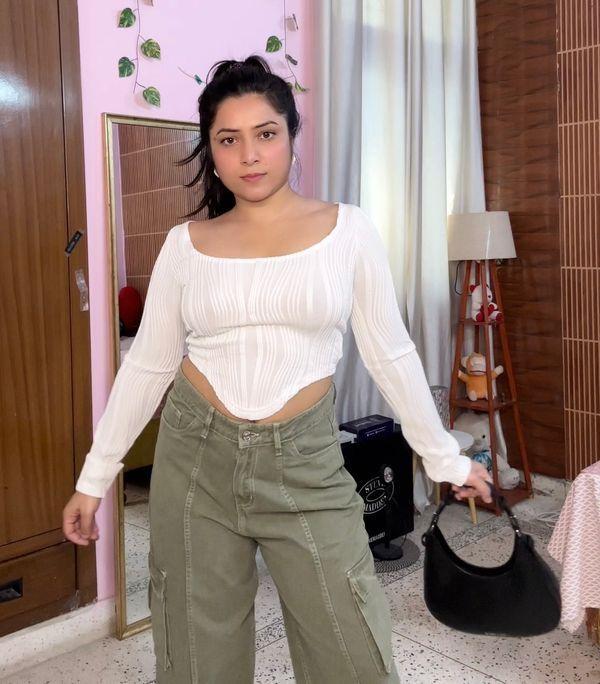
- **Body Mapping:** This is a transformation from a tight crop top to a long, loose tunic (kurti). The new garment must extend past the waist, covering the belt loops and upper thigh area of the cargo pants. Gravity will pull the fabric vertically from the shoulders; it should not cling to the midriff like the current top.
- **Occlusion Handling:**
- **Hair:** The loose hair strands falling on the user's shoulders and neck must be segmented and layered *over* the new blue fabric.
- **Left Arm (Bag Hand):** The fabric at the left elbow must compress and fold to accommodate the bend. The sleeve cuff must terminate at the wrist, ensuring the hand and the black handbag handle remain fully visible and unobscured. The lower hem of the kurti must drape *behind* the handbag.
PHASE 3: ENVIRONMENT & LIGHTING
- **Light Match:** The user's environment has a soft, directional natural light source coming from the right (window side). The generated garment must render with highlights on the wearer's left side (image right) and cast soft shadows towards the wooden wardrobe (image left).
- **Color Calibration:** The source image has cold, clinical lighting. The target room has pink walls and warm ambient light. The deep blue of the kurti requires a slight warm tint adjustment and contrast reduction to integrate realistically into the softer, domestic lighting of the bedroom.
PHASE 4: IDENTITY PROTECTION
- **Facial Lock:** The user's entire head, including facial features, skin tone, and the specific messy ponytail hairstyle, must be completely frozen.
- **Body Integrity:** The user's shoulder width and arm volume must remain unchanged. While the garment silhouette changes (tight to loose), the underlying skeletal structure and pose (standing with hip sway) must not be warped or slimmed. The skin tone on the exposed neck/chest area must match the face perfectly.