Thinking Process
PHASE 1: VISUAL DECONSTRUCTION
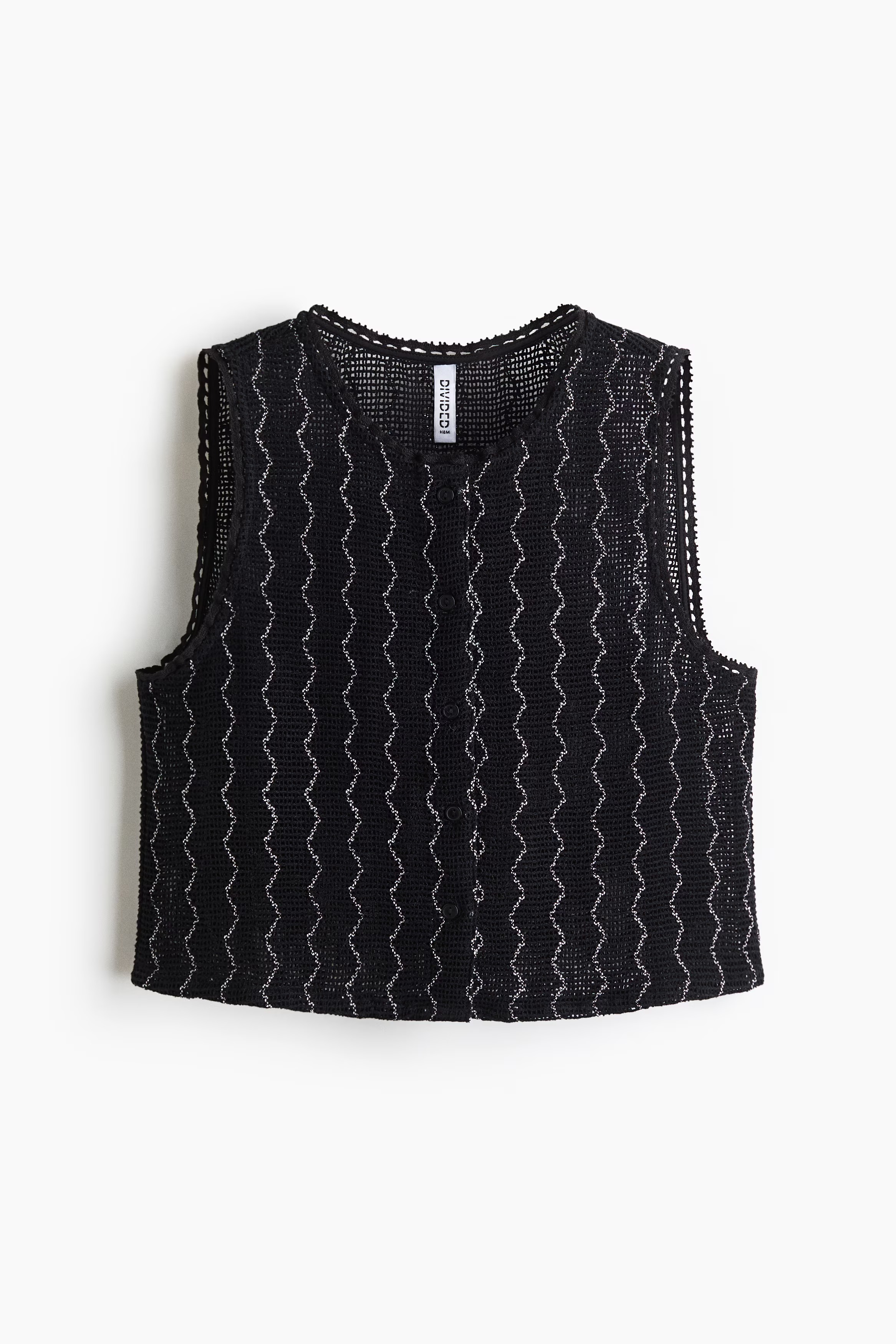
- **Fabric Physics:** The source garment is an open-knit or crochet mesh structure (polyester/cotton blend). Simulation must account for surface texture depth; it is not a flat plane. The material has low specular reflection (matte finish) but high textural contrast. The "holes" in the mesh imply semi-transparency; the VTO generation needs to either render skin/undershirt beneath or treat the mesh as dense enough to be opaque, ensuring the black yarn absorbs light while the white wavy threads catch ambient diffusion.
- **Key Features:** The vertical white wavy stitching is the primary pattern and must not be distorted by low-resolution warping. The central button placket (5-6 visible buttons) acts as a rigid anchor line. The ribbed armhole borders and the scoop neckline shape must be preserved. The "DIVIDED" tag area implies the back interior layer needs to be darkened or removed to look realistic on a body.
PHASE 2: FIT & DRAPE SIMULATION
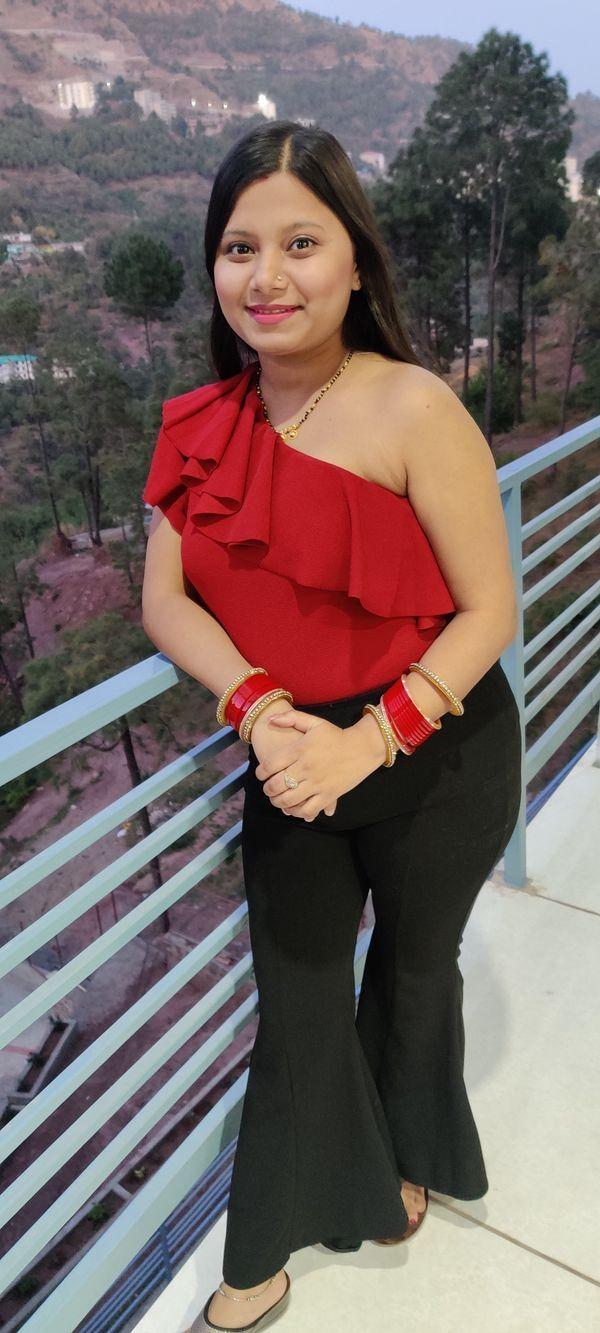
- **Body Mapping:** The user is leaning slightly backward against a railing. Gravity dictates the vest will hang vertically from the shoulders, creating a slight gap between the fabric and the lower abdomen/waist area due to the backward lean. The garment is sleeveless; simulation must generate realistic skin texture for the user's right shoulder (currently covered by the red ruffle) to match the exposed left shoulder. The fit should be relaxed but structured, following the bust curvature without aggressive clinging.
- **Occlusion Handling:** CRITICAL: The user's hands are clasped at the waistline/navel area. The hem of the vest will interact with the wrists and fingers. The hands, thumbs, and red/gold bangles must be segmented as a foreground layer, masking the vest's hemline. The vest must appear to tuck behind the hands or sit just above them depending on length, but absolutely cannot be rendered *over* the hands.
PHASE 3: ENVIRONMENT & LIGHTING
- **Light Match:** The scene is outdoors at dusk/twilight, characterized by soft, cool-toned diffuse lighting with no harsh directional shadows. The black value of the vest must be lifted (not pure #000000) to match the ambient contrast, taking on a slight cool/blue tint to integrate with the background atmosphere.
- **Color Calibration:** The white wavy lines on the vest must be desaturated and slightly dimmed to match the exposure of the user's skin; they cannot appear "studio white" or they will look pasted on. Shadows formed by the vest (on the skin near the armholes) must be soft and diffuse, matching the lack of hard shadows in the original photo.
PHASE 4: IDENTITY PROTECTION
- **Facial Lock:** The user's entire head, including the hairline, facial features, nose ring, and expression, is to be frozen. The neck area (including the gold necklace) must remain untouched.
- **Body Integrity:** The user's shoulder width and arm volume must remain consistent. Do not slim the waist or alter the hip curvature visible in the black pants. The skin tone generated for the currently covered right shoulder must perfectly sample the melanin and lighting values from the visible left shoulder and face.