Thinking Process
PHASE 1: VISUAL DECONSTRUCTION
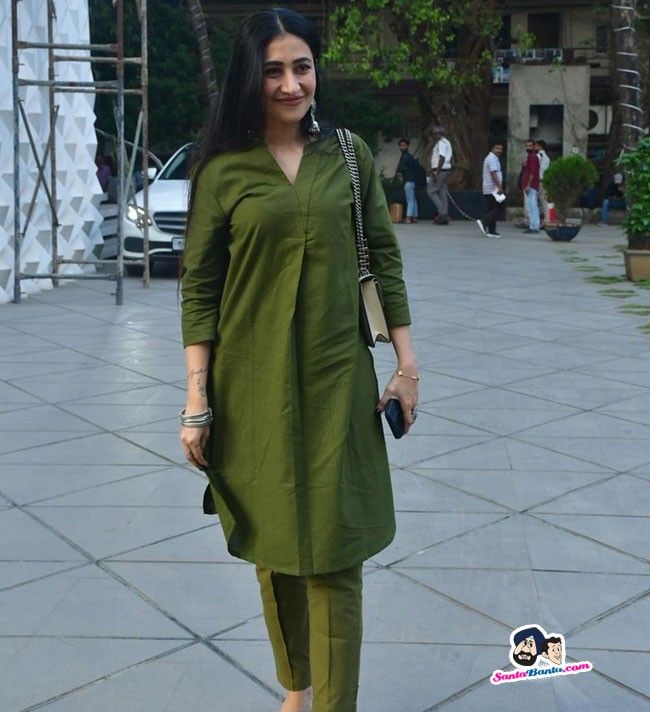
- **Fabric Physics:** The source garment is an olive green tunic (kurta), likely constructed from medium-weight cotton or a cotton-linen blend. It has a matte finish with very low specularity (no shine). The fabric possesses moderate stiffness, holding sharp creases at the central pleat while draping vertically with some weight. It does not cling to the skin but creates a structured silhouette.
- **Key Features:**
- **Central Pleat:** The distinctive inverted box pleat or seam running vertically down the center front is the primary defining feature and must be preserved.
- **Neckline:** The sharp V-neck cut.
- **Sleeves:** Three-quarter length sleeves that are slightly loose/straight cut.
- **Artifact Removal:** The cross-body bag strap visible in the source image must be virtually removed (inpainted) before texture transfer.
PHASE 2: FIT & DRAPE SIMULATION
- **Body Mapping:**
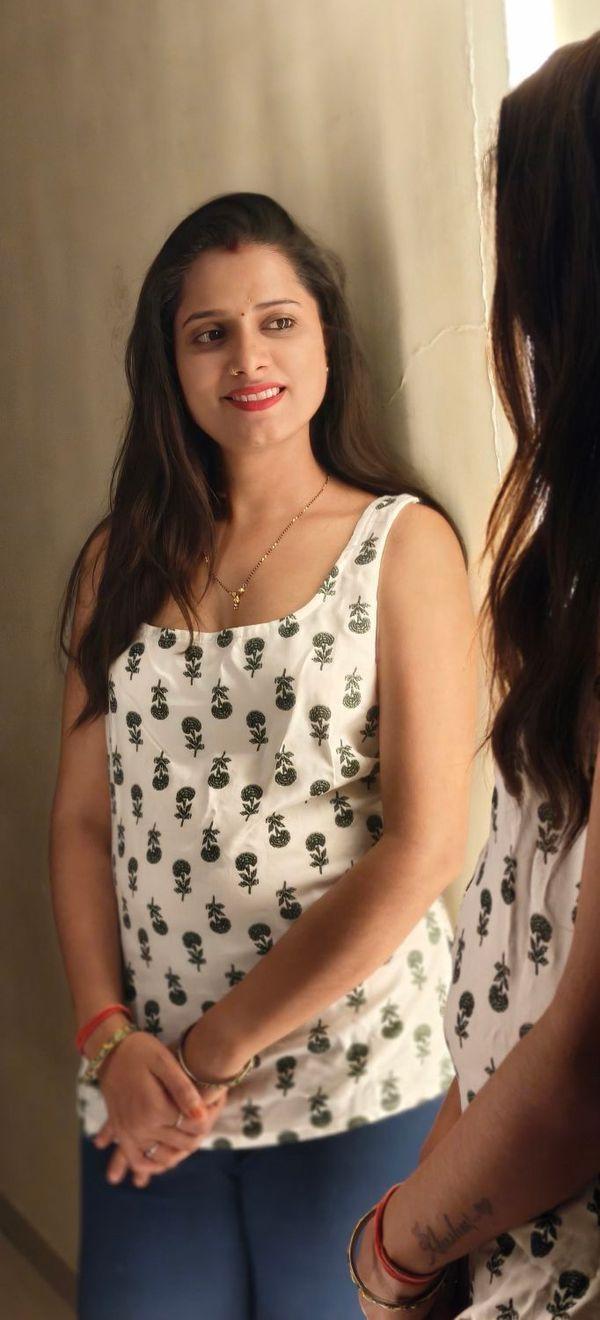
- **Torso:** The garment is a "Kurta" style, meaning it is long. It must extend past the user's waist, covering the hips and the top portion of the blue jeans. It should hang somewhat loosely, following the user's slight lean against the wall.
- **Sleeves:** The target user currently has bare arms; the simulation must generate the 3/4 sleeves covering her biceps and elbows, stopping before the wrist bracelet.
- **Shoulders:** The drop of the shoulder seam must align with the user's natural shoulder width, which is slightly angled due to her leaning pose.
- **Occlusion Handling:**
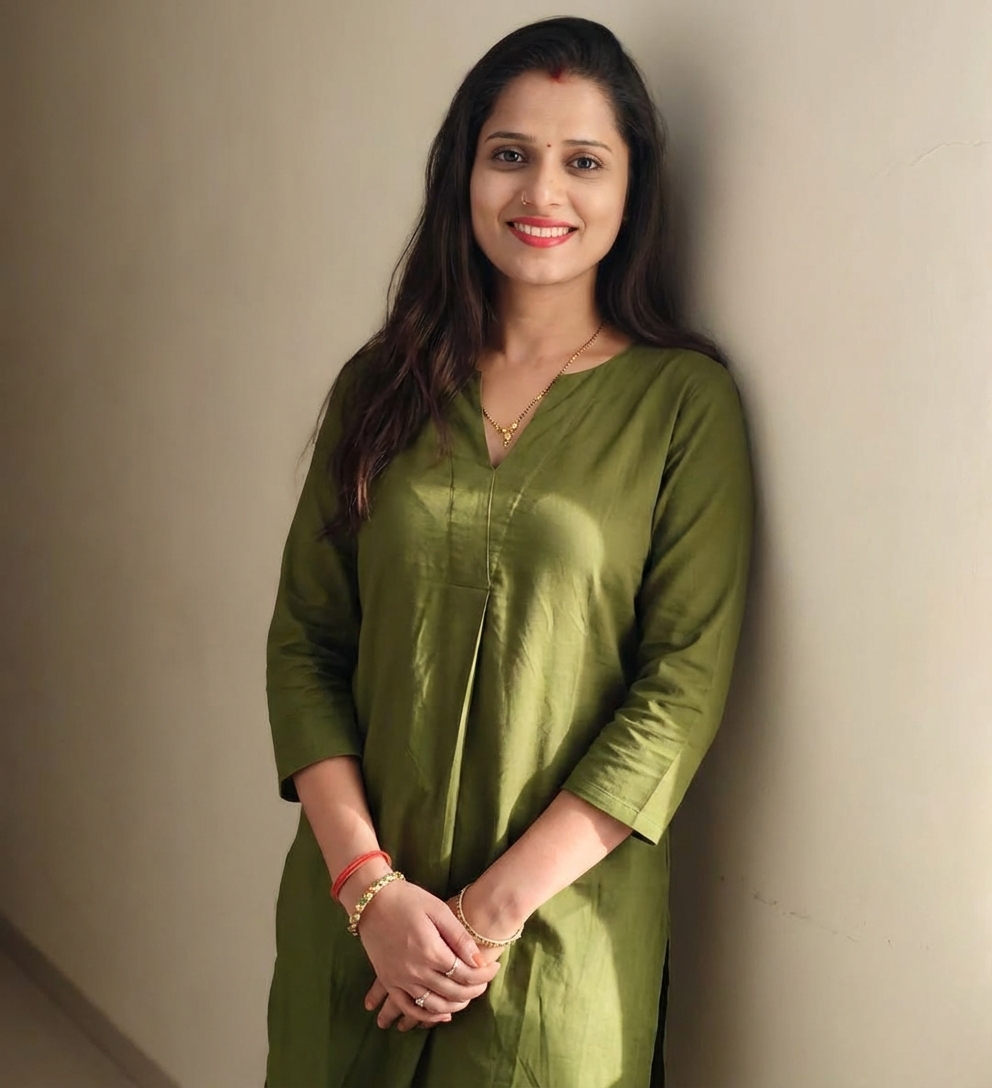
- **Hair:** The user has long, dark hair cascading over her shoulders and chest. A high-precision alpha mask is required to layer the hair *over* the green fabric.
- **Hands:** The user's hands are clasped at the lower waist. The hem of the long kurta will likely interact here. The fabric must appear to drape *behind* the hands/wrists, or flow around them if the garment is long enough to cover the wrists.
- **Accessories:** The gold necklace and the bracelet on the left wrist must be segmented and layered on top of the new garment.
PHASE 3: ENVIRONMENT & LIGHTING
- **Light Match:**
- **Directionality:** The user is illuminated by a strong, soft directional light source from the left (likely a window). The new garment must have brighter highlights on the wearer's right side (viewer's left) and cast self-shadowing towards the wearer's left side and under the bust.
- **Shadows:** The garment must cast a realistic shadow onto the cream-colored wall behind the user, matching the soft fall-off of the current shadow.
- **Color Calibration:**
- **White Balance:** The user image has a warm, indoor ambient tone. The source cloth is in cool outdoor daylight. The olive green must be color-graded with a warmer temperature to match the indoor environment so it doesn't look "pasted on."
PHASE 4: IDENTITY PROTECTION
- **Facial Lock:** The entire head region, including the jawline, chin, smile, red bindi, and neck (above the V-neck line), is a strict "freeze zone." No pixel alteration is permitted here.
- **Body Integrity:** The volumetric shape of the user must remain constant. Do not slim the arms or waist to fit the garment. The garment mesh must expand to fit the user's existing body geometry, preserving her natural posture and size.