
Thinking Process
PHASE 1: VISUAL DECONSTRUCTION
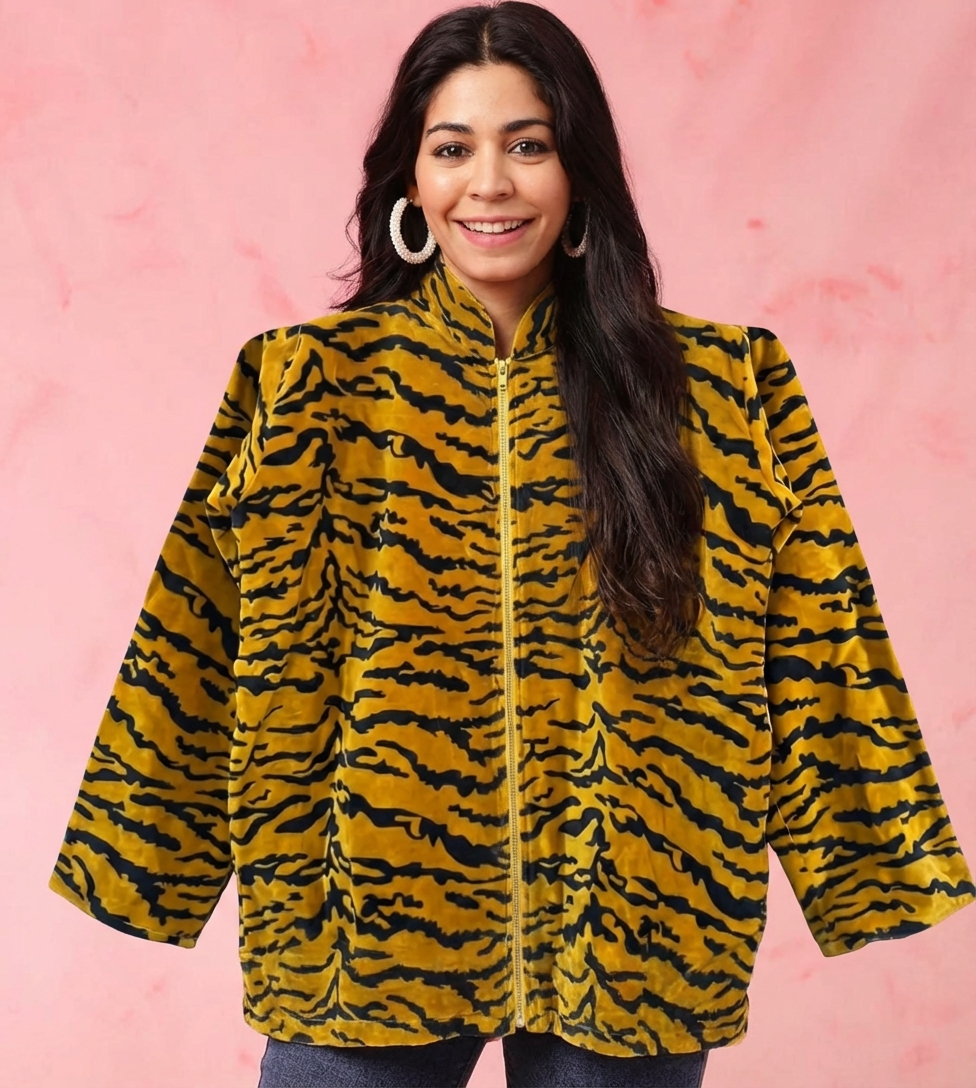
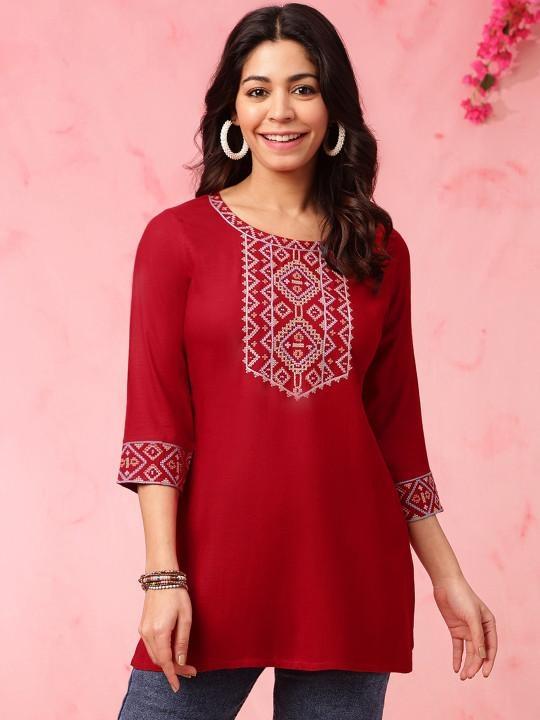
- **Fabric Physics:** The source garment is a high-pile velvet or velour material. It possesses anisotropic reflective properties, meaning it will exhibit a soft, shifting sheen where the fabric curves (shoulders, arms) and darker, deeper tones in the folds. It is heavier and thicker than the user's current rayon/cotton tunic, requiring a stiffer simulation that resists micro-wrinkling but allows for soft, heavy folding.
- **Key Features:** The tiger print pattern (black irregular stripes on a gold/mustard background) is the primary visual identifier and must remain sharp. The stand-up/mandarin collar structure must be preserved. The vertical yellow-and-white striped inner lining, visible due to the open front on the hanger, should be maintained if the VTO generates an open-jacket look, or concealed if the jacket is simulated as zipped.
PHASE 2: FIT & DRAPE SIMULATION
- **Body Mapping:** The jacket is a boxy cut compared to the user's fitted kurti. The simulation must avoid "vacuum-sealing" the jacket to the user's waist. It should hang somewhat loosely from the shoulders, following gravity to create a straighter silhouette down to the hips. The long sleeves of the jacket must extend fully to the wrist, replacing the current 3/4 sleeves, and should exhibit slight stacking or bunching at the elbows due to the arm bend.
- **Occlusion Handling:**
1. **Hair:** The user's long, dark wavy hair falls over both shoulders and rests on the upper chest. This is a critical occlusion layer; the hair masks must be generated to ensure the jacket collar and shoulders are rendered *behind* the hair strands.
2. **Accessories:** The large hoop earrings must sit in front of the high collar. The bracelets on the right wrist should either be covered by the long sleeve or, if the sleeve is pulled up, rendered as interacting with the cuff.
PHASE 3: ENVIRONMENT & LIGHTING
- **Light Match:** The user is in a high-key, soft lighting environment with frontal diffusion (indicated by the lack of harsh shadows on her face and the pink background). The source garment is currently lit by a harsh, top-down spotlight in a dark room. The jacket's lighting map must be completely neutralized and re-lit to match the soft, ambient brightness of the user's scene. The velvet sheen must shift to reflect a frontal light source rather than an overhead one.
- **Color Calibration:** The source image has a cool/blue ambient cast from its background. This must be removed to restore the warm mustard/gold tone of the jacket. Additionally, the jacket creates a risk of color bleeding; ensure the pink background of the user does not unnaturally tint the yellow velvet, and conversely, that the yellow jacket does not cast an unrealistic yellow reflection onto the user's jawline.
PHASE 4: IDENTITY PROTECTION
- **Facial Lock:** Absolute freeze on the facial ROI (Region of Interest) including eyes, nose, mouth, chin, and jawline. The skin tone of the neck and the specific hairline boundaries must remain untouched.
- **Body Integrity:** The user's skeletal structure and BMI must remain unaltered. Do not slim the waist to match the hanger shape. The hip width visible at the bottom of the frame must align naturally with the new hemline of the jacket. The user's pose (arms slightly abducted) must dictate the garment shape, not the other way around.